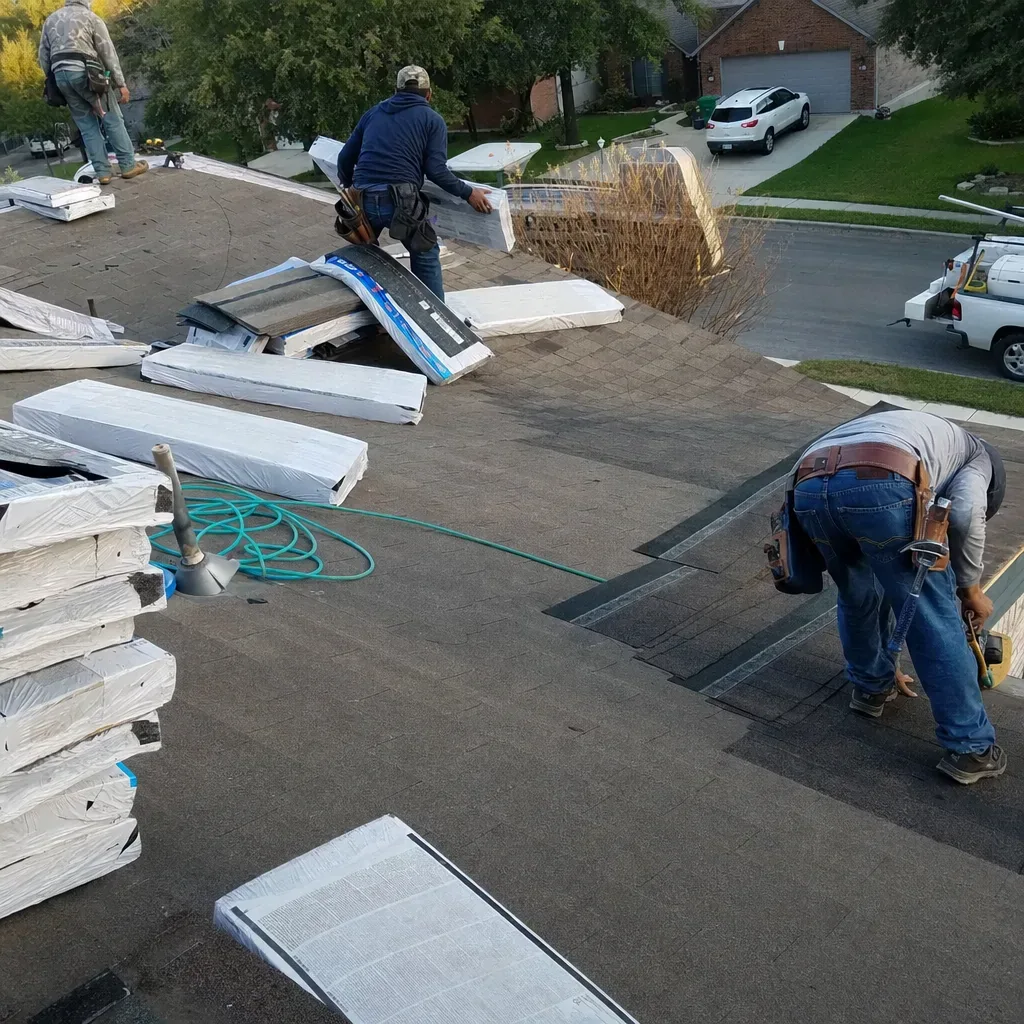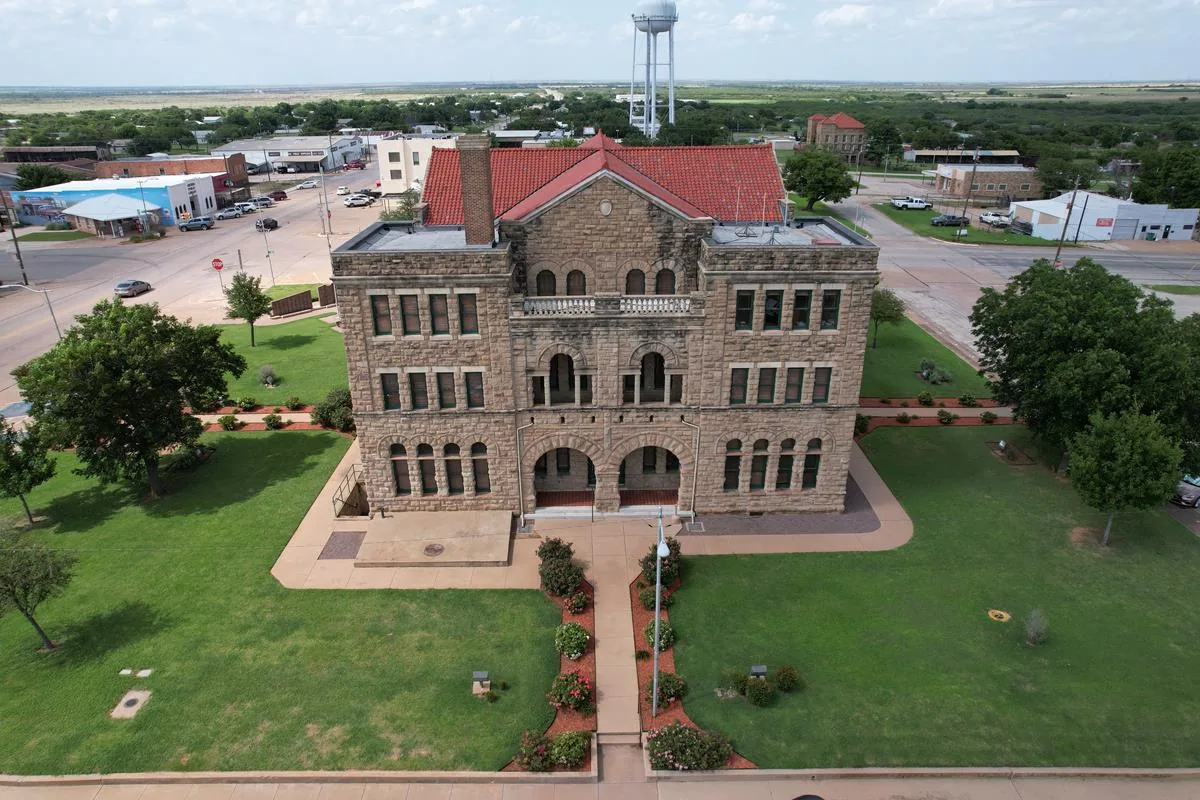
Bellevue, TX sits on U.S. 287 in Clay County, about 36 miles northwest of Wichita Falls. It started around 1882 as a railroad shipping station, became a town in 1902, and came close to being erased by a tornado in 1906. The town had 289 residents in 2020. A roof job there is a long drive from the shop, so the first thing we plan is the day: what we bring, what we can finish and what must be covered if weather turns.
Distance changes how a roof is repaired. A crew that cannot return tomorrow needs every part on the truck. That is why the first walk is thorough and the report is specific.
Plan the Trip Before the Repair
Step one is a call. We ask how old the roof is, how the building is used, what the roof is made of and where it has leaked. Step two is a photographed walk that lists every opening, soft spot and loose piece. Step three is a parts list built from that walk, so the repair day does not stall for lack of a boot or a roll of sealant.
For a small building, a single trip can often cover both the walk and the fix. For a larger roof, we split the work: survey first, then a scheduled repair with the right lift, material and crew. Owners get a written scope and a price for each stage.
Weather gets a line in the plan too. High wind stops lift work, and rain stops anything that needs a dry surface. We watch the forecast two days out, hold a backup date and tell the owner early, so no one waits on a roof that cannot be worked.
Edges and Trim in Open Wind
The 1906 tornado is part of the town's story, and a 1979 tornado carved an 8-mile path across the south and east parts of Wichita Falls. Both belong to the past. They do not tell us about a particular roof, but they explain why we start with the perimeter: edge metal, coping, drip edge and the first row of fasteners.
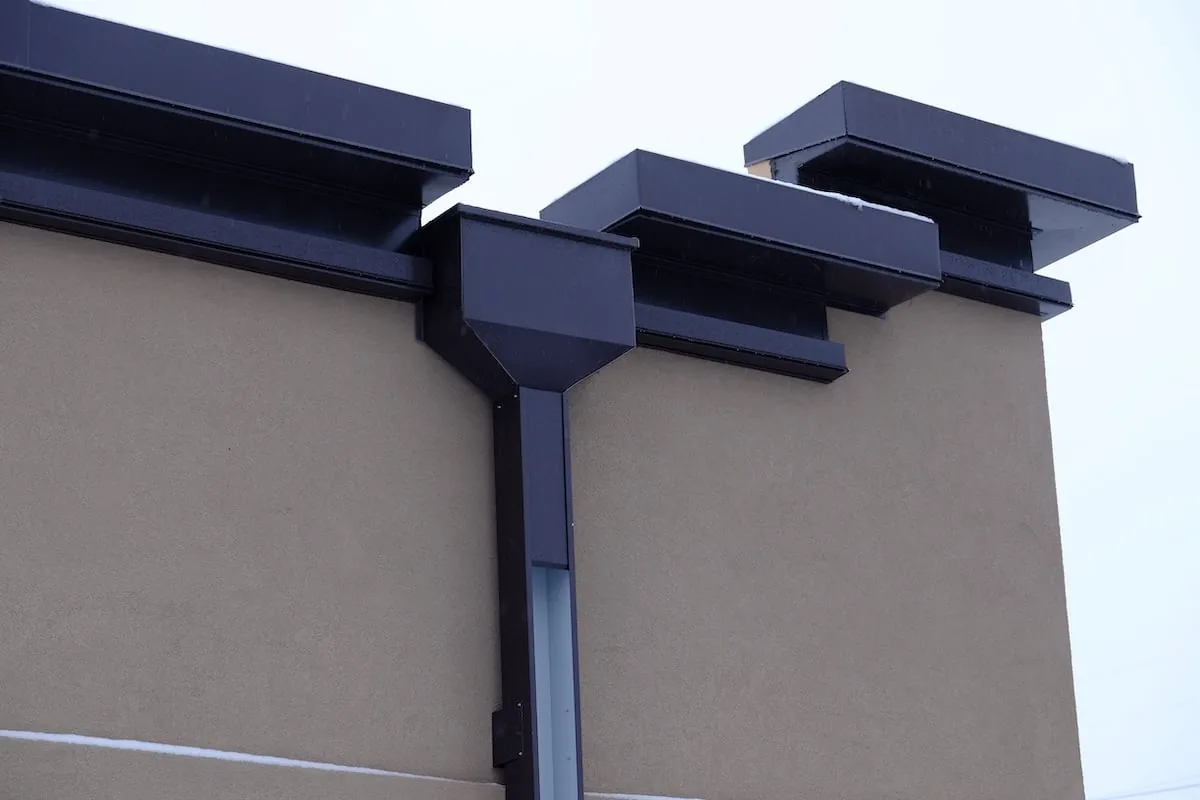
Wind gets under whatever is loose. We tug on trim, check the fasteners behind it and re-seal the joints. Edge metal that has lifted even slightly lets air under the membrane, and each gust works the gap wider. A wind damage check after a storm adds a look for debris, bent panels and torn flashing.
Do Not Assume the Roof Type
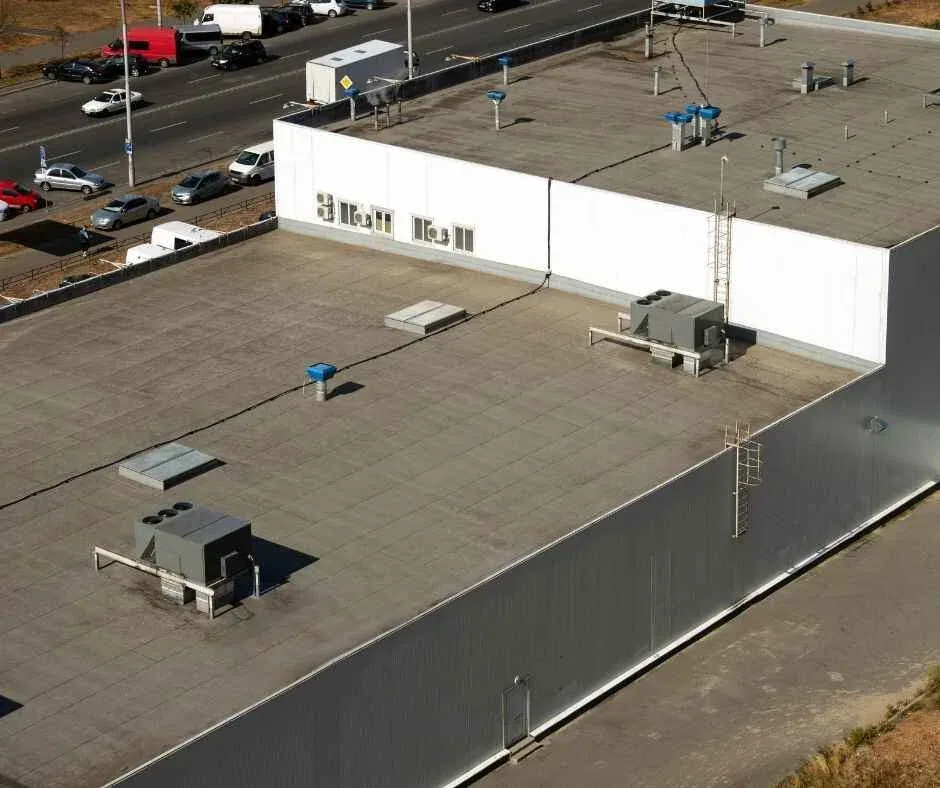
Small-town commercial buildings can carry any roof: a flat membrane behind a parapet, a gravel surface, a metal panel system, or a mix added over the years. We do not guess from the street. A core sample or a close look at the edge shows the layers, and the layers decide the repair.
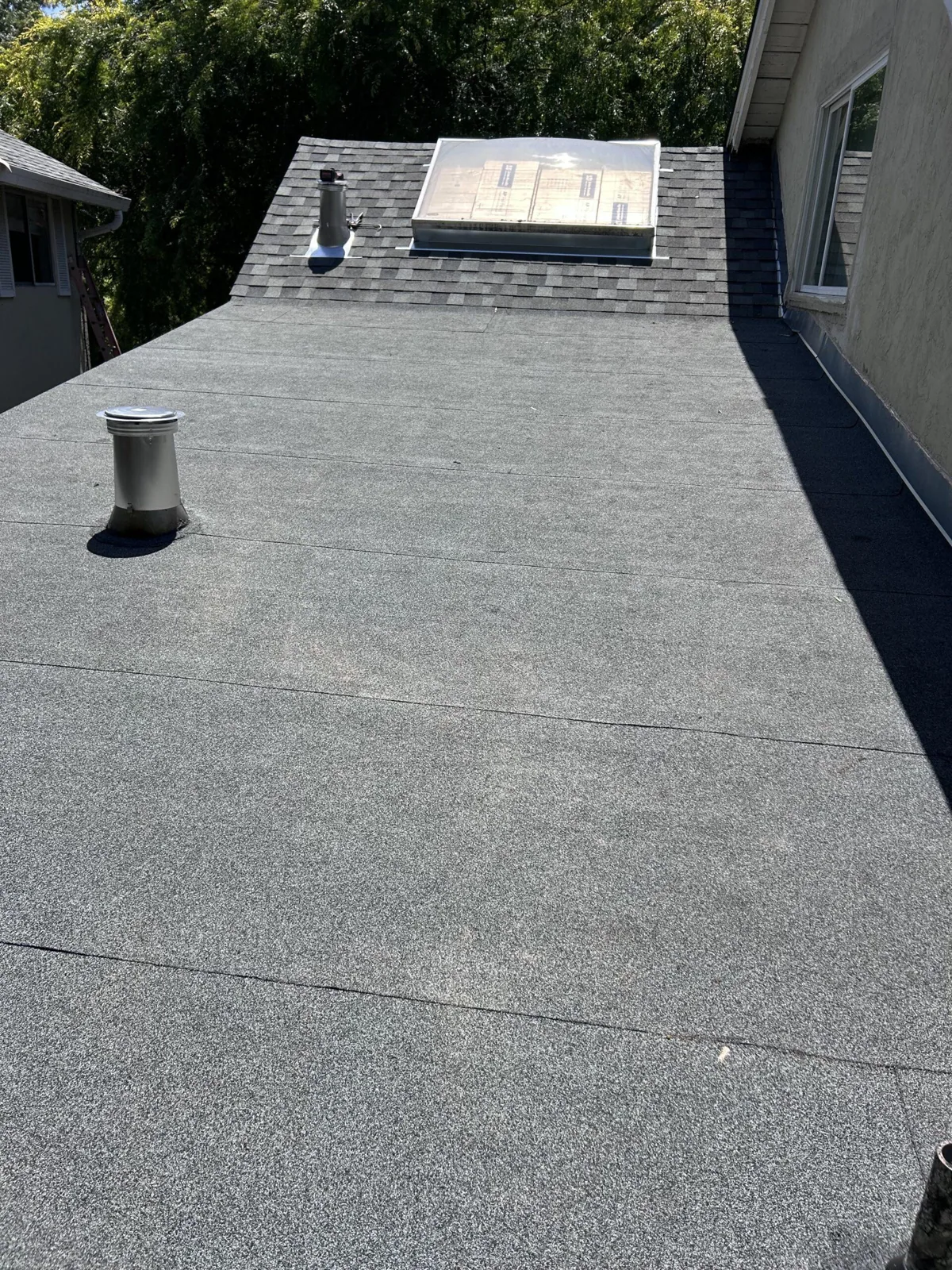
A built-up roof with gravel is repaired differently from a single-ply sheet. A built-up roof fails at blisters and flashings, while a single-ply roof fails at seams. Metal fails at fasteners. Naming the type correctly in the first hour saves money in the last.
Mixed roofs need extra care. Where one roof type meets another, the tie-in is the likely leak. We look at each joint between sections and photograph it, since the repair there depends on which materials meet and how they were joined.
Flat Roofs, Parapets and Scuppers
A flat roof behind a parapet depends on its scuppers and drains. If an outlet is clogged, water stands against the wall flashing, and the flashing is the weakest part of the wall. We clear the outlet, probe the flashing and look for the dirt ring that a standing puddle leaves.
That ring is the ponding line. A thin ring means water lingered. A ring over a soft spot means moisture has reached the insulation. Fixes run from cleaned roof drains and scuppers to tapered insulation that gives water a slope. The cheapest fix is the one that matches the cause. A repair that treats the stain instead of the cause tends to fail by the next storm.
Heat and Hail Across the Region
The market city, Wichita Falls, sees about 28 days a year at 100 degrees. Heat bakes the surface of a roof, dries sealant and makes thin spots. Stones as big as baseballs came down on Iowa Park and Burkburnett in April 1991, and Electra took 15 minutes of golf-ball hail in March 1982.
Those events were elsewhere, and none of them proves damage on a Bellevue roof. They tell us what to look for. Hits on test squares are tallied by slope in a hail damage report, which gives an owner numbers for an insurer. Soft spots under the surface get probed and marked, and dents on metal are checked for broken coatings.
Cover It Tonight, Fix It Next
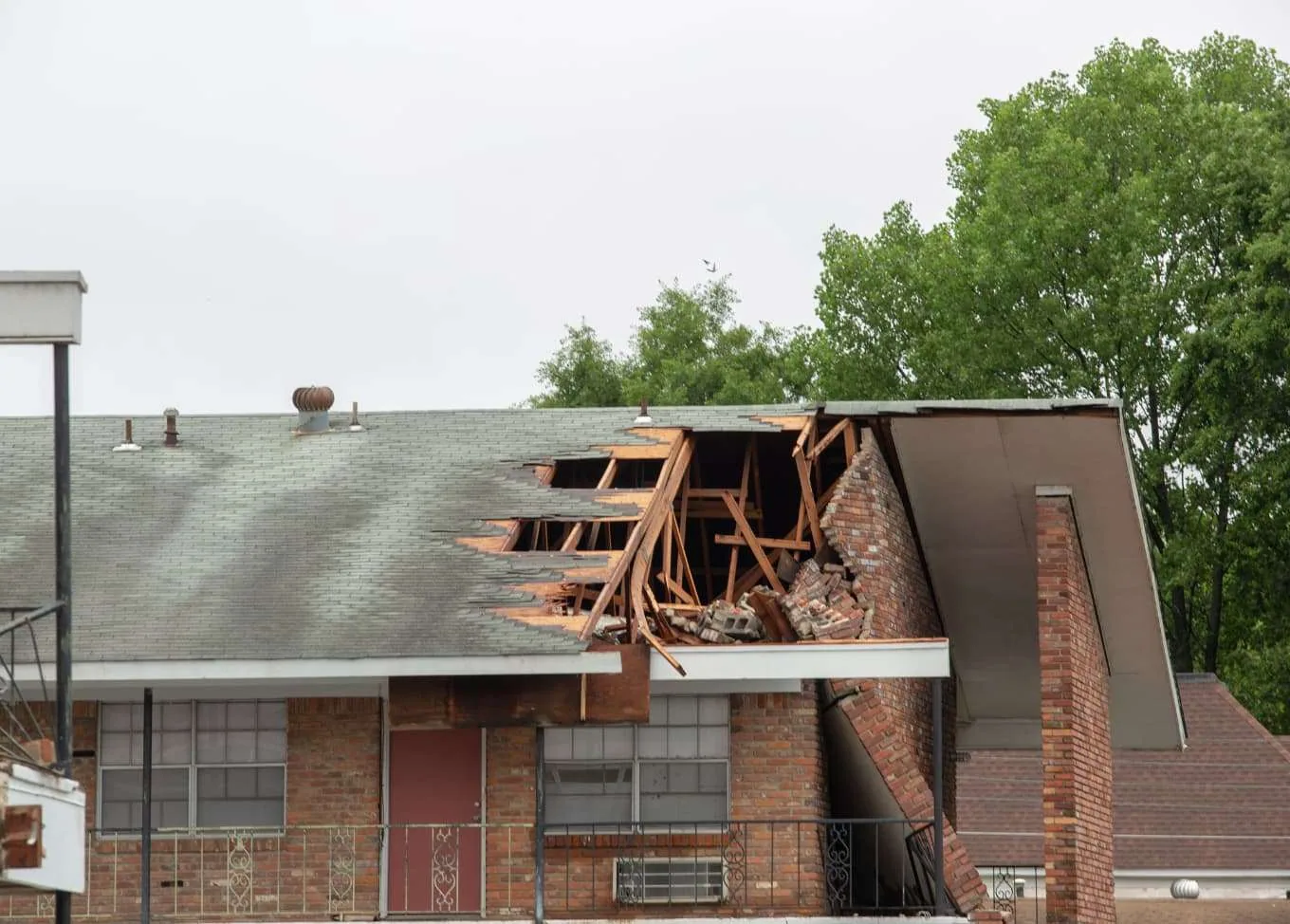
A roof that opens in a storm needs protection that night. We use tarps, temporary patches and sealant to stop water, then plan the lasting repair. The temporary work is photographed, so the insurer sees what was done and why.
Our emergency roof repair response is available around the clock, and a long drive on U.S. 287 does not change the answer. It changes the plan, so we load the truck for the worst case and confirm the cause on arrival. The photographs we take of the temporary work and of the opening go to the owner the same day.
Repair, Coat or Replace
A cracked boot, a handful of screws or a lifted seam gets a repair. A sound roof with worn surface can take a coating. Wet insulation, rust across panels or a heavy hail count points to replacement. Price follows roof size, deck condition, access and penetrations, and distance adds travel time that we state up front.
The same options apply to a building in Archer City or Windthorst, and the same written report supports the decision. A roof close to the end of its service life is better replaced on a plan than after a failure, since planning buys better weather and the right material.
Commercial Roofing Questions
Can the repair be done in one trip?
For a small roof, usually. We confirm the roof type and the parts list on the walk, then bring what is needed. A larger roof is split into a survey and a scheduled repair.
How do I tell what my roof is made of?
Look at the edge. Gravel on top points to built-up roofing, a smooth white or gray sheet points to single-ply, and ribbed panels point to metal. A core sample or a close look at the edge confirms it.
What should I do right after a storm?
Photograph the damage from the ground, move valuables away from wet ceilings and call us. Stay off the roof. We cover any opening that night and plan the lasting repair next.
Do clogged scuppers cause leaks?
They can. Standing water presses on flashing and finds any weak point. Clearing the outlet and checking the flashing often ends the leak without further work.
Is a long drive a reason to wait on a small repair?
No. A small opening gets bigger with every rain, and insulation that gets wet is costly to dry. We plan the trip, load the right parts and finish the repair on arrival whenever the roof allows.
What should I send before the first visit?
The roof's age, how the building is used and where water has come in. Mention a storm date if one comes to mind, and the walk starts there.