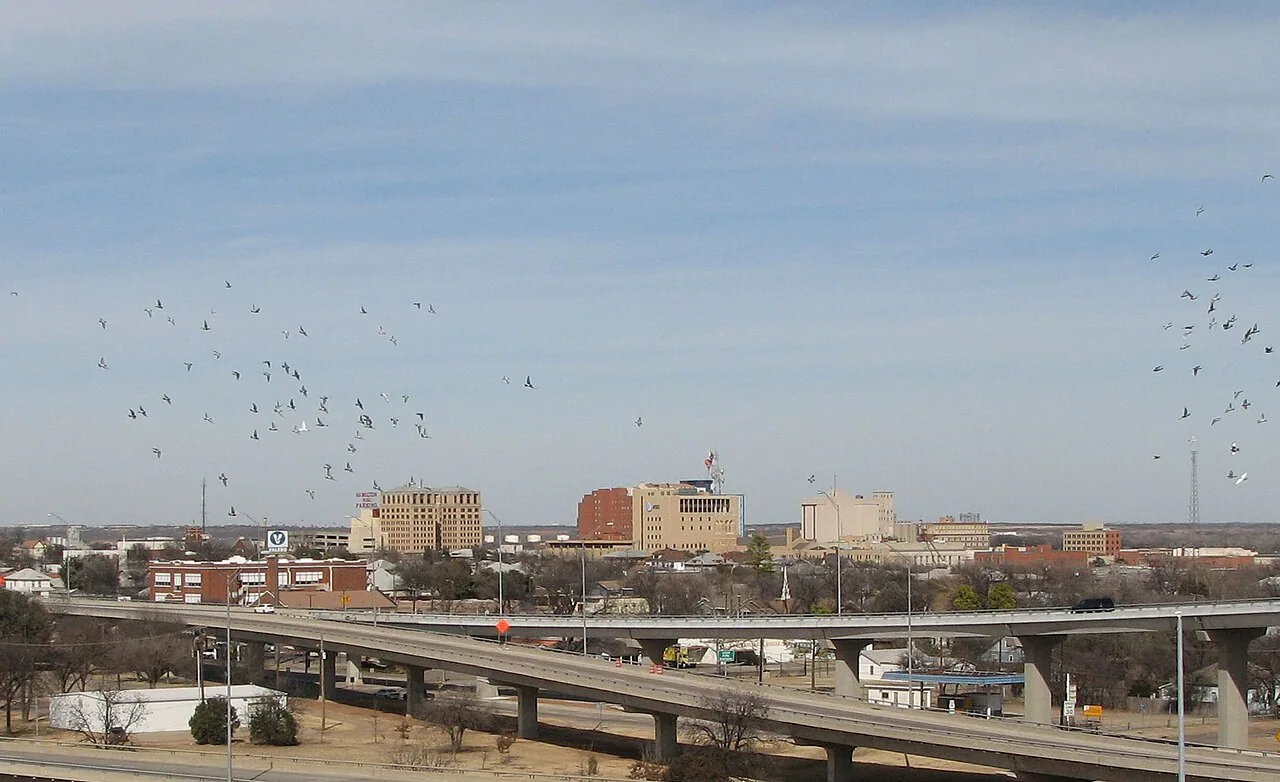
Grease is the first thing to ask about on a restaurant roof. A kitchen exhaust fan throws a fine film of oil onto the membrane around it, day after day, and that film does what no rain can do: it softens some roofing materials from the surface down. In Wichita Falls, TX, the same roof also takes the summer sun, with about four weeks of 100-degree days a year. Start with the kitchen. Then the dining room below. Then the small details that connect them.
The Kitchen Sets the Rules
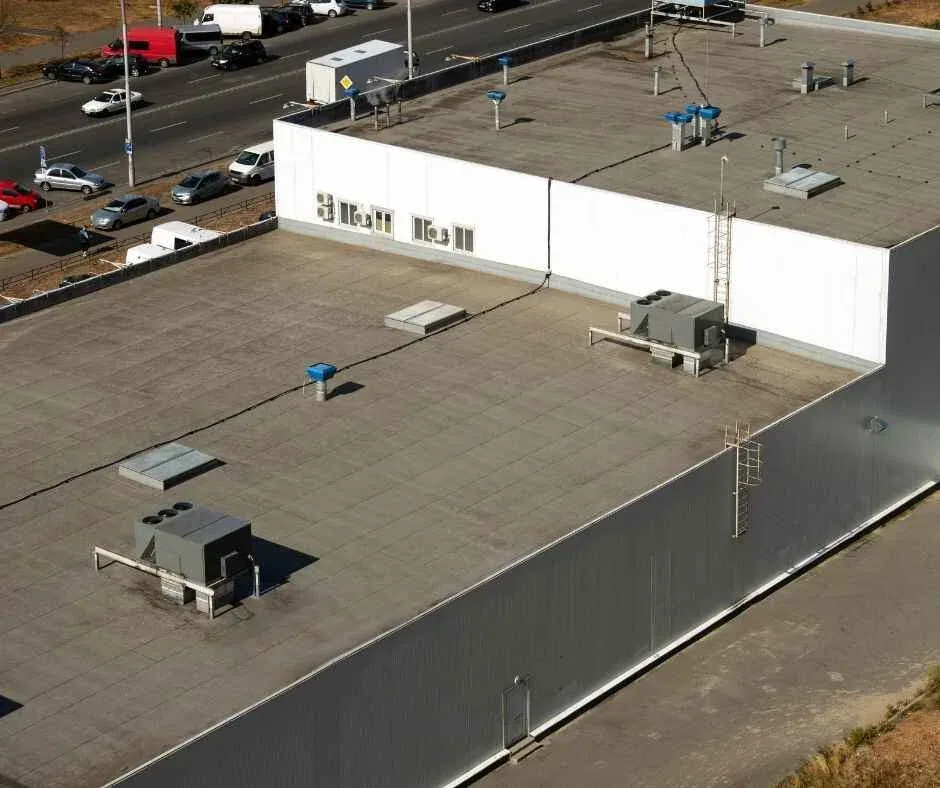
A restaurant building is small compared with a warehouse, but its roof is crowded. The kitchen has a hood and a duct that rise through the deck to an exhaust fan. A make-up air unit pushes fresh air in. Walk-in coolers add a condenser. A grease trap vent or two, a restroom fan and a couple of rooftop air conditioners finish the list. Each one is a hole in the roof with its own flashing.
The area around the exhaust fan is the worst-treated square yard on the roof. Hot, fatty air leaves the duct, cools and settles on whatever is nearby. A grease containment tray catches most of it, but only if someone empties it. A full tray overflows onto the membrane, and the membrane under it ages in months instead of years. We look at the tray first, then the surface within a few feet of the fan, because a soft, shiny, darkened patch tells us a lot.
Pick a Membrane That Tolerates Oil
Not every roofing sheet handles grease equally. PVC is built to resist fats and oils, and it is the usual choice when a roof sits under a busy kitchen. TPO can serve well when the exhaust is well managed and the sheet is detailed with care. EPDM is the one to avoid near a heavy grease plume, because oils swell the rubber.
On an older roof, a modified bitumen surface can hold up for a while under grease, but the asphalt softens in strong heat. The point is to match the sheet to the real exposure, not to the cheapest line in a bid. A restaurant owner who reroofs without telling the contractor where the exhaust lands may pay for the wrong membrane twice. We ask where the fan sits and how often the tray is serviced before we recommend anything.
Where Restaurant Roofs Leak
The common leaks come from the same few places. A curb around a fan loses its seal as the metal heats and cools. A pipe boot cracks in the sun. A rooftop unit's condensate line drips on a single spot. A parapet on a pad-site building has a short, tight corner that holds water. And because many restaurants are a single story with a low roof, the dining room ceiling is only a few feet below the deck, so a small leak is seen quickly.
That visibility is useful. A stain over a table appears fast, and a report with a date and a photo is worth more to us than a guess. The stain shows where water landed, not where it came in. We trace it by following the deck and the insulation upslope, then confirm with a moisture scan and a hose test, one detail at a time. For leaks on a busy night, the leak repair goal is to stop water that evening and plan the permanent fix for a quiet hour.
Hail and Wind on Small Roofs
A small roof is not a safe roof. Golf-ball stones covered the ground in Electra for a quarter hour in March 1982, with damage that reached Burkburnett, and baseball-size stones hit Burkburnett and Iowa Park in April 1991. A restaurant roof in any of those towns, or along the Kemp and Kell corridor in the city, works under the same weather. That history is context, not a diagnosis.
After a storm, the first checks are the fan hoods, which dent and shift in hail, the vent caps, and the small flat spaces around the units. A dented hood can let rain into the duct and into the kitchen. After wind damage, a lifted cap or a loose edge can be a quick fix if it is found early and a long one if water has soaked the insulation.
Repair, Coat or Replace
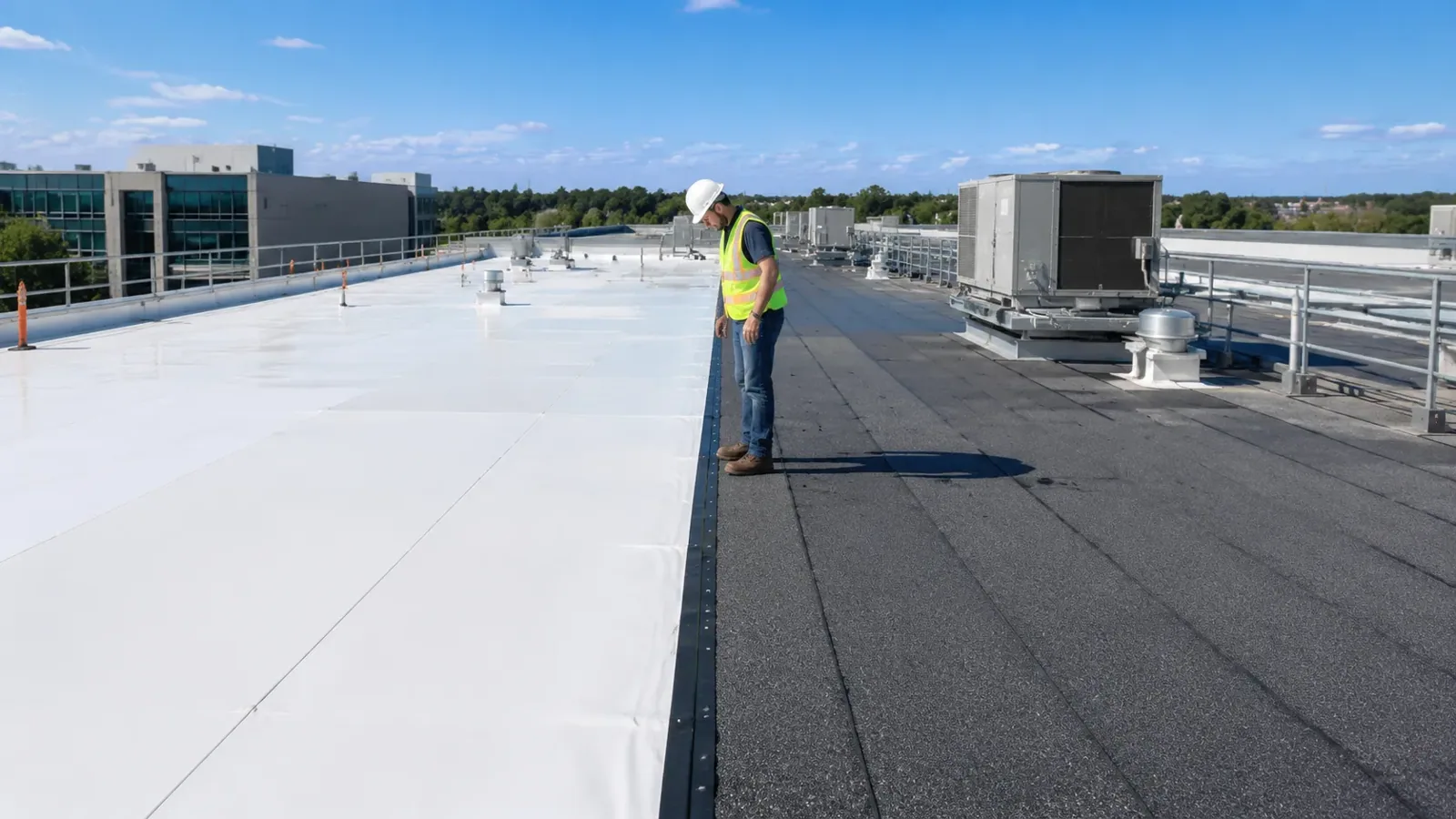
One clean rule: a roof that is dry beneath can be repaired or coated, and a roof that is wet beneath needs the wet material out. A coating can seal a tired roof and add reflectivity, but it needs a clean surface, and a grease-soaked area must be cleaned or replaced first. A coating over oil will not hold.
Cost depends on the roof area, the number of penetrations, the grease treatment, tear-off if any, and the work window. Small roofs have a higher cost per square foot than large ones, because the same crew time covers less area. The written scope should list each fan, curb and drain by position, so the owner can compare options without guessing.
Roof Work Around Service Hours
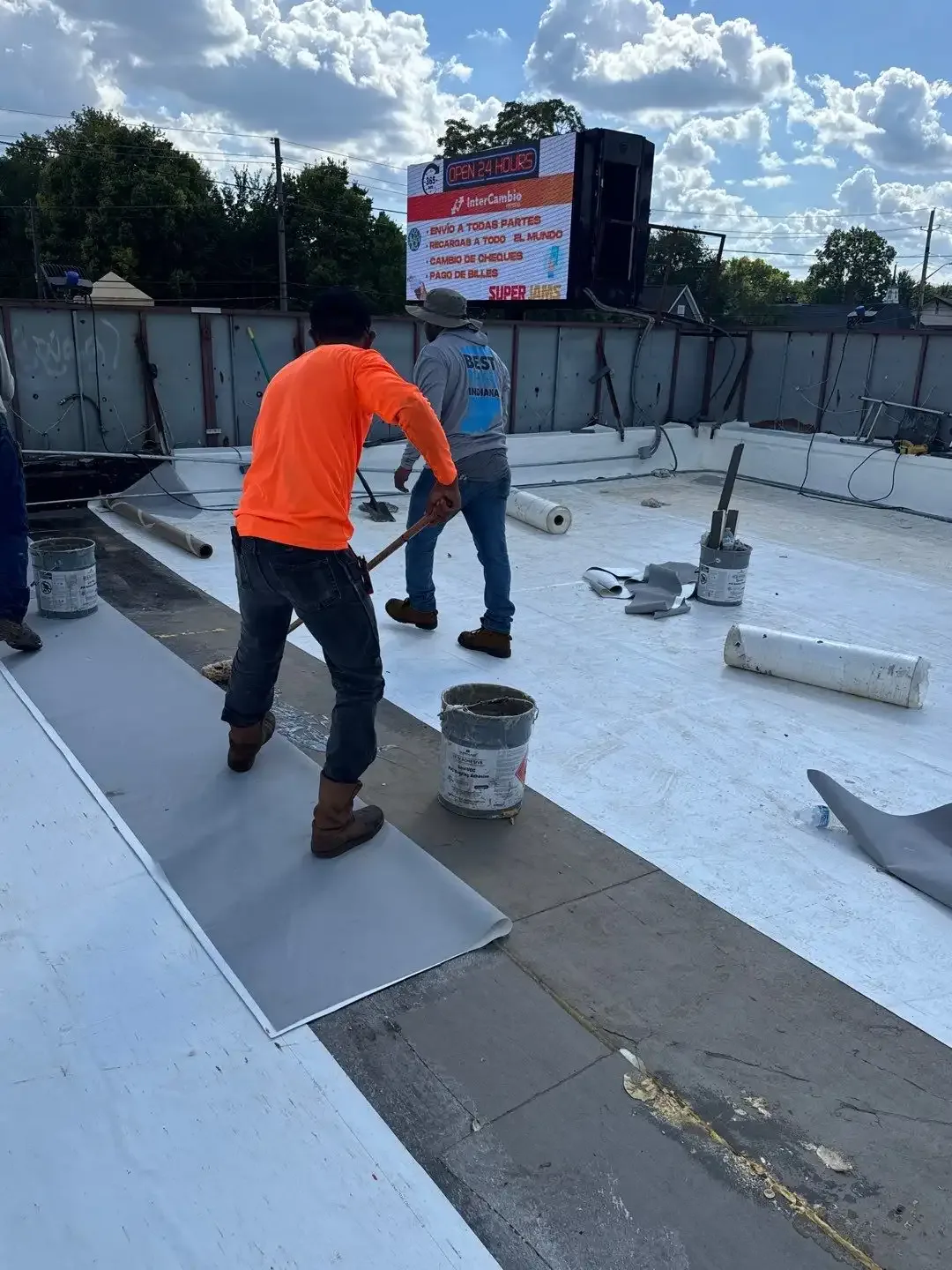
Restaurants have two tight windows: lunch and dinner. Roof work is scheduled in the quiet middle or on a closed day, with deliveries and the exhaust shutdown agreed in advance. Hot work such as torch-applied roofing is a poor fit above a kitchen, so cold-applied and welded systems are the usual choice. We keep the kitchen exhaust running whenever it is safe, and we cover the area under any open cut.
A restaurant in a larger development, such as a pad beside a shopping center, may share a roof or a wall with neighbors, which adds coordination. A hotel with a kitchen adds guests above and below. In every case, the schedule is written and shared with the manager before the first day.
Odor and noise get attention too. Hot asphalt and strong adhesives smell, and the smell drifts into an air intake, so we keep intake units in mind when choosing materials and where to stage them. Picking the quiet day well keeps those smells and sounds away from guests.
Commercial Roofing Questions
Why did my restaurant roof fail near the exhaust fan?
Grease settles around the fan and attacks the membrane, especially if the containment tray overflows. The soft, shiny patch near the fan is the tell. We check the tray and the surface, then pick a sheet that tolerates oil.
Is torch-applied roofing allowed above a kitchen?
We avoid open flame above a working kitchen. Welded and cold-applied systems give the same protection without the fire risk, and grease buildup near the flame is a reason to keep it off the roof.
Can the restaurant stay open during roof work?
Often it can, if the work is planned around the kitchen and the dining room. Closed days make the largest cuts easier, and quiet mid-afternoon windows work for smaller repairs.
How do we stop grease from returning after a repair?
Service the containment tray on a set schedule, keep the filter clean and add a walk pad near the fan. A short note on the tray's emptying dates helps us see whether the problem is the roof or the routine.
What does a first visit need from the owner?
The roof age if known, where the exhaust fans sit, how often the tray is cleaned and any ceiling stains by date. That gives the walk a specific question to answer.