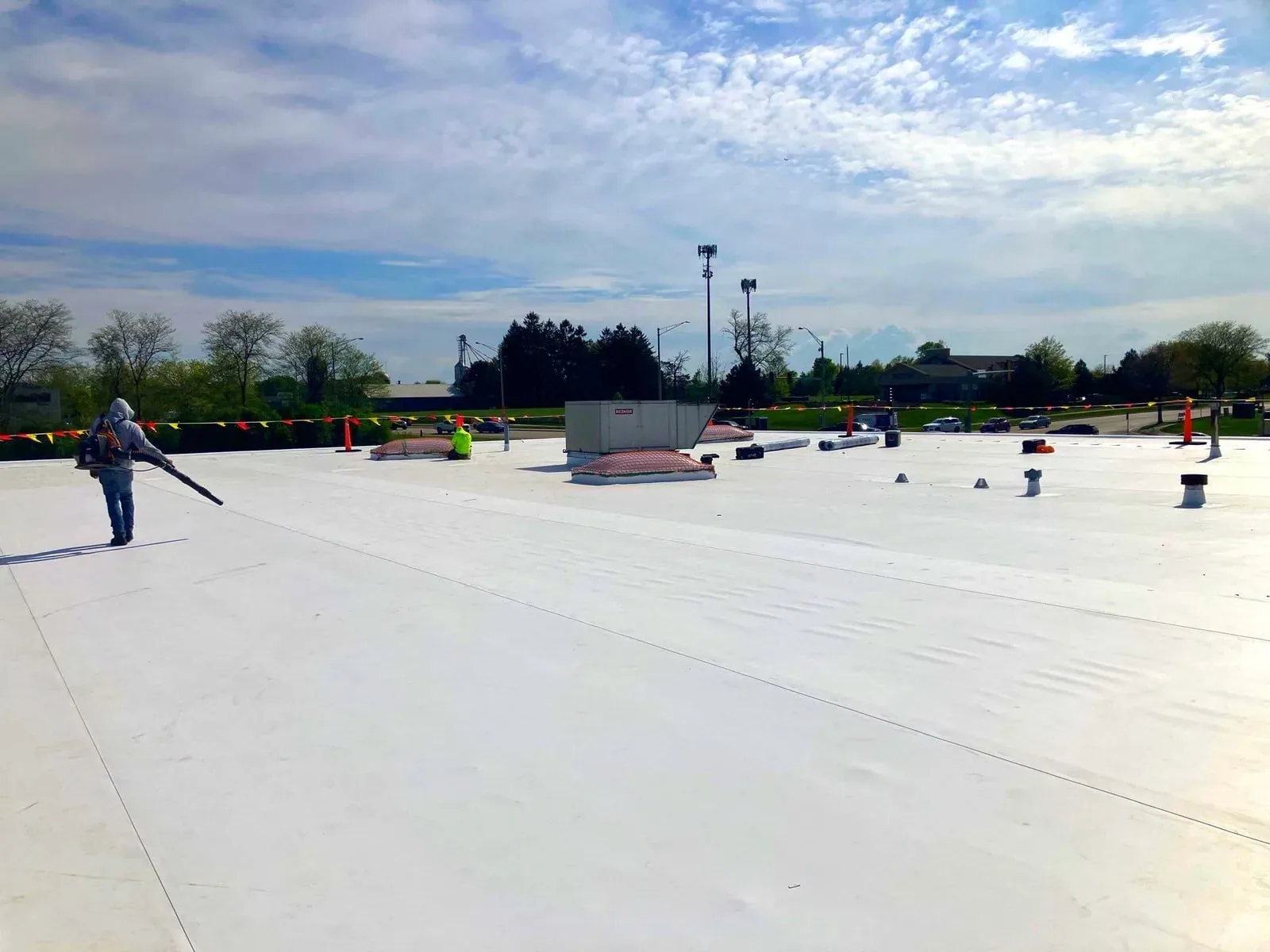
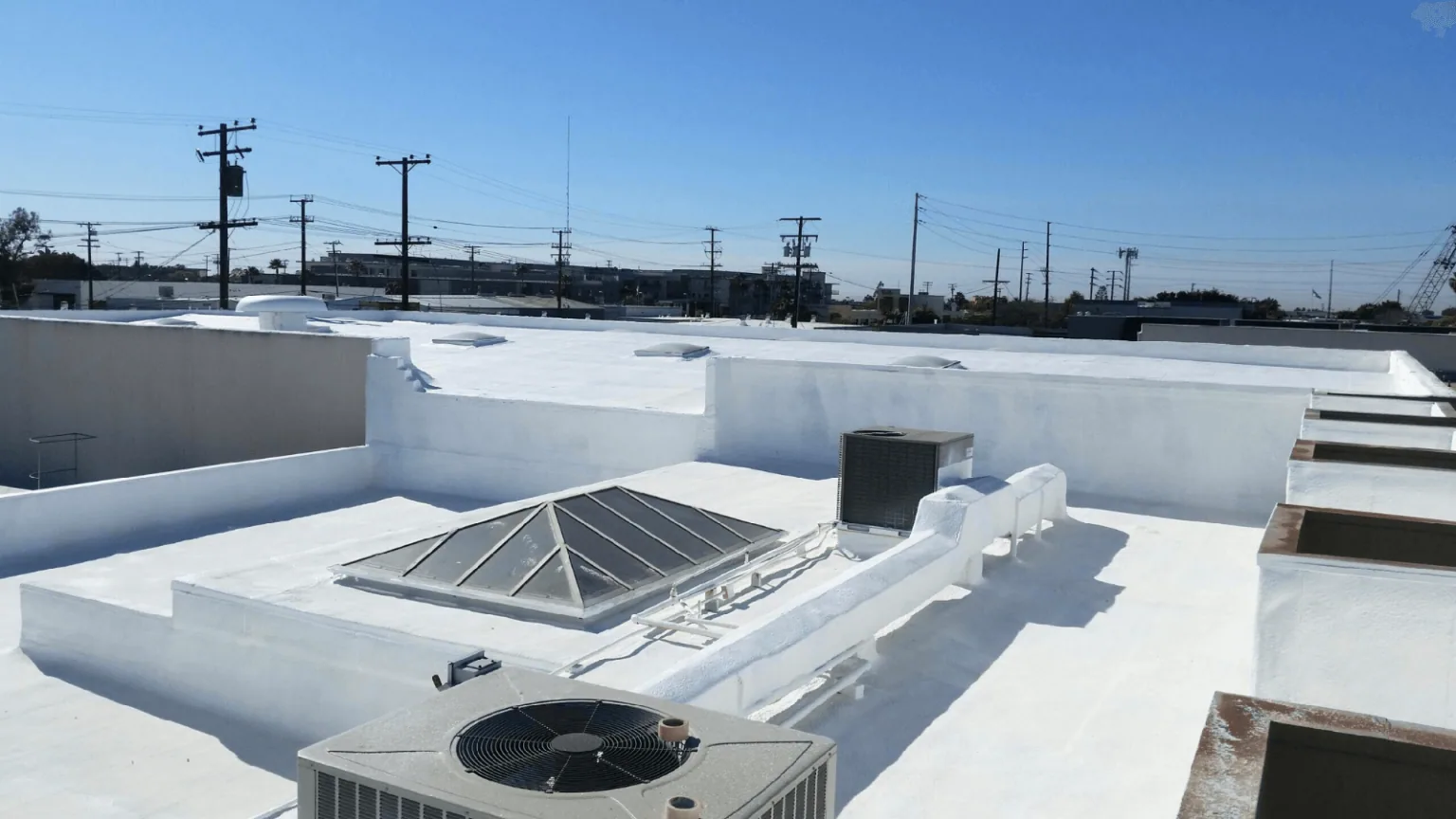
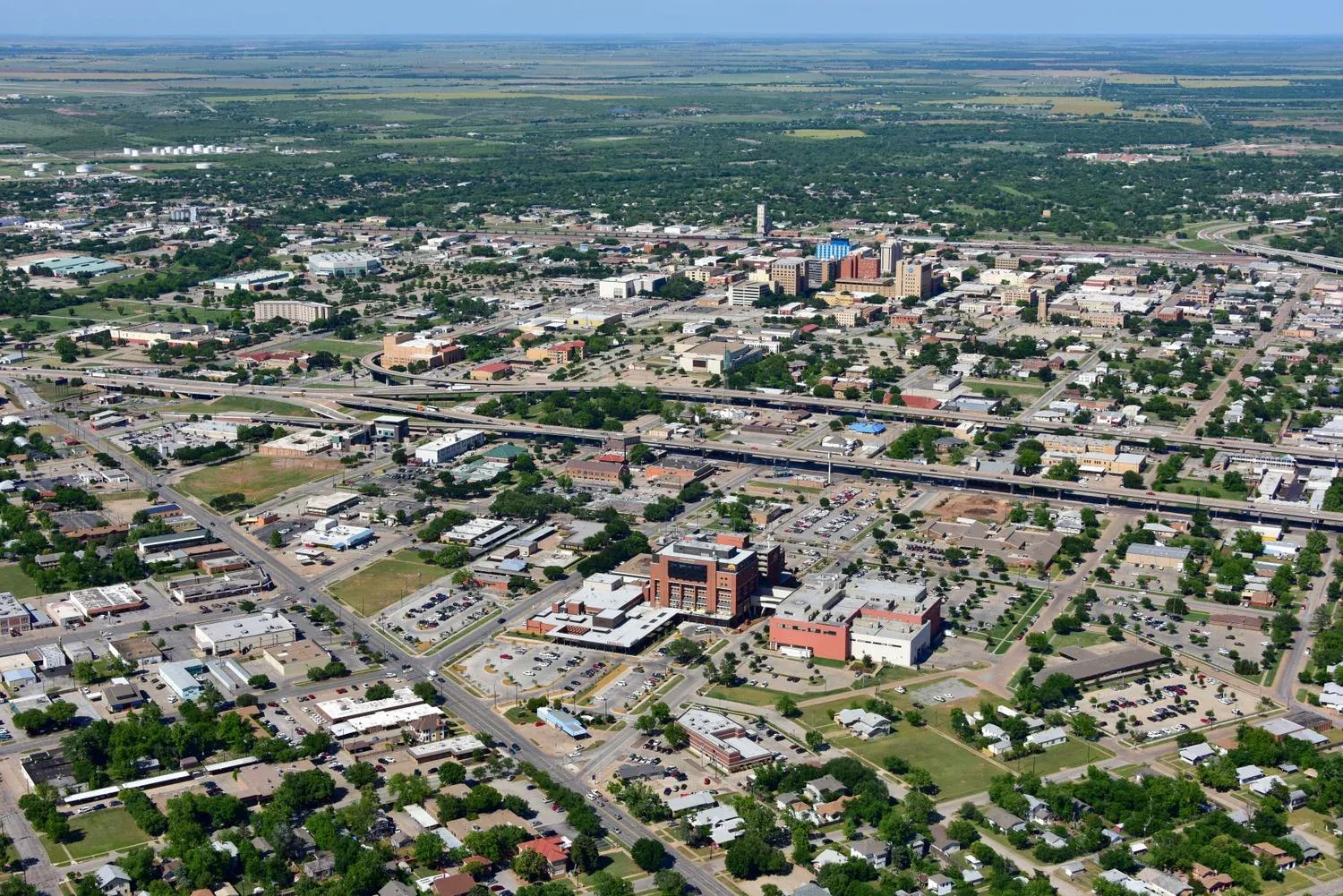
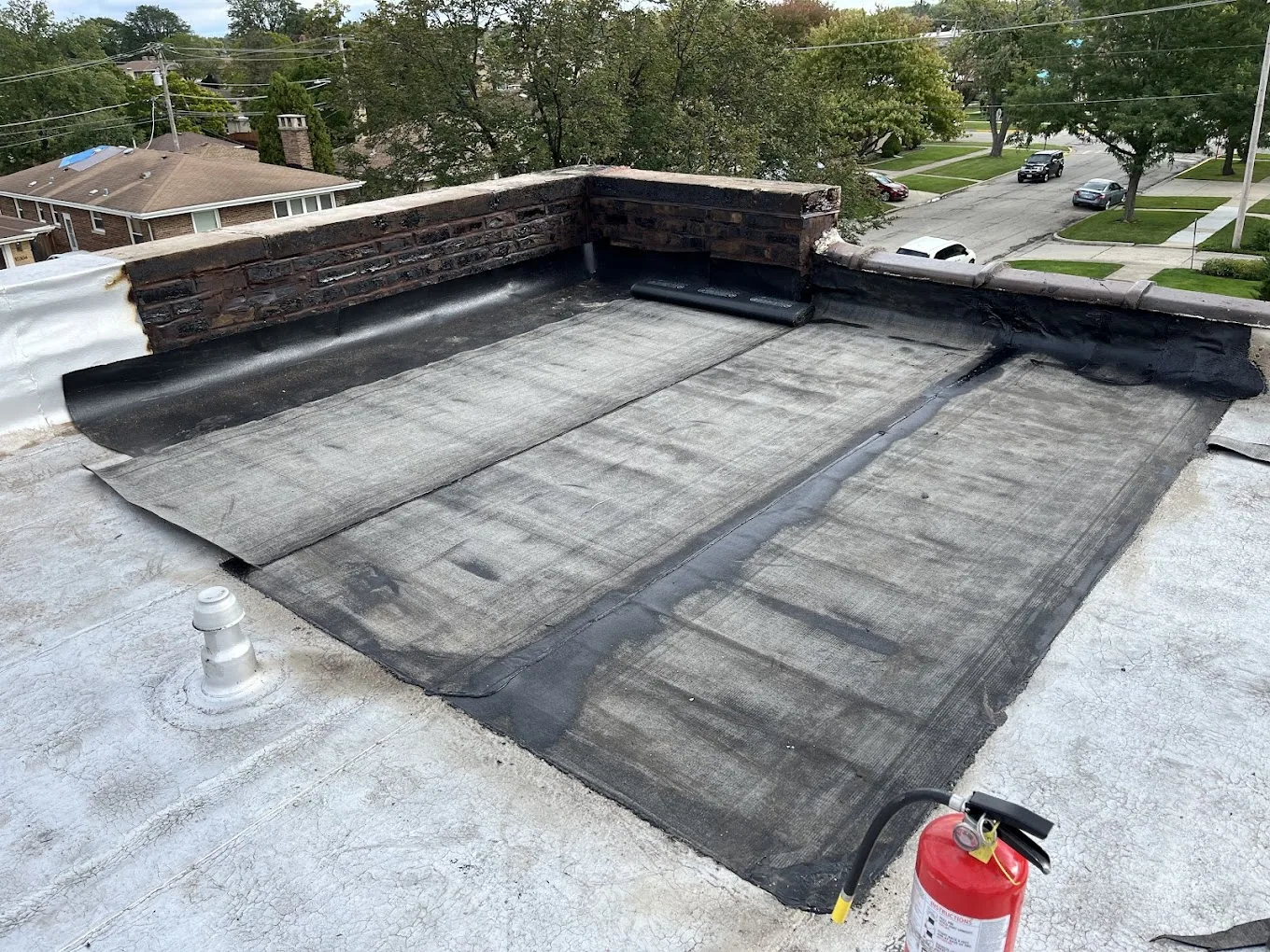
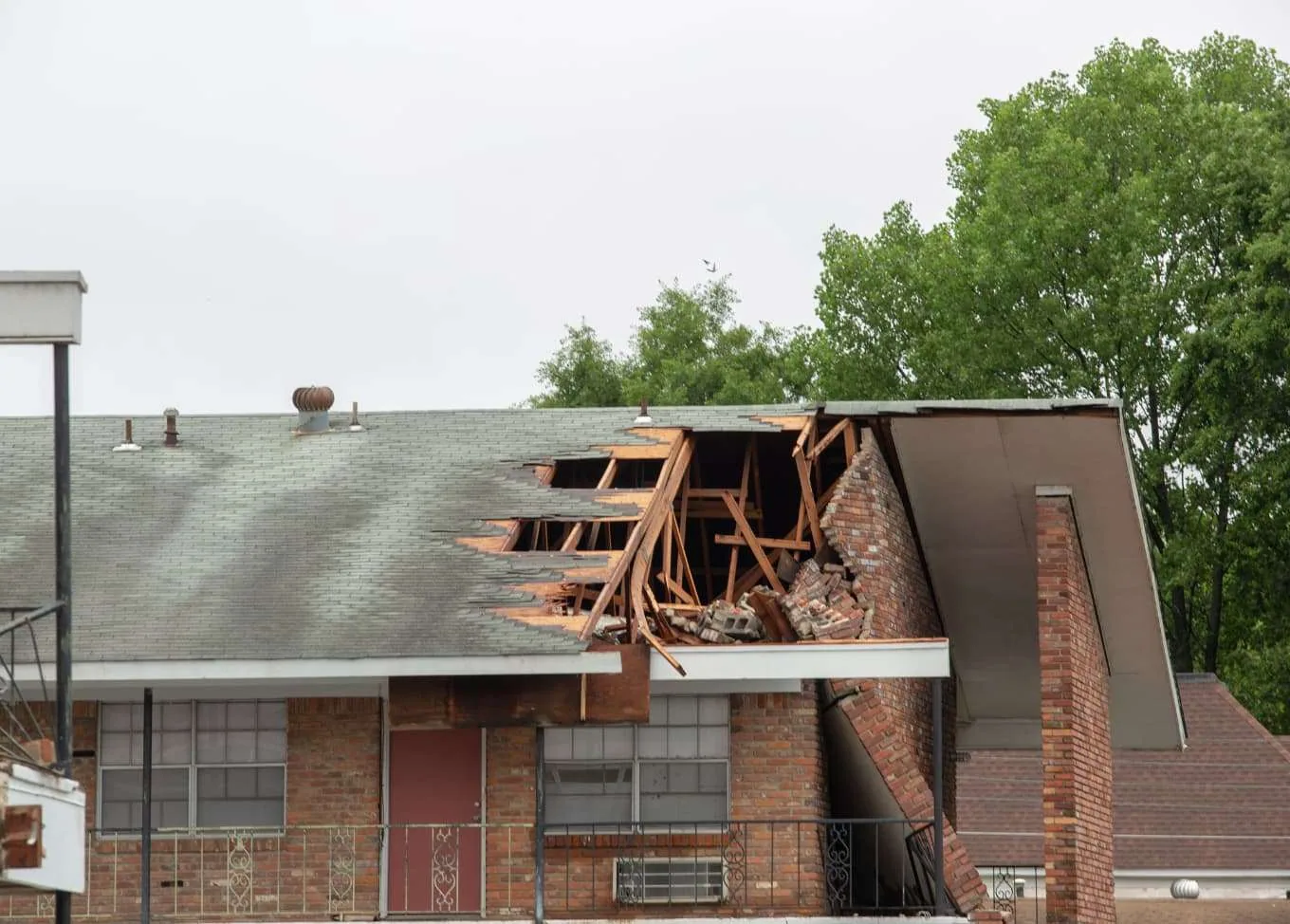
A manufacturing roof along Kell Boulevard has to shed water while service crews, equipment and production keep moving below. Johns Manville makes commercial roofing membranes and built-up assemblies, including TPO, EPDM and modified bitumen options. Commercial Roofing Wichita Falls handles commercial roofs in Wichita Falls, TX from installation through repair. The existing layers and building use come first, and then assemblies are compared against the deck, drainage and access conditions.
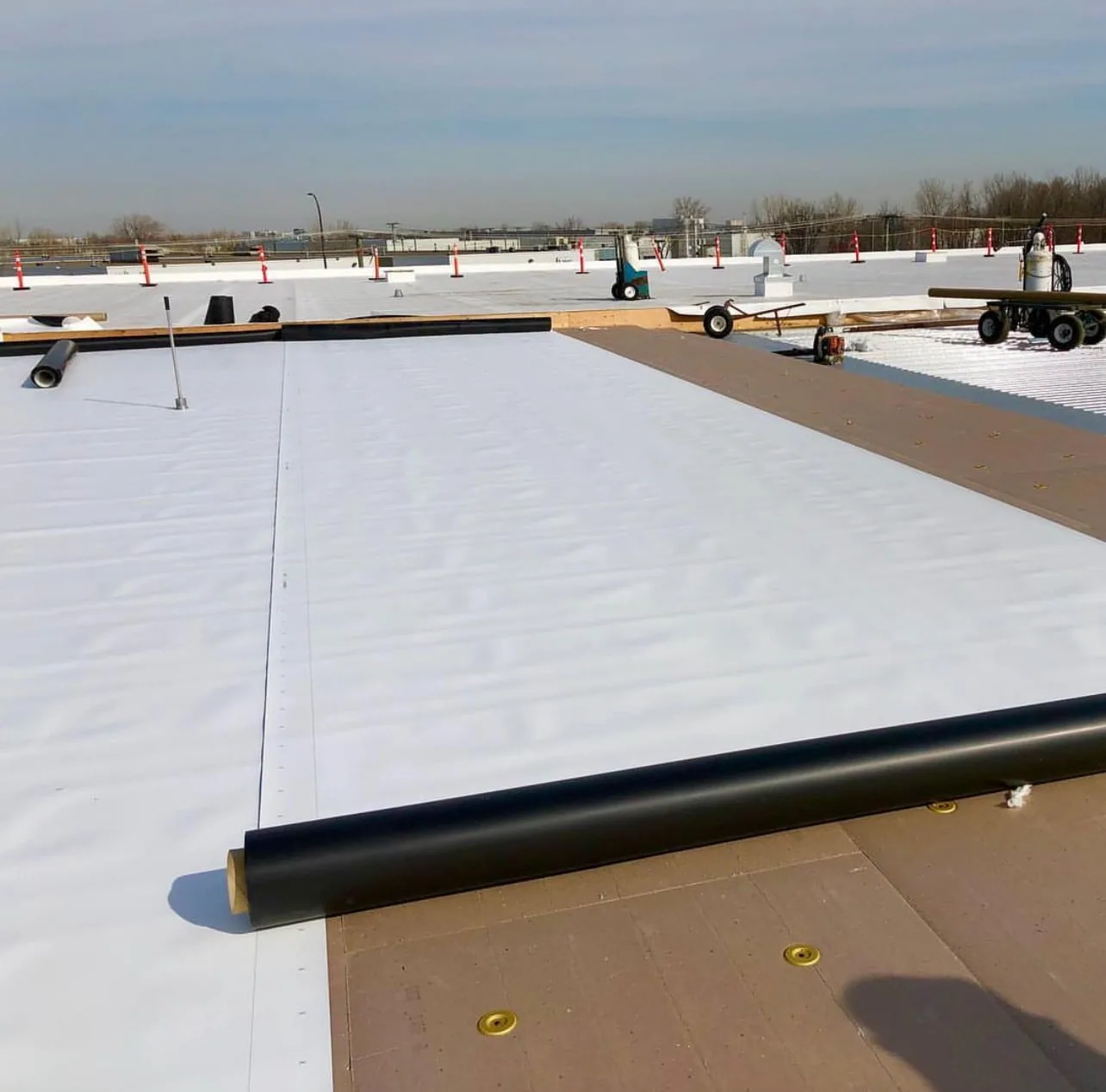
Product selection comes after inspection. We check seams, penetrations, wet insulation and edge conditions before defining whether a repair, recover or replacement is appropriate. That keeps a Johns Manville roofing scope tied to the roof rather than a catalog description.
Read the Roof Build-Up
Johns Manville offers several commercial system families. TPO is a thermoplastic sheet with heat-welded laps. EPDM is a rubber membrane with adhered or mechanically attached options and taped or adhered seams. Modified bitumen uses reinforced asphalt sheets installed in layers. Those assemblies differ in seam method, repair material, field layout and detail work. We identify the system already present before specifying a patch or new layer.
At a low-slope building, drainage and deck condition guide the next step. A ponding line near a drain may point to a low sump or settled insulation. A soft area underfoot may mean water has reached the board or deck. We map those conditions and, when needed, use infrared readings or core samples. The TPO membrane or Versico product family is considered alongside what must happen underneath it.
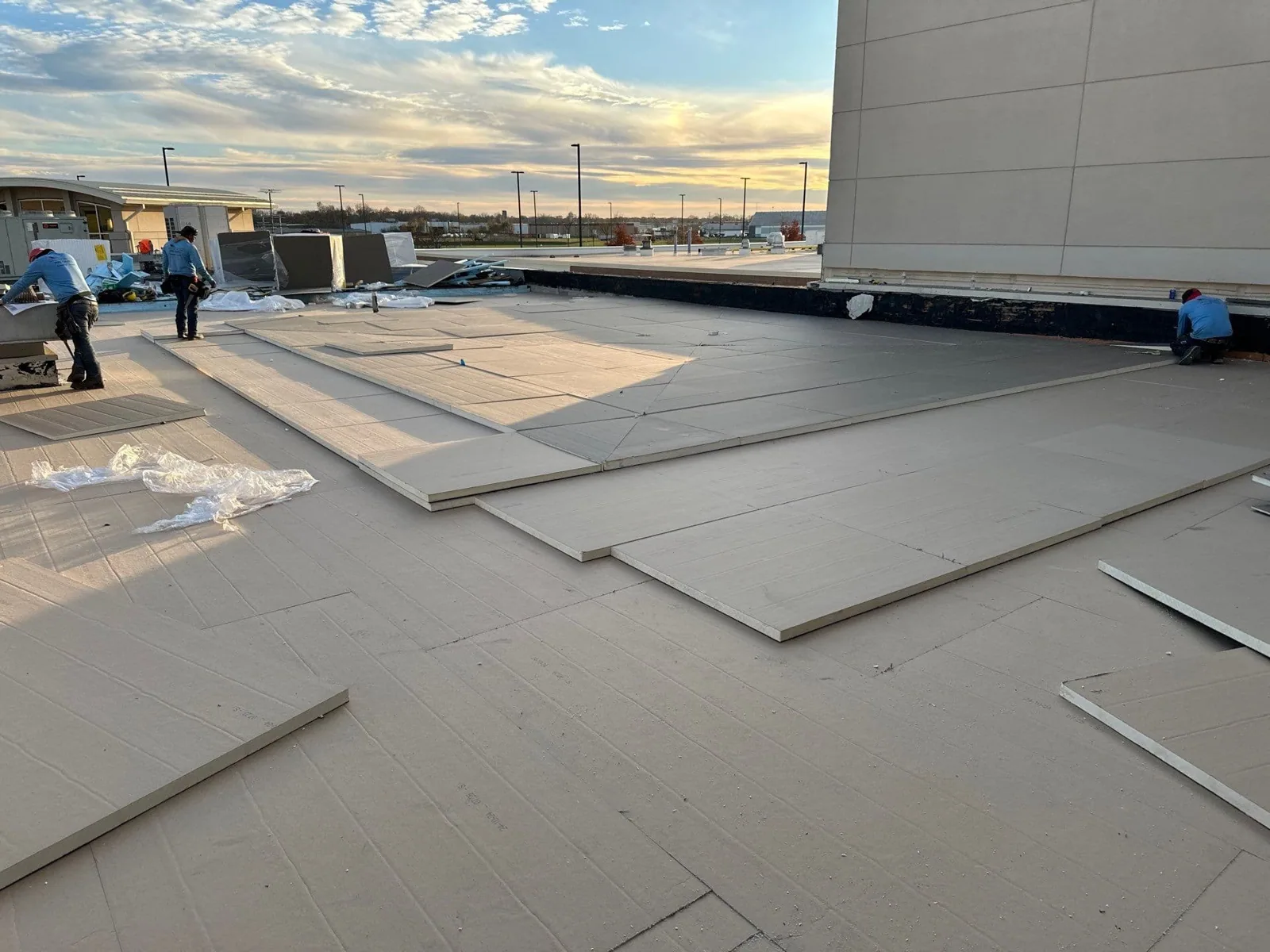
New insulation, cover board and attachment details must suit the selected system and substrate. If the roof is stable and dry, a recover may be an option where requirements allow. If moisture is broad or the deck is deteriorated, removal sets a more dependable base. We include those findings in a replacement scope so the owner can see the complete assembly.
Make the Seam Method Fit
Thermoplastic seams are welded with heat and pressure. The crew tests settings on sample material, tunes the welder as the day warms, and probes the cooled lap to check the bond. Wind, dust and a hot sheet can change how the welder behaves. A seam that looks closed from standing height still needs a physical check, especially at corners, end laps and transitions.
EPDM seams need clean, dry surfaces and compatible primer or adhesive. The mating surfaces are aligned before the joint is pressed, since a fold or trapped grit can leave a channel under the sheet. Modified bitumen work depends on the application method and the existing assembly. We follow the system instructions and protect adjacent surfaces while heating or adhering each layer.
Heat matters here. Wichita Falls commonly reaches 100 degrees on about 28 days in a year. The 2011 summer reached 100 degrees or more on 100 days. That climate record is not a report on any one roof, but it makes timing and material handling part of the plan. We watch surface temperature, keep rolls protected, and make sure every exposed section is closed before the crew leaves.
Details Carry the Water
Most roof leaks start at a change in plane or a penetration, not in an uninterrupted membrane field. We inspect parapet terminations, pipe boots, curbs, equipment supports and drain bowls. A flashing that ends too low can let water pass behind it. A curb that moves can pull at the membrane. We check those details before recommending a broad repair.
On a mixed system, transitions deserve their own plan. A membrane may meet metal, masonry, an older roof or a new addition. We identify which material is sound, prepare the transition and use compatible flashing. At the Wichita Falls Business Park, distribution and manufacturing buildings can have roof equipment added as operations change. We photograph each curb and conduit before detailing the repair, so the scope accounts for the actual obstacles.
When an active leak needs fast attention, we protect the interior and make a temporary stop where conditions permit. Then we trace the route and repair the source. A commercial roof repair can address an isolated detail, while a drain and scupper check can correct blocked outlets or failed bowls.
Storm Records Guide the Walk
Local weather history gives us inspection questions, not a shortcut to a diagnosis. The April 1979 tornado crossed the southern and eastern parts of Wichita Falls, and severe wind can stress corners, edges and rooftop equipment. A present-day storm visit looks for lifted metal, displaced flashing, punctures and open seams. We photograph the damage and mark each item on the roof plan instead of assuming a historic path affected a given property.
Hail calls for a different test. Baseball-size stones fell on Iowa Park and Burkburnett on April 2, 1991. A bruise beneath a membrane may not be visible from the ground, so we inspect the field and test areas suggested by the storm pattern. The hail damage assessment separates functional damage from ordinary wear and notes any wet insulation that changes the repair boundary.
At occupied buildings near the Wichita Falls Business Park, work can be staged around loading doors and production hours. A crew can keep an area dry at the end of a shift, but only if the lift plan, material storage and weather watch are set before tear-off.
Compare Scope and Timing
Repair, recover and replacement each fit a different condition. A tight repair limit works when the defect is local and the surrounding membrane remains sound. Recover may fit a stable roof with dry layers and suitable drainage. Widespread moisture, poor attachment or a failing deck can make tear-off the better choice. We explain what the inspection found and show where each option begins and ends.
Price follows that boundary. Tear-off volume, deck repairs, insulation and cover board, perimeter metal, flashing, drain work and equipment moves all affect labor and materials. A written scope lists those items separately. It also explains how much roof will be open at once and what temporary protection is planned if weather interrupts the work.
Timing follows access and the building schedule. We sequence work around shipping, entrances and production, with notice for noisy work or lifts. Around-the-clock emergency response is available for a leak that cannot wait. A roof condition report keeps findings and remaining risks in a dated record.
Protect the Work After Closeout
Closeout should make the next decision easier. We photograph the deck and insulation, note membrane and flashing details, and locate repairs on a roof plan. Remaining maintenance items are recorded. That record helps a facility manager compare the finished assembly with later inspections and see whether a new leak is near an earlier repair.
Routine upkeep is modest but useful. Keep drains open, remove debris with tools that will not cut the membrane, and check that service crews use walk paths. New rooftop equipment needs a properly flashed curb, not a bead of sealant around its base. A scheduled maintenance visit can check seams, edges and penetrations before the next storm season.
Give us the roof age and the building use, with any leak dates, and we will inspect the assembly and explain the next layer up, from repair to replacement.
Commercial Roofing Questions
Can a Johns Manville roof be recovered instead of removed?
We check whether the existing layers are dry, stable and compatible with the proposed assembly. If the deck or insulation has widespread damage, the scope defines removal rather than covering the problem.
What makes a TPO seam fail?
Heat setting, speed, contamination and surface conditions all affect a weld. We test sample seams during installation and probe the cooled joint, then document any area that needs a second pass.
Can EPDM and TPO be repaired with the same materials?
No. Seam methods and repair materials differ, so we identify the installed membrane and use compatible patch and flashing products.
Will hail damage show right away?
Some damage is visible, while a bruise or wet insulation can require closer testing. We photograph the roof, probe suspect areas and map any moisture before setting repair limits.
What roof information should I gather?
Send roof plans, approximate age, leak locations and any repair records. Note the building schedule and access limits so the first walk can focus on the areas that matter.