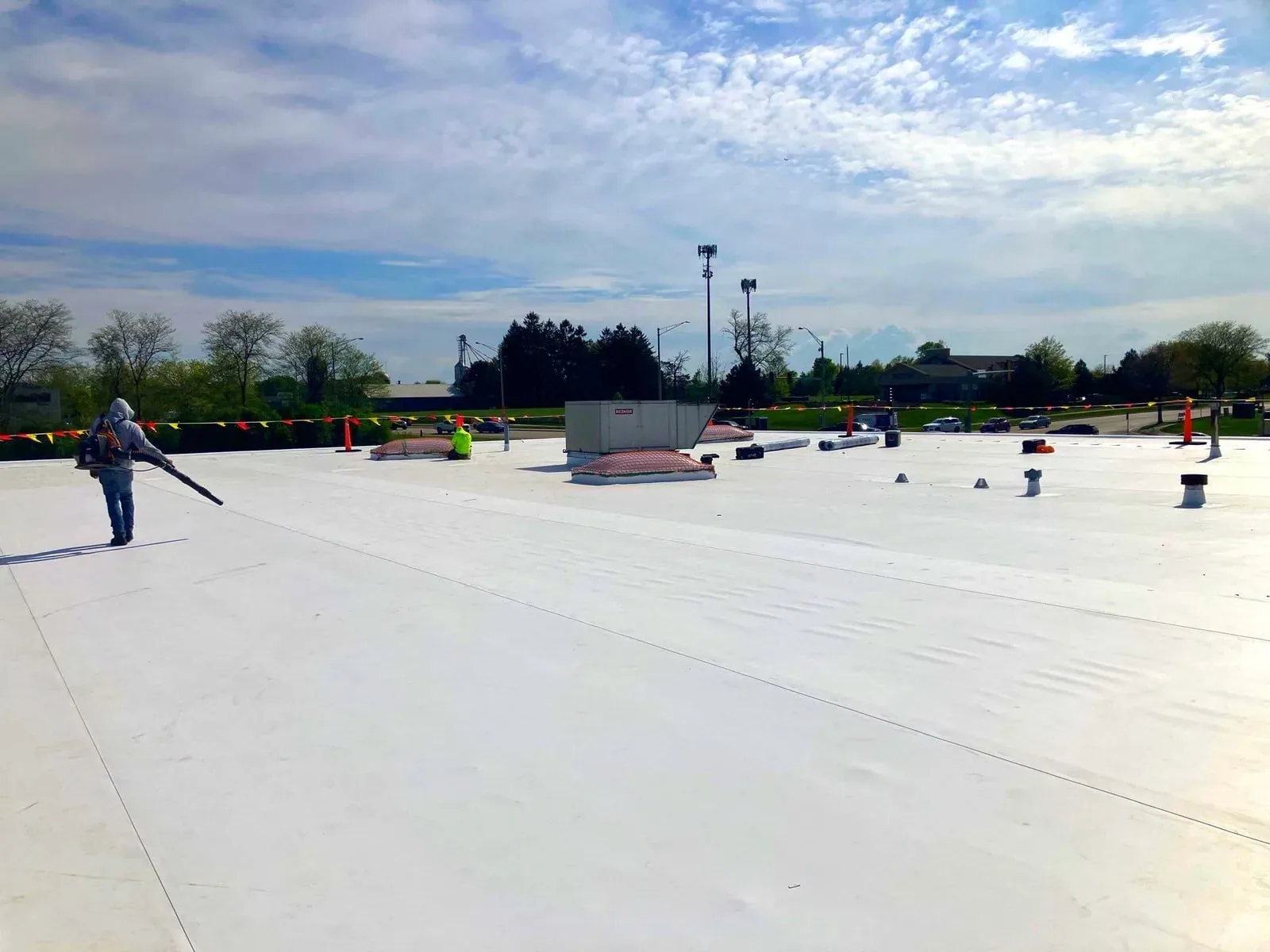
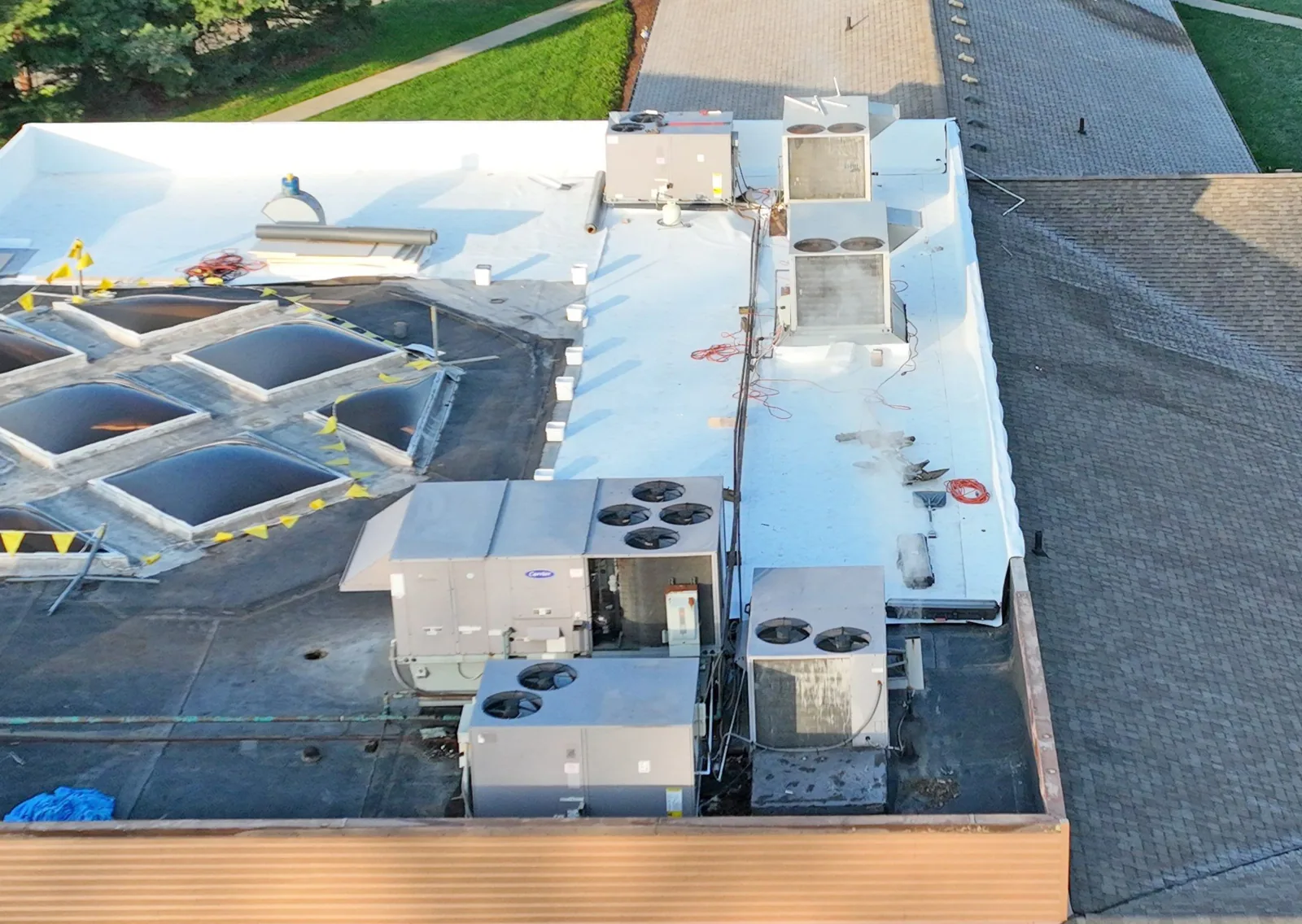
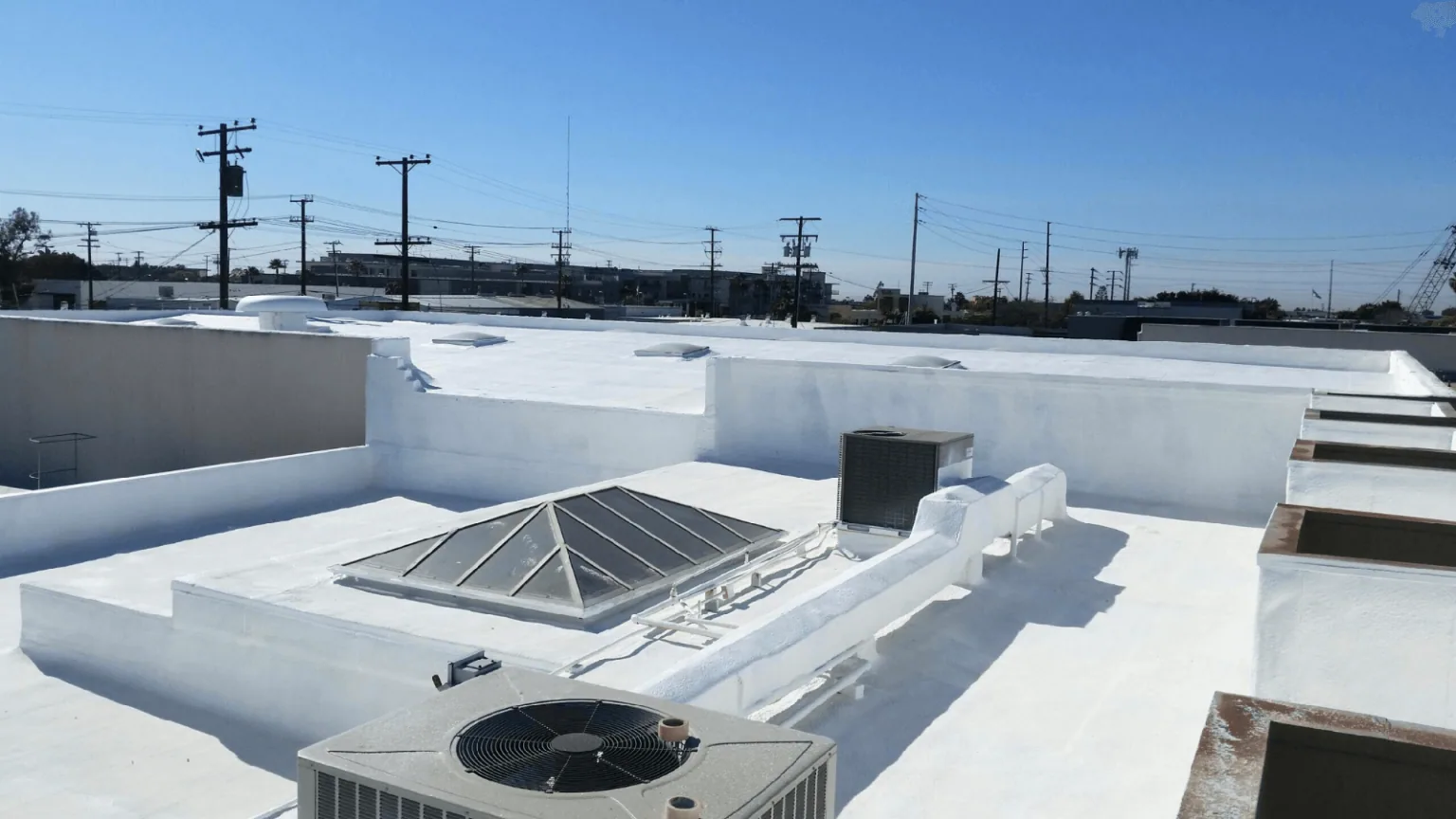
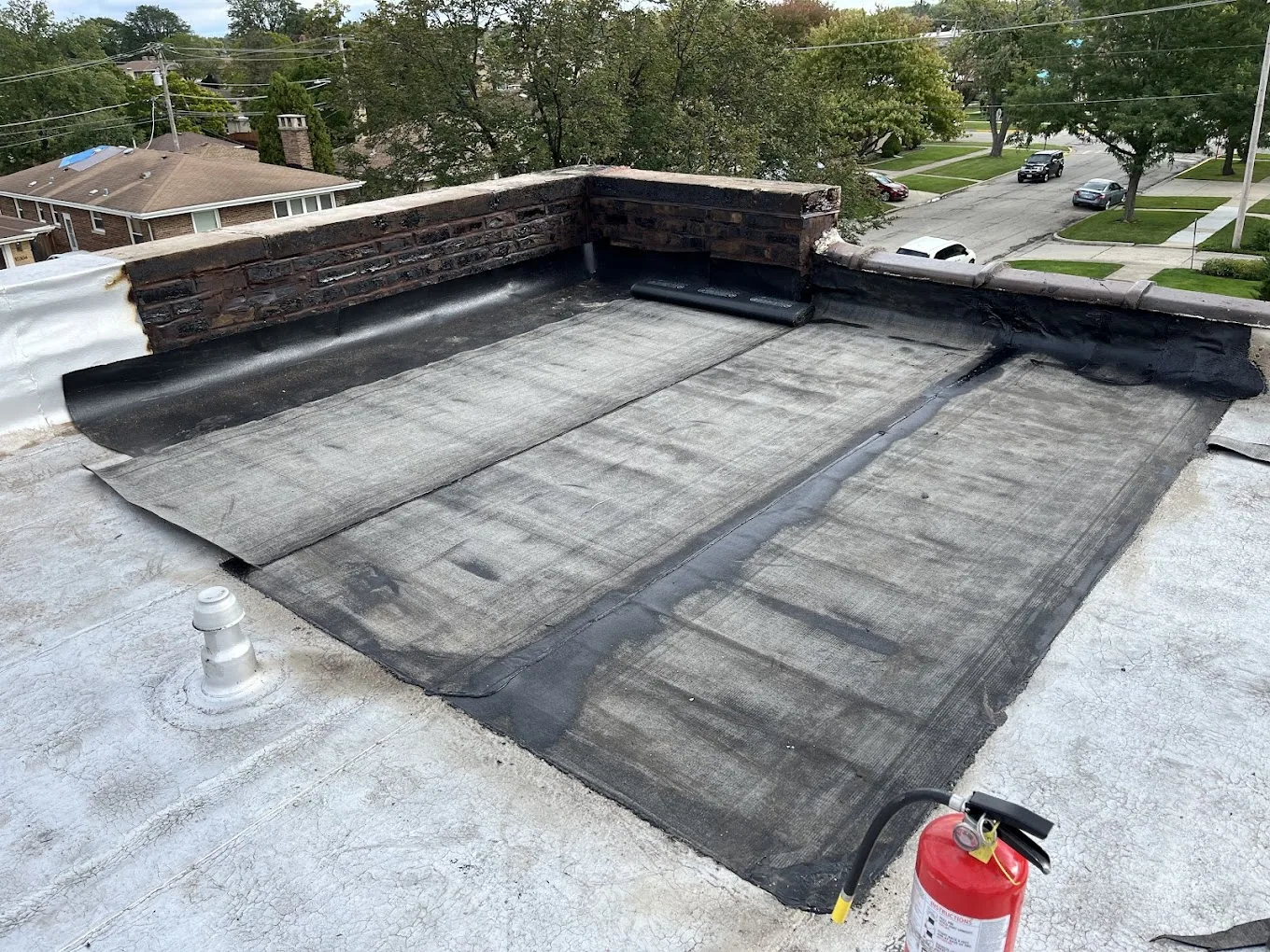
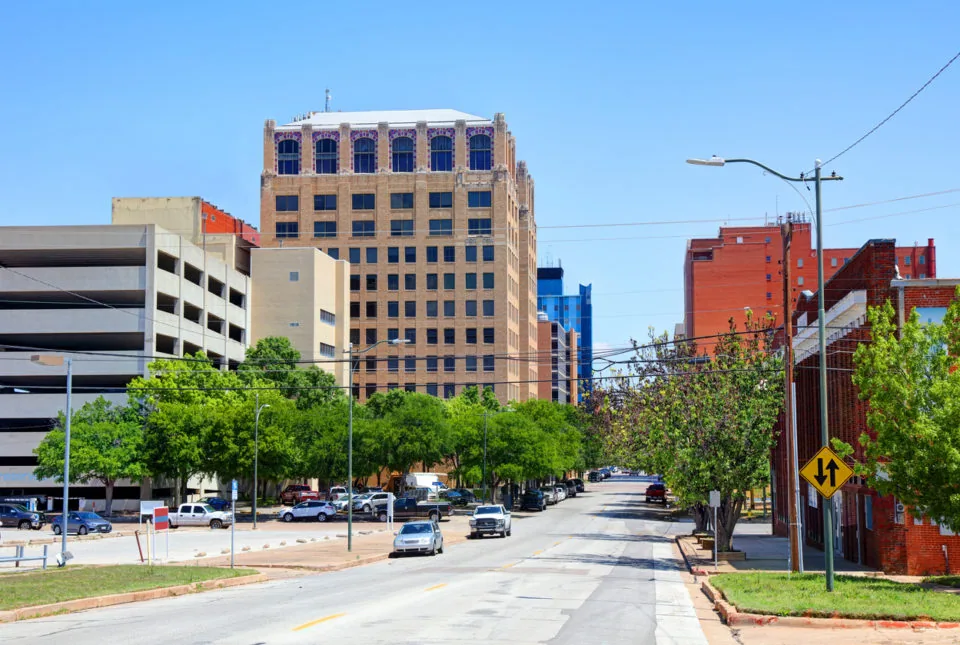
A roof at the Wichita Falls Business Park may have long membrane runs, rooftop units and loading areas that set its repair needs. Carlisle SynTec Systems makes TPO, PVC and EPDM assemblies, and those materials call for different seam work and detail checks. Commercial Roofing Wichita Falls installs and services commercial roofs in Wichita Falls, TX. We begin with the building and existing layers, then determine which product family fits the deck, drainage and use.
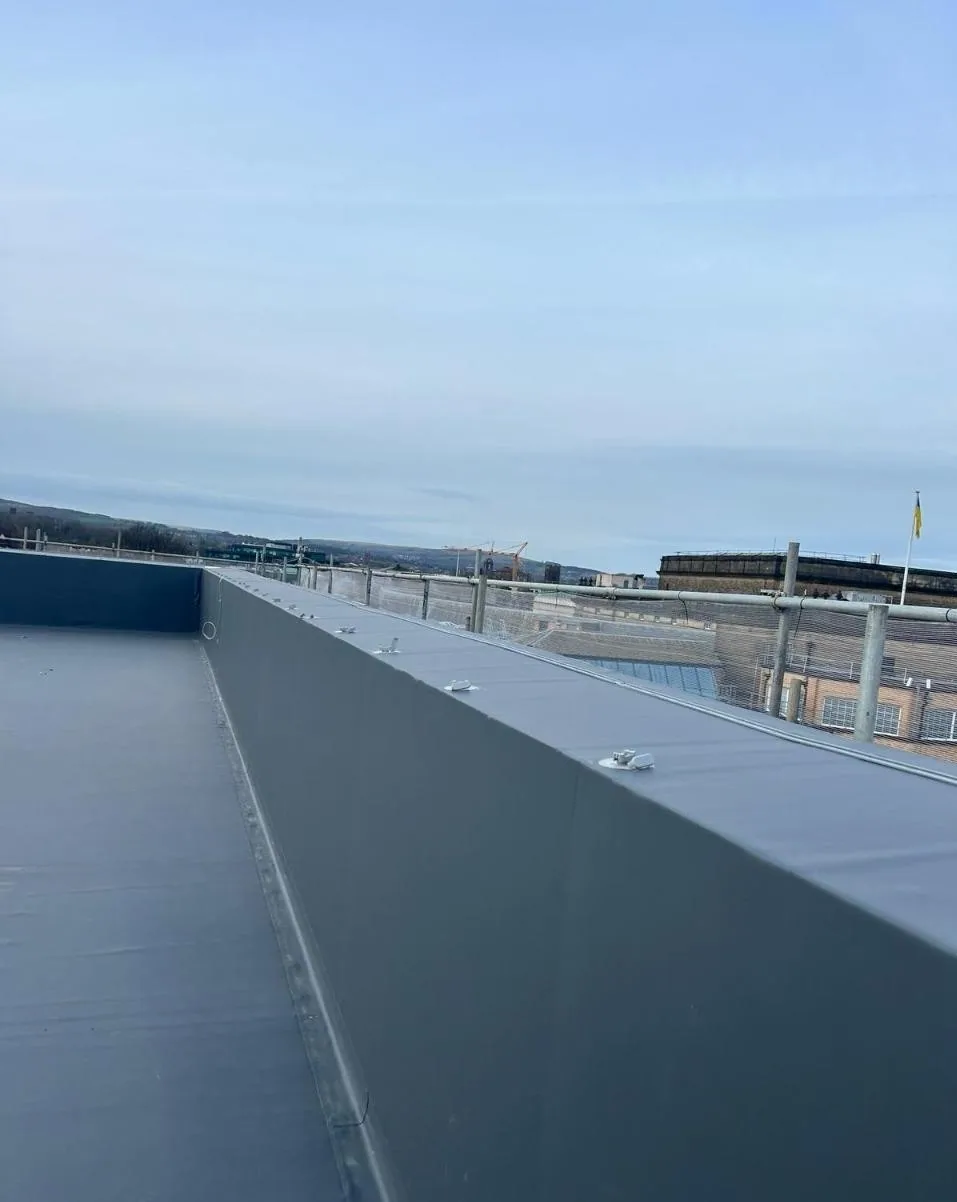
The roof decides. We inspect the surface, test suspect areas and record what is beneath the membrane before discussing an assembly. That puts a Carlisle SynTec system review on practical ground: what can stay, what must come out, and how new work will meet existing walls and equipment.
Three Membranes, Different Work
Carlisle’s Sure-Weld TPO is a thermoplastic sheet with heat-welded seams. Sure-Flex PVC is also welded, while Sure-Seal EPDM is a rubber membrane joined with adhesive or tape. The visible sheets may look alike from the ground, but seam preparation, repair materials and flashing details differ. We identify the existing system before bringing materials to the roof. A repair made with an incompatible product can weaken a seam instead of closing it.
For a TPO proposal, we check the substrate and sheet layout, then plan welds around drains, curbs and roof edges. PVC may fit a different use or exposure profile, while EPDM requires clean, properly prepared adhesive joints. The TPO assembly and the Johns Manville offering each need a matching scope. We explain why a material suits the building rather than ranking membranes by name.
A warehouse at the Business Park, where distributors and manufacturers are targeted, may have different access demands than an occupied shop. We stage rolls, insulation and equipment around loading schedules and keep a dry-in plan ready for each work area.
The Existing Layers Set the Limit
Step one is to find the roof’s actual build-up. We review available records, inspect edges and penetrations, and take focused cores where evidence is missing. A dry surface can hide wet insulation. A membrane can be intact while the deck or attachment below it is failing. We mark moisture limits on a roof plan so replacement quantities reflect tested areas, not a broad assumption.
Insulation type and thickness, cover board, fastener pattern and deck condition all affect the new assembly. A recover may be possible only when the existing layers are stable, drainage is adequate and system requirements permit another layer. If water has spread or the deck has lost strength, removing unsound material is the safer starting point. We connect those findings to a replacement scope with defined tear-off and repair limits.
Owners comparing two product options should compare the whole roof, not just the membrane. We list insulation, cover board, edge metal, flashing, equipment work and disposal separately. That makes differences visible and helps the facility manager plan the work around other capital needs.
Seams and Flashings Tell the Story
On TPO and PVC, a welder must produce a consistent bond across the lap. Dust, water, speed and heat setting can leave a seam that looks closed but opens under a probe. The installer checks settings on sample material, adjusts as conditions change, then tests the cooled weld. Corners and end laps get extra attention because hand work and overlapping pieces make those spots harder to seal evenly.
EPDM repair uses a different sequence. The surface is cleaned and allowed to dry, then compatible primer and seam tape or flashing material are applied with the specified pressure. Dirt trapped beneath a patch can form a channel. We prepare the repair area carefully and check that the patch extends onto sound membrane.
Most leaks still gather around details: pipe boots, curbs, parapet walls, drains and transitions between materials. We inspect those points before cutting into a broad field area. A focused roof repair can address a loose boot or failed flashing when the surrounding assembly remains sound. If the leak path is unclear, a hands-on inspection documents the route and tests suspect layers.
Heat and Hail Shape the Inspection
A typical Wichita Falls year has roughly 28 days at 100 degrees, and 2011 brought 100 days at or above that temperature. That does not establish the condition of any particular Carlisle roof. It does make seasonal movement and work timing practical concerns. Sheets, metal edges and sealants expand and contract; crews must account for surface temperature while welding, adhering and closing each area at day’s end.
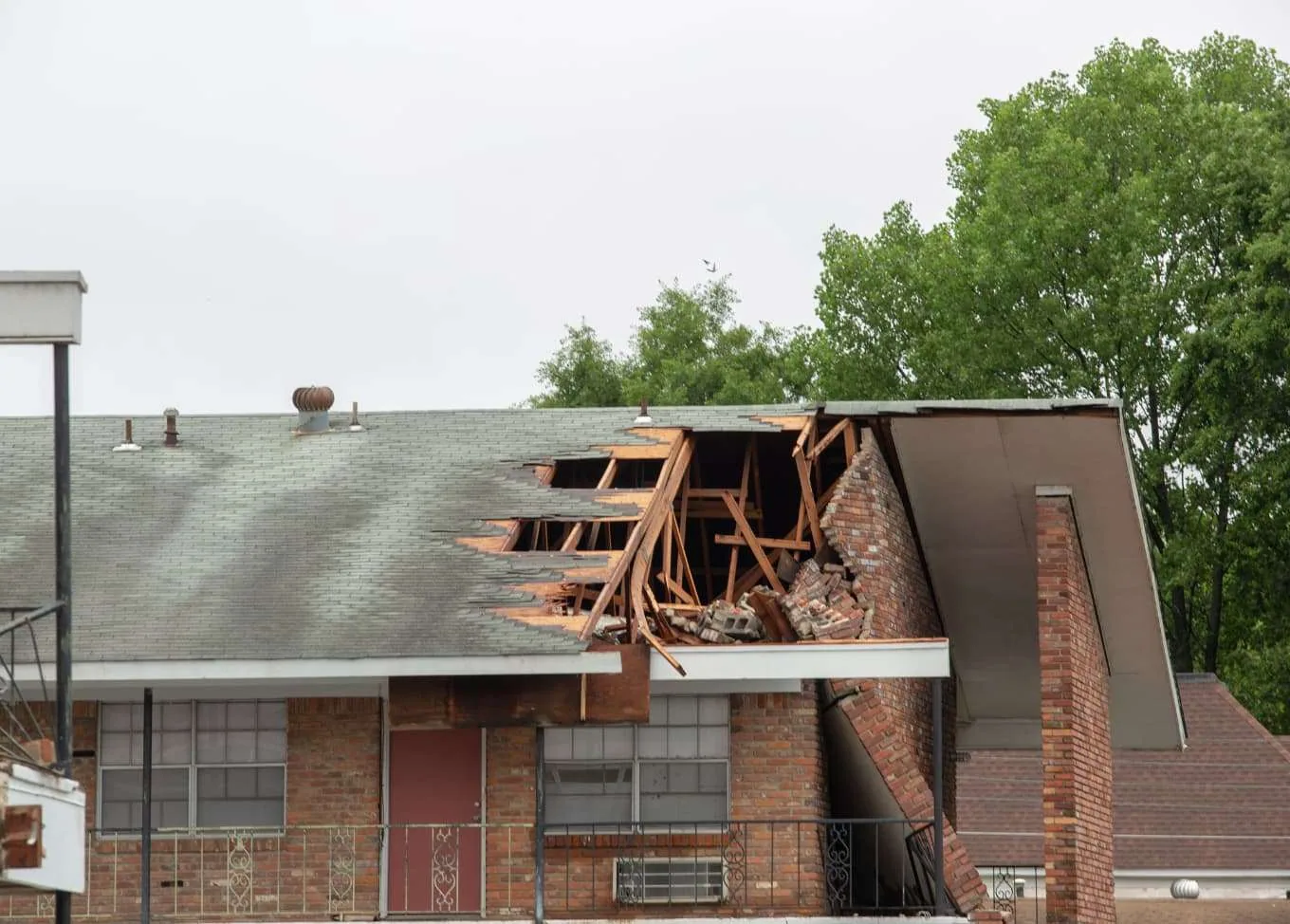
Hail needs a close look rather than a quick count of marks. Baseball-size hail struck Iowa Park and Burkburnett in 1991, and larger stones followed at Sheppard Air Force Base in 1993. Those events are local history, not evidence of current damage. After a present storm, we check for cuts, bruises, broken seams, damaged metal and wet insulation, then use photographs and test results to define any hail repair.
At a retail roof near Sikes Senter and the Midwestern Parkway corridor, customer access and loading routes can shape inspection hours. At the Business Park, warehouse operations may need material lifts scheduled outside a shipping window. We coordinate those details with the building contact before exposing a section of roof.
Select Repair or a New Assembly
We sort findings into repair, recover or replacement. Localized seam or flashing failure can be repaired when the adjacent membrane and insulation remain serviceable. A recover may fit a stable, dry roof if the deck, drainage and assembly requirements allow it. Broad moisture, failing attachment or deteriorated decking points toward tear-off. The recommendation follows the evidence on the roof.
Cost changes with tear-off volume, deck repairs, insulation thickness, cover board, perimeter details, penetrations, crane access and occupied-building staging. We write those items into the scope so you can see what each option includes. The timing plan shows how much roof stays open at once, when equipment must be moved and how the crew protects the building if weather interrupts a shift.
Emergency protection is separate from a permanent solution. Our crews respond around the clock when water is entering, secure the affected area where conditions allow, and return to finish the repair under suitable conditions. For owners weighing a recover or tear-off, a roof capital plan can put the immediate work beside the longer replacement need.
Keep Future Repairs Clear
A completed job should leave a useful record. We photograph the substrate, insulation, membrane seams, flashing and penetrations before covering them, then identify repair locations on the roof plan. The closeout notes the system materials used, any conditions that remained, and routine items to monitor. That record helps the next inspection distinguish a new opening from a repaired detail.
Keep drains clear, remove debris without scraping the membrane, and tell service crews where the designated walk paths are. New HVAC or conduit work should include proper curb or penetration flashing rather than sealant alone. A maintenance visit can check seams, edge metal and rooftop details before water reaches the interior.
Send us the roof age, building use and leak history. We will inspect the layers, explain what each condition means, and prepare a Carlisle SynTec scope that fits the building in Wichita Falls.
Commercial Roofing Questions
Can Carlisle TPO be installed over an older membrane?
We first check the existing layers, deck, moisture and drainage. If the assembly and system requirements permit a recover, we explain the preparation needed; otherwise we define the removal area.
How is an EPDM seam repaired?
The joint is cleaned and dried, then compatible primer and seam materials are applied with firm pressure. We extend the patch onto sound membrane and check the edge for full contact.
Does a hail mark always mean replacement?
No. We test the membrane and underlying insulation, photograph functional damage and map wet areas. A limited defect may call for repair, while widespread damage changes the scope.
What information helps you price the work?
Roof plans, approximate age, leak locations and past repair records help. We also need the building use, access limits and any planned equipment changes.
Can tenants remain in the building during reroofing?
Usually the work can be staged while operations continue. We plan lift locations, access routes and daily dry-in with the facility contact, then sequence areas to limit disruption.