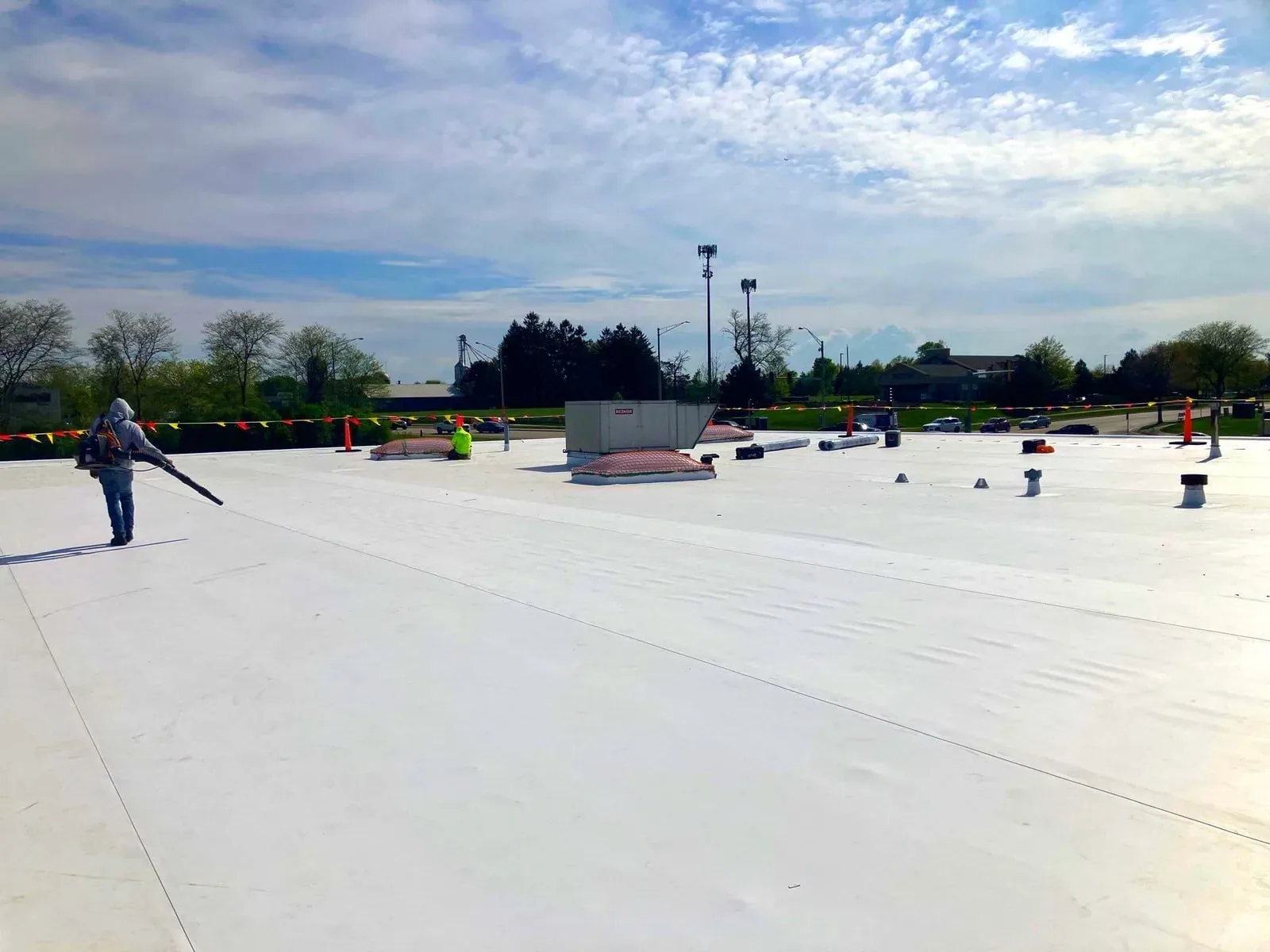
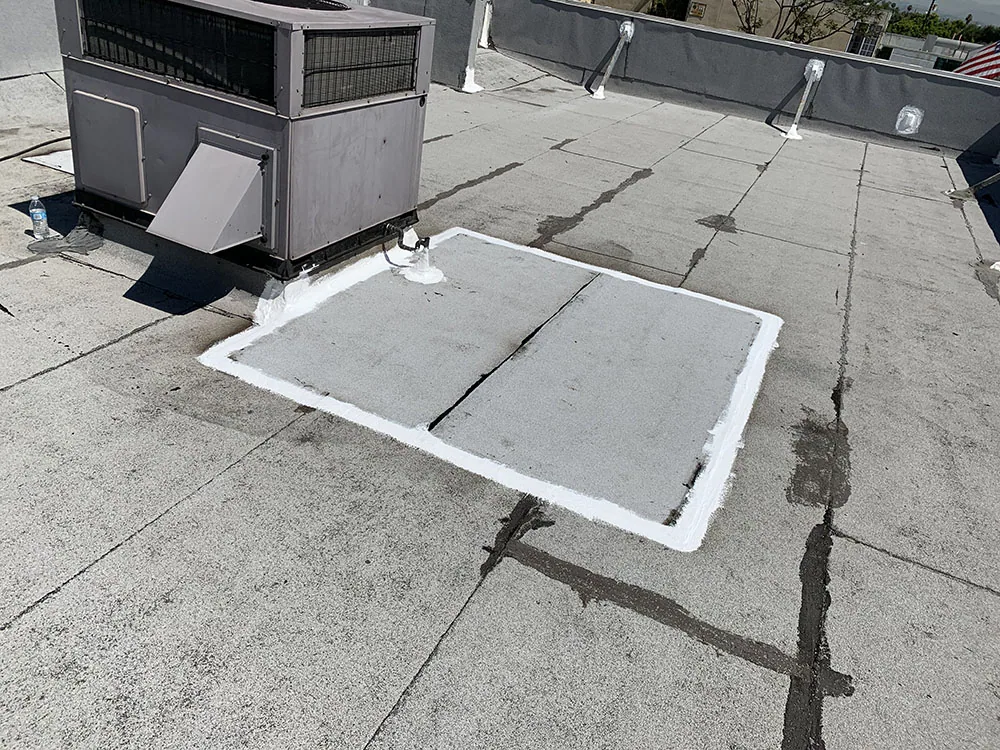
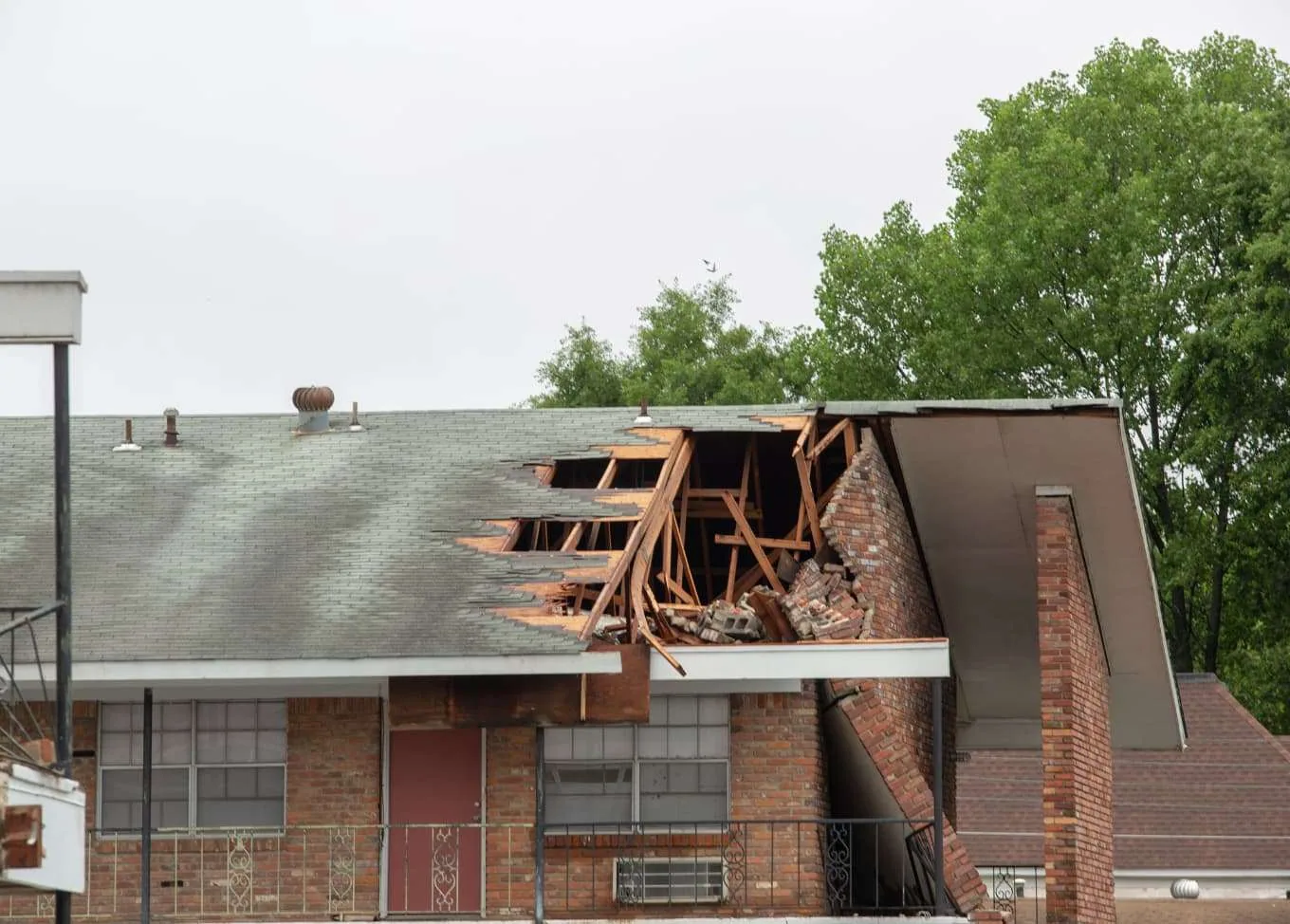
The busiest roofs are the ones with the most equipment on them, and every visit to that equipment is a chance to damage the membrane. A technician carries a tool bag, drops a fastener, drags a ladder or sets a panel on the surface, and none of it is noticed until water shows inside. That is the first thing to understand about puncture damage: it is mostly made by people, not weather. Step one is to find every hole. Step two is to learn why people were there.
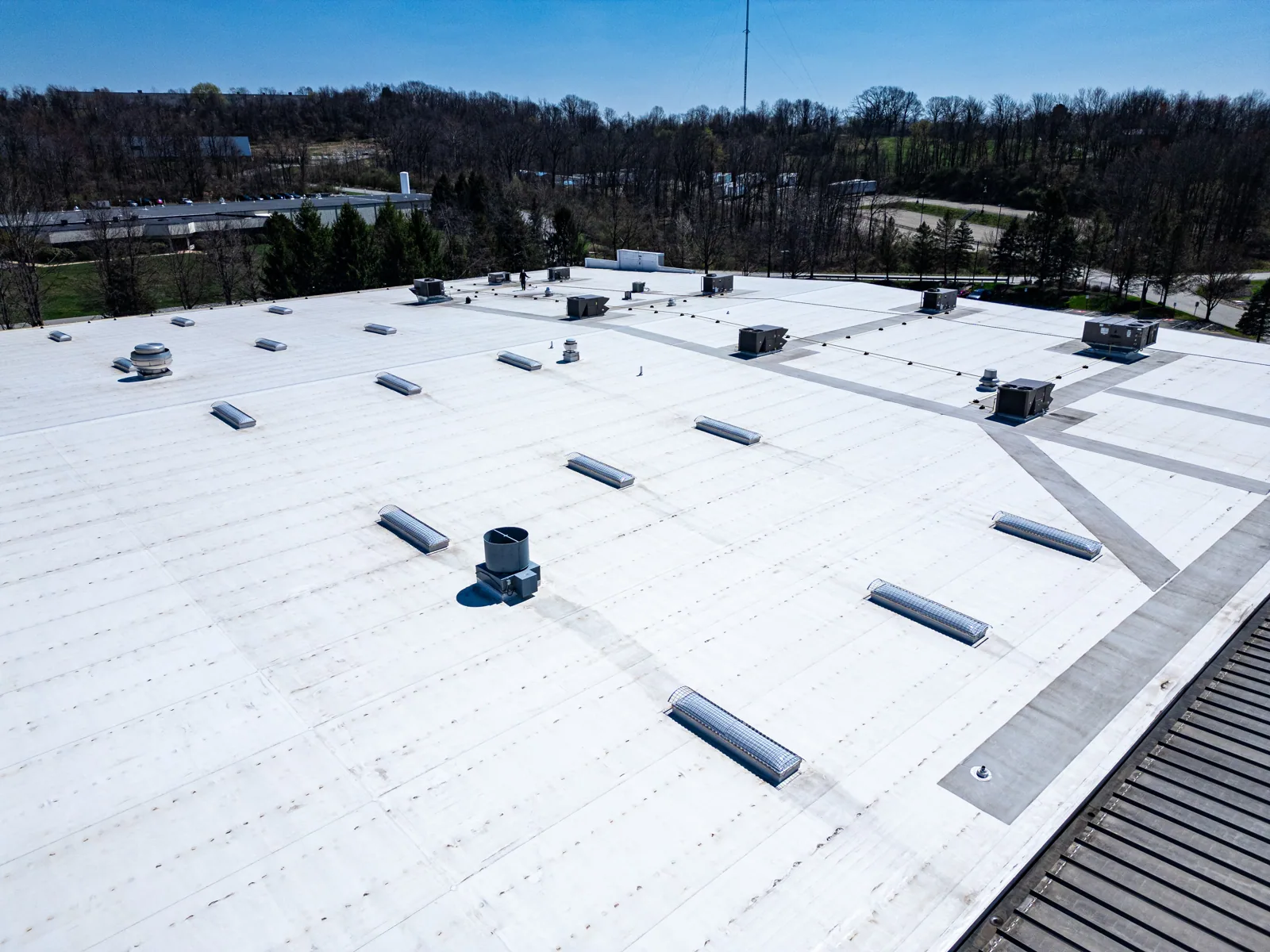
We repair punctures, cuts, gouges and worn walkways on low-slope commercial roofs in Wichita Falls, TX. We check for water under the damage, patch the membrane with compatible material, and add walk pads or protection where traffic will return. When a puncture is letting rain through, we respond at any hour, holidays included.
Finding every hole
Start with the places where people walk. Paths between the roof hatch and the equipment, areas around rooftop units and the ground beside drains wear first. We follow those routes slowly and look for scuffs, cuts, gouges and dropped objects such as screws, wire ends and bits of metal that have been pressed into the surface by later foot traffic.
Small punctures hide. A hole the size of a pencil tip can let in water for months before it stains a ceiling, since the water spreads through insulation before it shows. When we suspect damage but cannot see it, a moisture scan helps. Our infrared moisture survey shows wet insulation under the surface and points to the holes that matter. Each find is marked, photographed and logged on a roof plan.
Not every hole is a puncture from above. Fasteners can back out and push up through the membrane from below, and a bump over a loose plate will wear through in time. Blistered spots and soft areas also hide breaks. We press on suspect bumps and compare them against the fastener pattern, so a break from below is not mistaken for a cut from above.
How membranes get punctured
The biggest source is service traffic. Heating and cooling technicians, satellite and antenna crews, solar installers, window cleaners and sign contractors all use the roof, and most are not roofers. A step on a loose screw, a heavy case set down hard or a dragged ladder foot can cut a membrane. Tools left behind cause their own damage when the sun heats them and they press into the surface.
The second source is the roof itself. Brittle, aged membranes crack under light traffic that a newer sheet would shrug off. Hail bruises and weak spots can become holes with a footstep. The third is debris: gravel blown from a neighboring roof, a fallen branch or a sharp object tossed up by wind. Each cause suggests a different fix, from walk pads to a closer look at the age of the whole system.
Making the patch
One clean rule governs the repair: clean, dry, compatible and lapped. The area around the hole is cleaned and the membrane inspected for moisture. If insulation under the hole is wet, it is cut out and replaced, since a patch on wet material fails again. The patch is cut with rounded corners, extends well beyond the damage and is welded or bonded using a method that suits the membrane.
On TPO and PVC, hot-air welding makes a patch that fuses to the sheet. On EPDM, a primed patch or a splice tape provides the bond. On modified bitumen and built-up roofs, a compatible patch is heated or adhered with the right material. After every patch, we probe the edges to make sure they are tight. A patch that peels at one corner needs a second visit, and a careful first repair avoids it.
Large damage needs a different plan. A tear longer than a few feet, a crushed area from a dropped load or a worn path through the whole walkway is better handled as a replaced section than as a stack of patches. We cut out the damaged strip, check the insulation, install a new piece and tie it into sound membrane on every side. A single clean section lasts longer than a dozen small patches.
Keeping traffic off the membrane
Repairs without protection are repeated repairs. We recommend walk pads along routes to equipment, and heavier protection where service crews work in one spot. Rooftop equipment curbs and supports can also be changed so panels open over a protected surface. Roof hatch landings, ladder feet and tool staging areas get protection as well, and the hatch landing pays back fastest, since it takes the first step of every visit.
A written access rule is the other tool. Contractors who go on the roof should sign in, wear clean footwear and report what they did. A short note after each visit tells us when the membrane might have been touched. A preventive maintenance walk then catches the small damage that service visits leave behind.
Coatings can help in worn zones. A fresh coating over a sound but scuffed membrane adds a protective layer, though only after repairs are made and the surface is clean. Where traffic is constant, a heavier walkway system is the better choice, since it takes the wear instead of the roof.
Where traffic is heaviest in the city
Buildings with plenty of equipment see the most roof traffic. Hospitals, schools and plants all run rooftop units, and the Wichita Falls area has employers such as United Regional Health Care System and Arconic, along with Wichita Falls ISD and the campus of Midwestern State University. We do not assume anything about a particular roof. We walk it and map what the traffic has done.
Weather adds to the damage. Hail the size of baseballs hit Burkburnett and Iowa Park in April 1991, and a roof that took hail may have soft spots that give way under a footstep. After a storm, a punctured membrane and hail damage one often occur together. Where punctures cluster near edges or curbs, the flashing may need repair of its own. A campus such as the one in the Taft Boulevard area has many buildings with different equipment, so each roof gets its own walk plan.
Commercial Roofing Questions
How fast should a puncture be repaired?
As soon as the roof is dry enough to patch. A hole lets water into the insulation every time it rains, and wet insulation costs far more than a patch. We tarp or seal it first if rain is coming.
Can foot traffic ruin a good membrane?
Yes, if it is heavy or careless. Even a sound sheet scuffs and cuts under repeated use. Walk pads protect the routes that people use most and cost little next to a membrane repair.
Is a small gouge worth patching?
If the gouge goes through the reinforcement or the top ply, yes. A shallow scuff may only need monitoring. We probe and measure to see how deep the damage is.
Who pays when a service contractor damages the roof?
That is settled between you and the contractor. We document the damage with dated photographs, which makes the record clear. A note after each service visit helps.
What helps before the first visit?
Tell us the roof age, what equipment sits on it, who goes up there and what damage you have photographed. The walk then starts with the busiest paths.