After a building fire, the roof is judged twice: once for what the flames did, and again for what the water did. The membrane may look burned only in one corner, while firefighting water has soaked insulation across a whole bay and heat has weakened the deck below. That is the first lesson of fire work. The visible burn is the smaller part of the damage. Step one is to make the building safe and dry. Step two is to learn what is underneath.
We assess and repair fire and smoke damage on low-slope and metal commercial roofs in Wichita Falls, TX. We work with owners, restoration contractors and adjusters, we document the roof in detail, and we plan the rebuild in stages that the structure and the schedule can support. Emergency response runs around the clock, holidays included.
Safety and dry-in first
A roof after a fire is not a safe place until it has been checked. Charred decking can look sound and fail under weight, and burned areas hide hot spots, unstable edges and weakened supports. We do not step on a fire-damaged roof until a structural review or the fire marshal's release says it is safe, and we work from lifts and edges when we can.
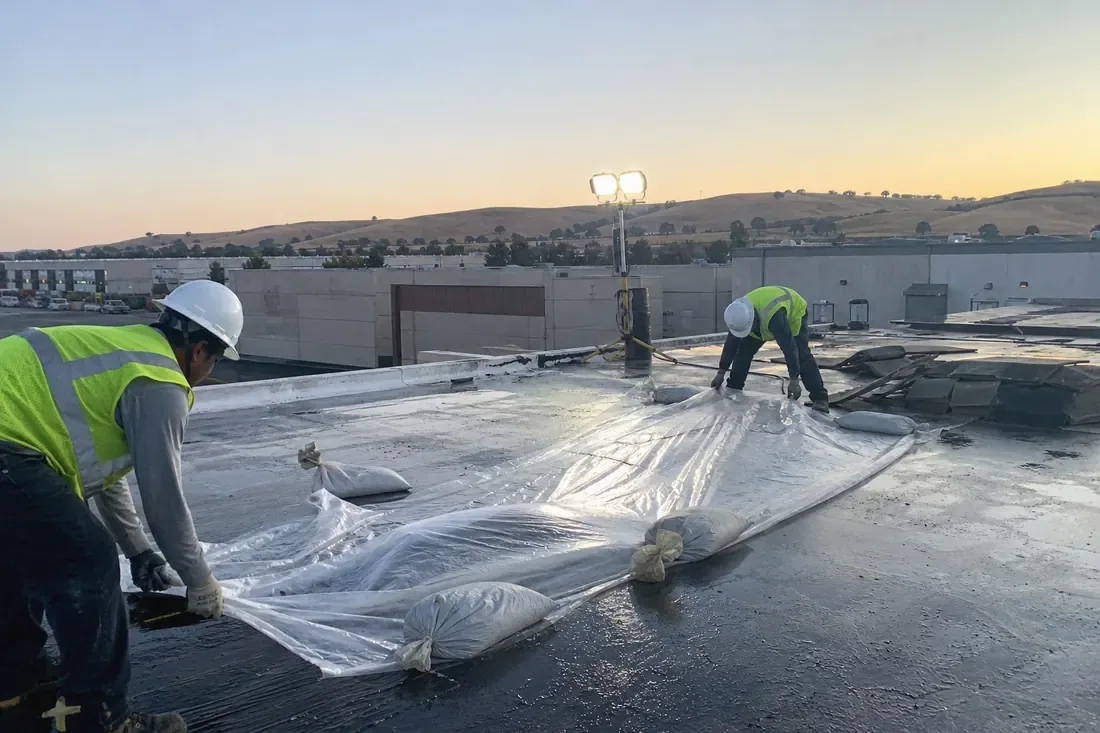
Once access is allowed, the first job is to stop more loss. Open areas are tarped or covered, burned membrane is cut back to safe edges, and drains are cleared of ash and debris so the first rain does not pond on a weakened deck. Emergency roof repair is the first step, and every temporary measure is photographed and noted as temporary so the permanent plan stays clear.
Firefighters often cut ventilation openings in a roof to release heat and smoke. Those cuts, along with hose damage and foot traffic, leave a pattern of openings that must each be found and closed. We treat them like any other membrane puncture, with one difference: they cut through insulation and sometimes through the deck, so the repair is a rebuilt section and not a patch.
What a fire does to each layer
Look at the roof one layer at a time. The membrane melts, blisters or chars, and even a membrane that appears whole may have lost flexibility from heat. Insulation beneath it can melt, shrink or char, and foam types may give off residue that stains the underside. The deck can warp, lose coating or lose strength, particularly steel decks, which can twist when heated and cooled.
Smoke has its own effects. Soot settles on membranes and metal, and acidic residue can attack coatings and fasteners over time. Mechanical equipment on the roof may have heat damage that is not obvious. We record each layer separately, because a repair scope that treats the roof as one piece will miss the part that matters most, which is usually below the surface.
Rooftop equipment deserves a separate check after a fire. Units, ducts and exhaust fans that sat in the heat may have damaged gaskets, wiring or panels, and curbs may have warped. Mechanical and electrical trades inspect their own work, and we inspect the flashing and curbs around it, so a hidden gap does not become a leak after the new roof is in.
Documentation continues through the rebuild. Photographs taken before, during and after each stage give the adjuster, the owner and the next buyer a clear picture of what was done.
Firefighting water is a second loss
Water used to fight a fire has to go somewhere, and a lot of it ends up in the roof assembly. Insulation holds water like a sponge, and a wet board loses much of its value. Moisture can sit in a closed roof for months and grow into rot, corrosion and mold in the space below.
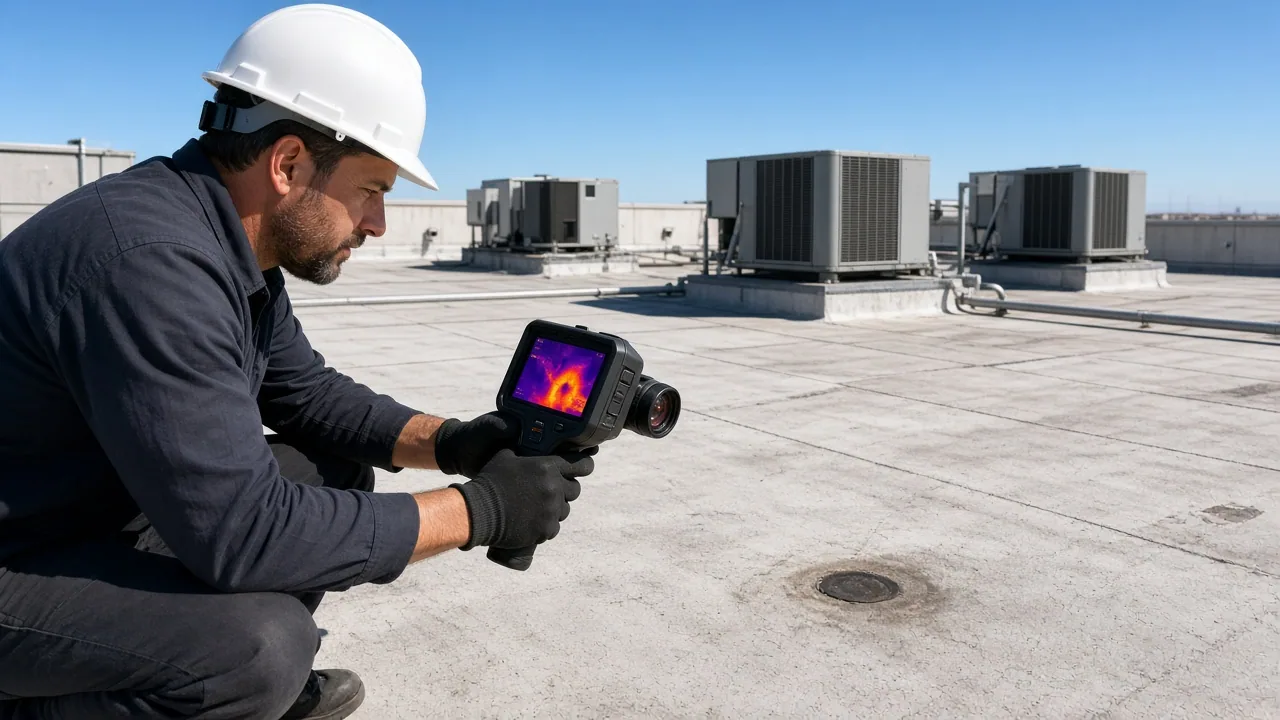
An infrared moisture survey is the usual way to map it, followed by core samples to confirm. The survey draws a clear line between insulation that can stay and insulation that must be removed. That line saves money: it prevents tearing off dry sections and prevents covering wet ones. The result goes into the report and the scope for the adjuster.
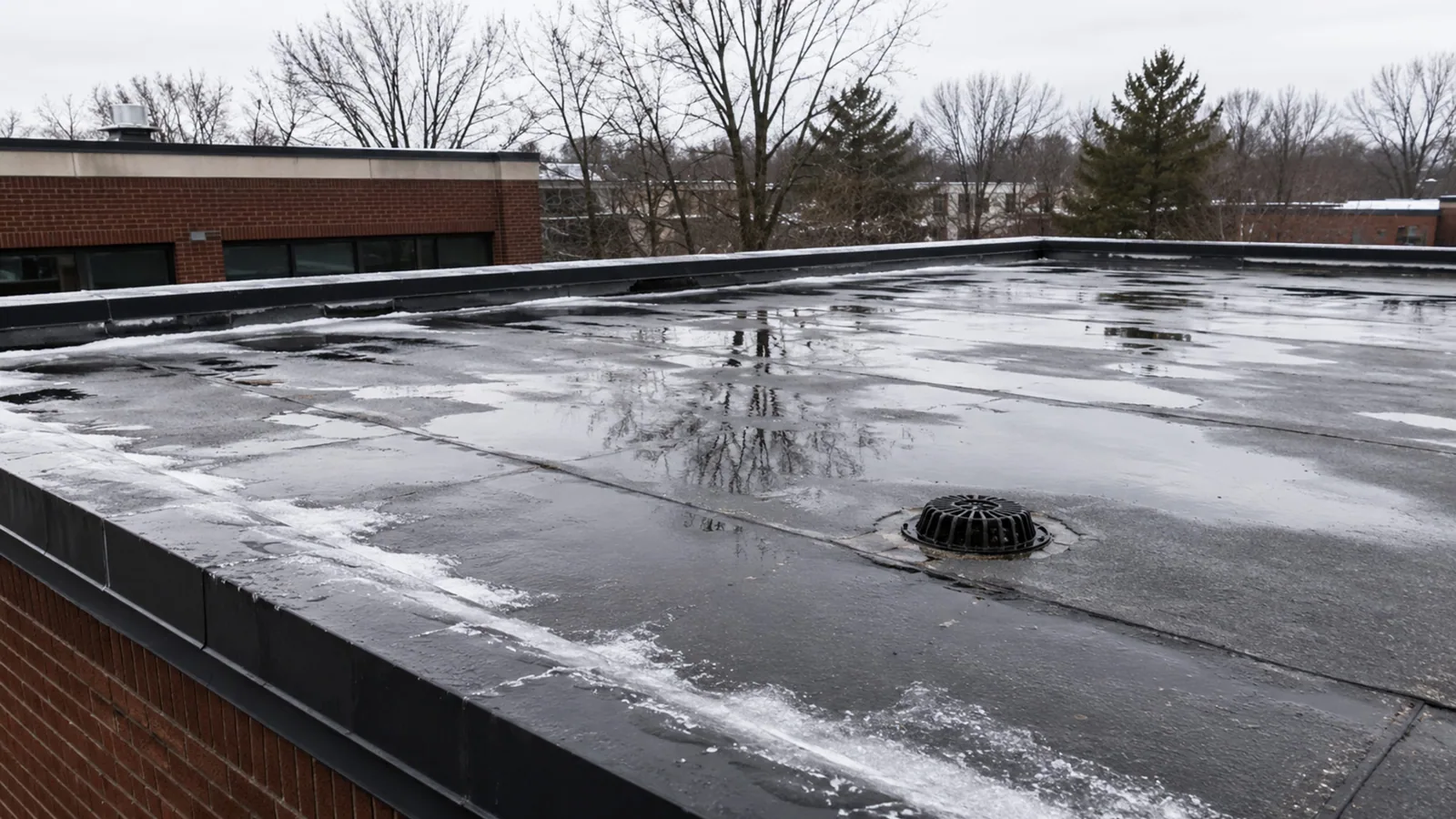
Drainage needs attention after a fire. Debris, ash and collapsed material clog drains, and a deck that has sagged from heat may hold water that it did not hold before. If the deck has dipped, standing water follows, and the same steps used for ponding water apply to the rebuilt roof, including tapered insulation to restore slope where the structure allows.
Repair, section or replace
One clean rule applies: replace what was heated, wetted or weakened, and keep what was not. A small fire confined to one bay may need a section replaced and tied into sound membrane. A fire that heated the whole roof, or wet the insulation across it, usually points to a full replacement. The deck is repaired or replaced first where it has warped or lost strength, and an engineer's sign-off may be needed.
The new system is chosen for the building. A manufacturing or distribution roof may use TPO, PVC or another low-slope system, and a metal building may call for panel replacement. We coordinate the roof with the other trades so the structure, the roof and the interior come back in the right order. Code and fire-rating questions go through the owner's design team and the building official.
Sequence matters. Interior work cannot start until the roof is closed, and the roof cannot close until the deck is sound and the insulation is dry. We give the restoration team a date for each step, name any long-lead materials and report each day's progress. If the schedule slips, they hear it from us the same day, not at the end of the week.
Local buildings and claims
Where industrial and commercial buildings carry large roofs, a fire loss costs the most. The Wichita Falls Business Park is a 525-acre site meant for distributors, high-tech operations and manufacturers, and the Kemp and Kell corridor carried both commercial businesses and industrial plants through the path of the 1979 tornado. Neither fact says anything about fire risk on a particular roof. They describe the building types where a fire loss would involve large roofs and active operations.
For the claim, we provide detailed documentation: before-and-after photographs, moisture maps, quantities and a clear separation of fire damage from older wear. That record supports roof insurance claim assistance and helps a restoration contractor coordinate the work. Heat matters here too: with roughly 28 days a year at 100 degrees or more, a roof left open in summer cooks quickly.
Commercial Roofing Questions
Can a fire-damaged roof be walked right away?
Not until it has been cleared as safe. Damaged decks can fail under weight. We wait for a structural review or the fire officials' release, and work from lifts and edges until then.
Does smoke damage a membrane that was not burned?
It can. Soot stains the surface and acidic residue can attack coatings, metal and fasteners. We clean what can be cleaned and flag what needs to be replaced.
How do we know whether the insulation is wet?
An infrared survey maps the wet zones, and cores confirm the finding. That avoids tearing off dry insulation and avoids covering wet insulation that will cause trouble later.
Will my insurer cover the full roof?
That is the carrier's decision. We provide the photographs, moisture maps and measurements that show the extent of the loss, and we separate fire damage from older conditions.
What should I send to begin?
Send the date of the fire, the building use, the roof age and any photos or fire department notes. With those, the first visit can focus on safety, dry-in and the biggest unknowns.