An adjuster needs the roof laid out in the order damage happens: what was there before, what the storm did, and what it will take to put the building back. That is the whole job of a good roof report. Step one is to separate old wear from new damage, because a claim turns on that line. Step two is to put both in plain words and photographs.
Hail, tornado-season wind and long summers all test commercial roofs in Wichita Falls, TX, so we work with adjusters, carriers, restoration contractors and owners to document roof damage, dry in a building after a storm and carry out the permanent repair. We describe what we find. We do not decide coverage, which belongs to the carrier.
What the local record says and does not say
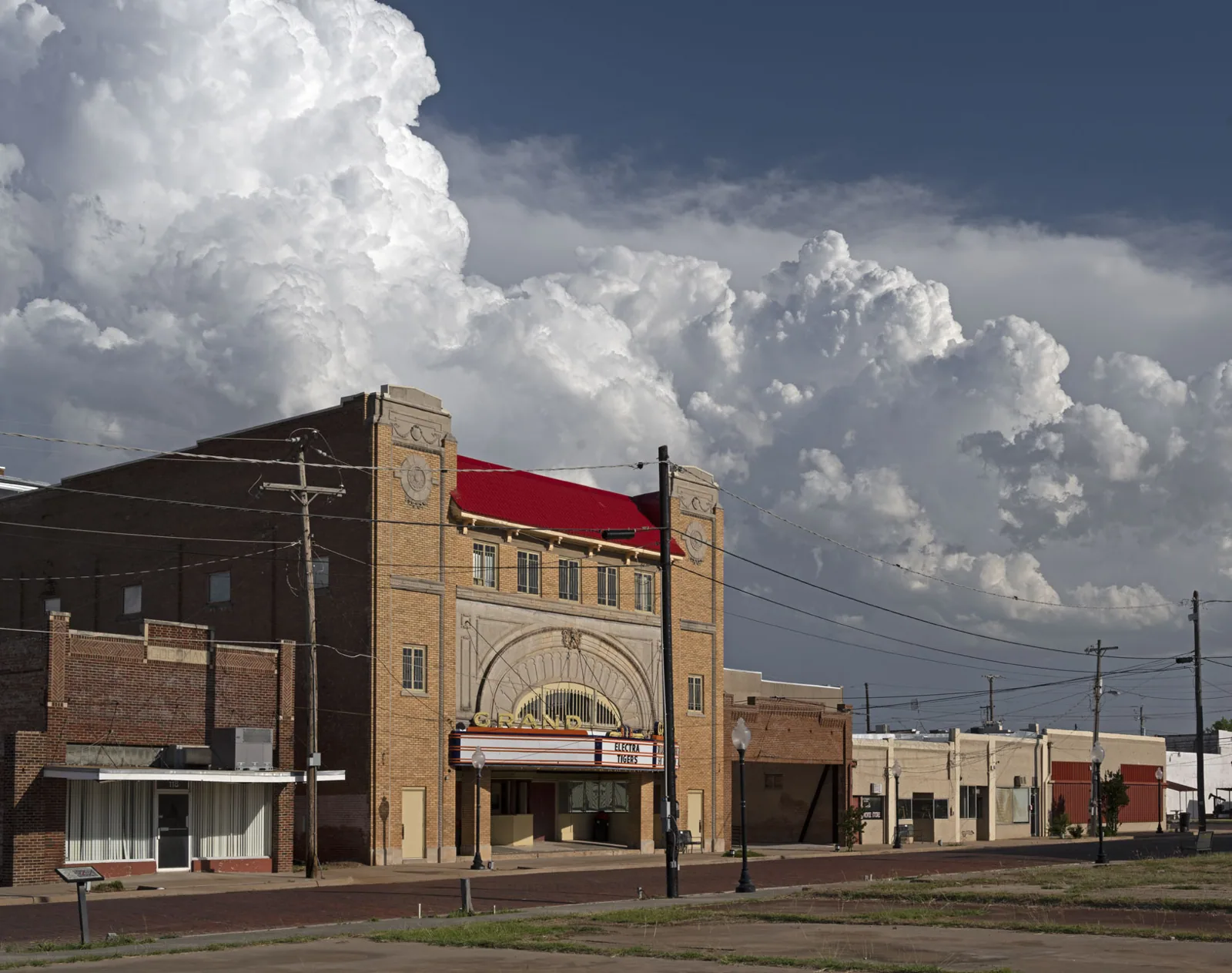
The area has a long weather record. In April 1991 baseball-size hail did extensive damage across Iowa Park and Burkburnett. On March 13, 1982, golf-ball-size stones fell on Electra for a quarter of an hour, with damage stretching between Electra and Burkburnett. Hail larger than baseballs reached Sheppard AFB on March 29, 1993. The April 1979 tornado caused an estimated $400 million in damage and destroyed more than 100 commercial businesses.
Those events are history. They show that severe weather reaches this part of Texas, not that a roof inspected today is damaged. Each claim stands on what is on that roof on the date of loss. We use the record to decide where to look, never as a substitute for looking.
The tornado record adds one more point. The F5 tornado of April 3, 1964 badly damaged downtown, and the 1979 storm left an 8-mile track across the southern and eastern parts of Wichita Falls. Whatever roof stands in those areas today, its age and condition on the date of loss matter far more than a storm from decades back. When a claim concerns an older building, we ask for the construction record and any repair history alongside the walk.
Documenting storm damage on a roof
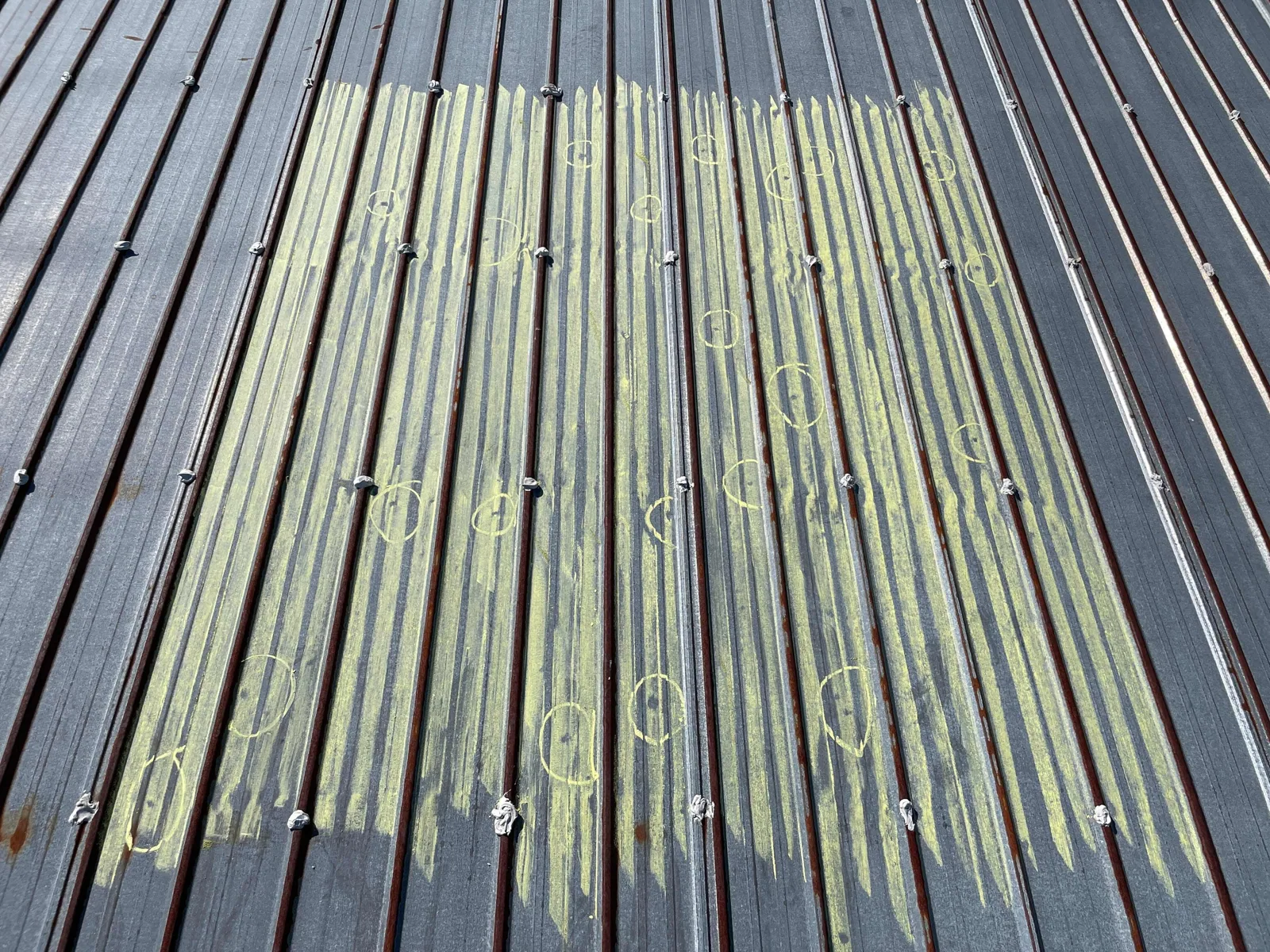
Start with the pattern. Hail leaves bruises in a scatter that follows the storm's direction, wind lifts edges and corners, and age wear shows as uniform cracking or blistering across the whole surface. A hail bruise is a soft spot that is often invisible from the ground. We press and probe the membrane, mark each hit and photograph it with a reference for scale.
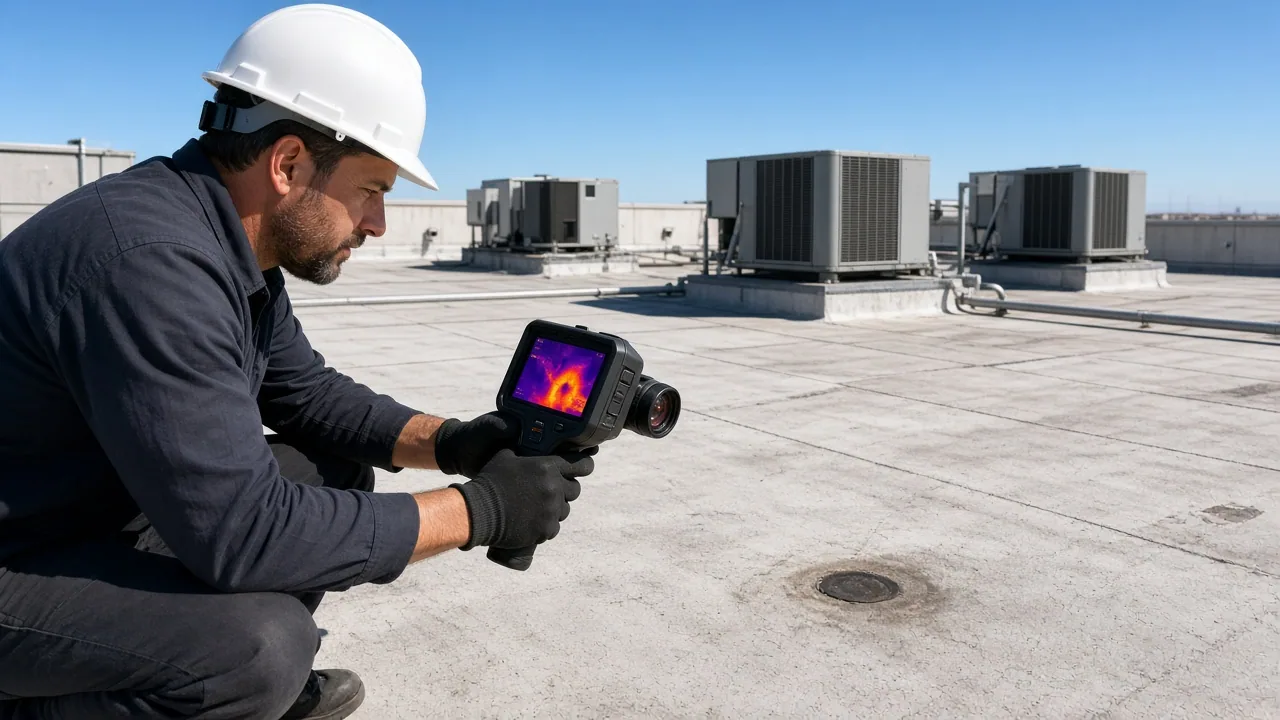
We also read the layer underneath. A hit that cracked the membrane may have wet the insulation, and a moisture survey, including infrared moisture survey work, shows how far the water went. The result is a written finding with a roof plan, numbered photographs, measurements and a statement of what is storm-related, what is pre-existing and what is uncertain. That keeps the file fair to the carrier and to the owner.
Wind leaves a different signature. Edges, corners and perimeter flashing lift first, and a creased or displaced piece of edge metal points to the direction of the gust. Where a membrane has pulled away from its fasteners, we note the row, the spacing and whether the fasteners are corroded or simply backed out. Fastener back-out is a slow process and predates most storms, so recording it protects an accurate scope.
Dry-in comes before the estimate
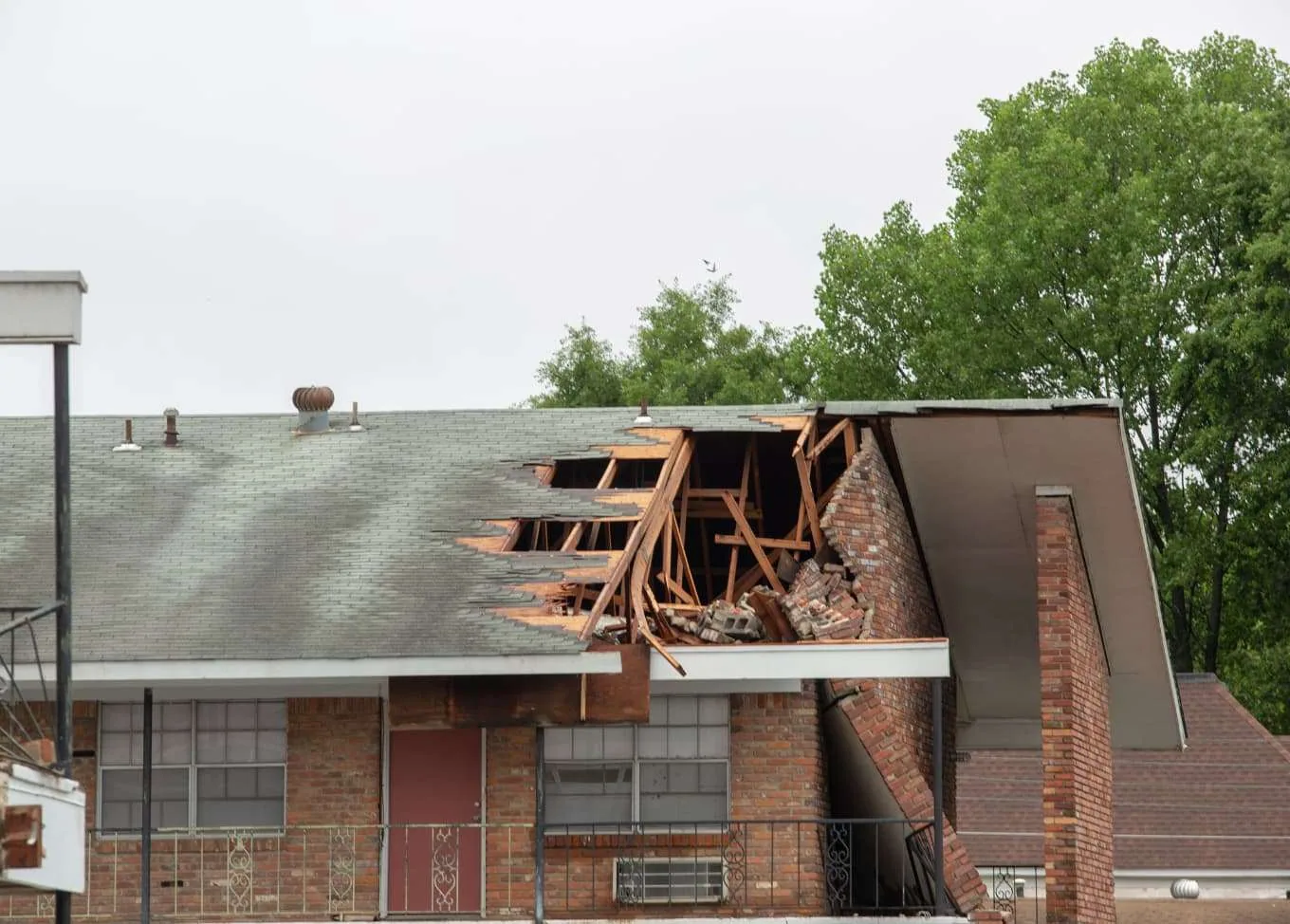
A roof that is open to rain is losing value by the hour. Before anyone argues scope, the building needs to be dry. Crews answer at any hour, holidays included, to tarp, seal and protect the building, and before and after photographs put the emergency work on record.
Temporary repairs are described as temporary. They hold a roof while the carrier reviews the loss, and they are written up with the materials used and the areas covered. Our emergency roof repair response starts with stopping the water and ends with a clear handoff to the permanent scope. That sequence keeps the loss from growing while the claim moves forward.
Some losses are not obvious from the roof. Water can travel along a deck, down a wall or through insulation before it appears on a ceiling, and a leak found on the first day may be a symptom of a second entry point. We check adjoining areas, test flashing and trace each stain to its entry, so the dry-in covers the real source and not just the visible one.
From scope to repair
A good scope is something a carrier, an owner and a contractor can read in the same way. It lists areas, quantities, layers to be removed, the new system and the details at edges, curbs and drains. When a roof can be repaired, the scope says where and how. When it must be replaced, the scope says why, with photographs of the evidence.
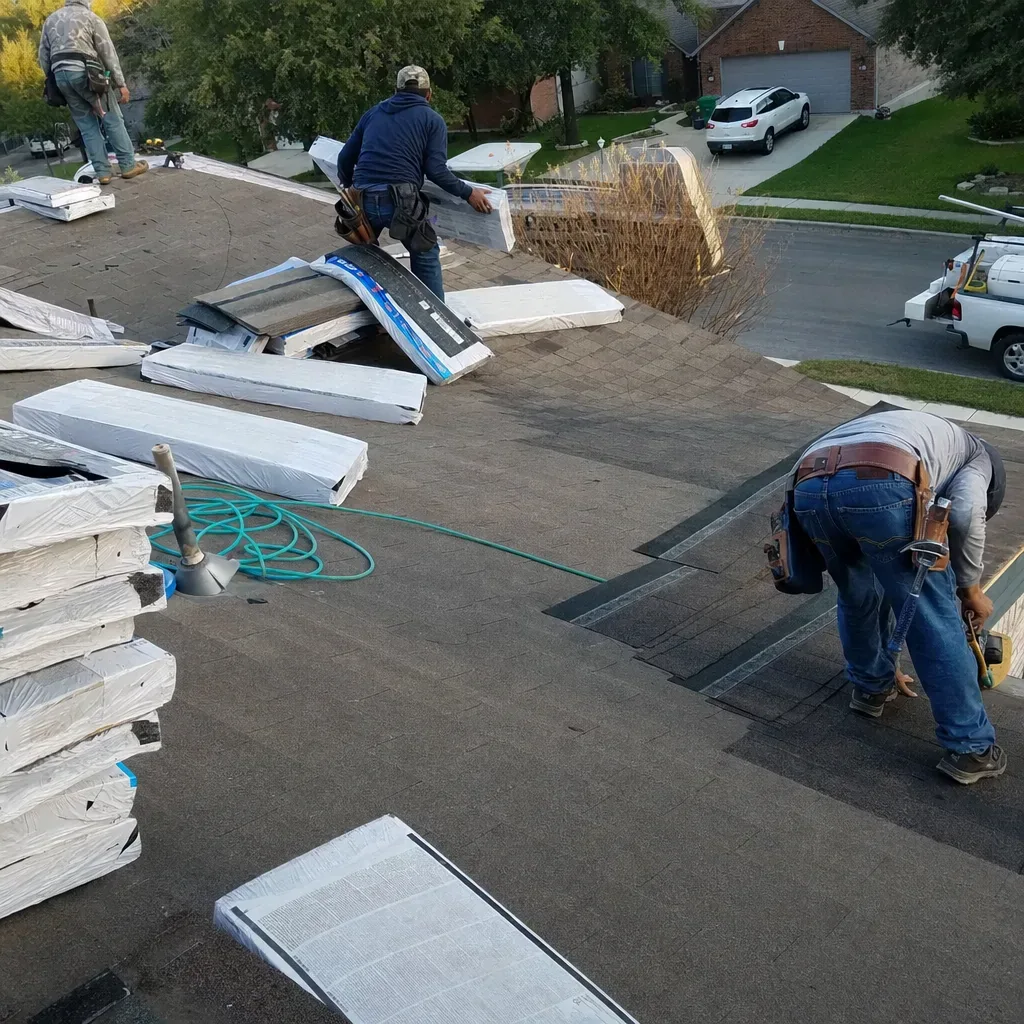
For a restoration contractor managing a whole building, we handle the roofing portion and coordinate with the other trades. Owners with a portfolio get claim documentation in one format for every site, and the storm damage repair itself uses systems matched to each building.
Cost drivers are explained, not hidden. Removal of wet insulation, access by lift or crane, the number of penetrations, the condition of the deck and the system chosen all move a price. We list them so a reviewer can see why a number is what it is, and so a supplement, if one is needed, is traceable to a specific discovery.
Storms across the metro area
Storms do not respect city limits. The 1982 hail event damaged an area from Electra to Burkburnett, and the 1991 event hit Burkburnett and Iowa Park together. After a regional storm we organize inspections by area, so that adjusters and owners see roofs in a sensible order and each file starts with the same level of detail.
Property teams and property management companies can have several buildings in the same path, and general contractors may be asked to rebuild interiors at the same sites. A shared record for the roof helps everyone work from the same facts.
Timing matters after a regional event. Photographs taken soon after a storm show fresh bruises, clean fractures and unweathered scars, and those details fade within weeks of sun and rain. We recommend that property teams call for a walk early, before temporary repairs or foot traffic change what the roof shows.
Commercial Roofing Questions
How do you tell hail damage from age wear?
By pattern and depth. Hail bruises scatter with the storm direction and soften the membrane or insulation at each point. Age wear is uniform across the surface. We probe, measure and photograph both.
Can you work with an adjuster on the same roof visit?
Yes, and it saves a second trip. We walk the roof together, point out the marked locations, and share photographs and measurements so both files agree on what was found.
Does a storm in 1991 mean a roof in Iowa Park has damage now?
It does not. A past event tells us where to look, but each roof is judged on its present condition. If the roof shows hail bruises today, the report records them with dates and photographs.
What does a temporary repair record include?
The date, the area covered, the materials used and before-and-after photographs. It also states plainly that the work is temporary, so the carrier and owner understand what remains.
Who decides whether a roof is repaired or replaced?
The evidence decides, reviewed by the carrier and the owner. We provide the condition findings, the moisture results and a recommendation, and the claim process determines how it is handled.