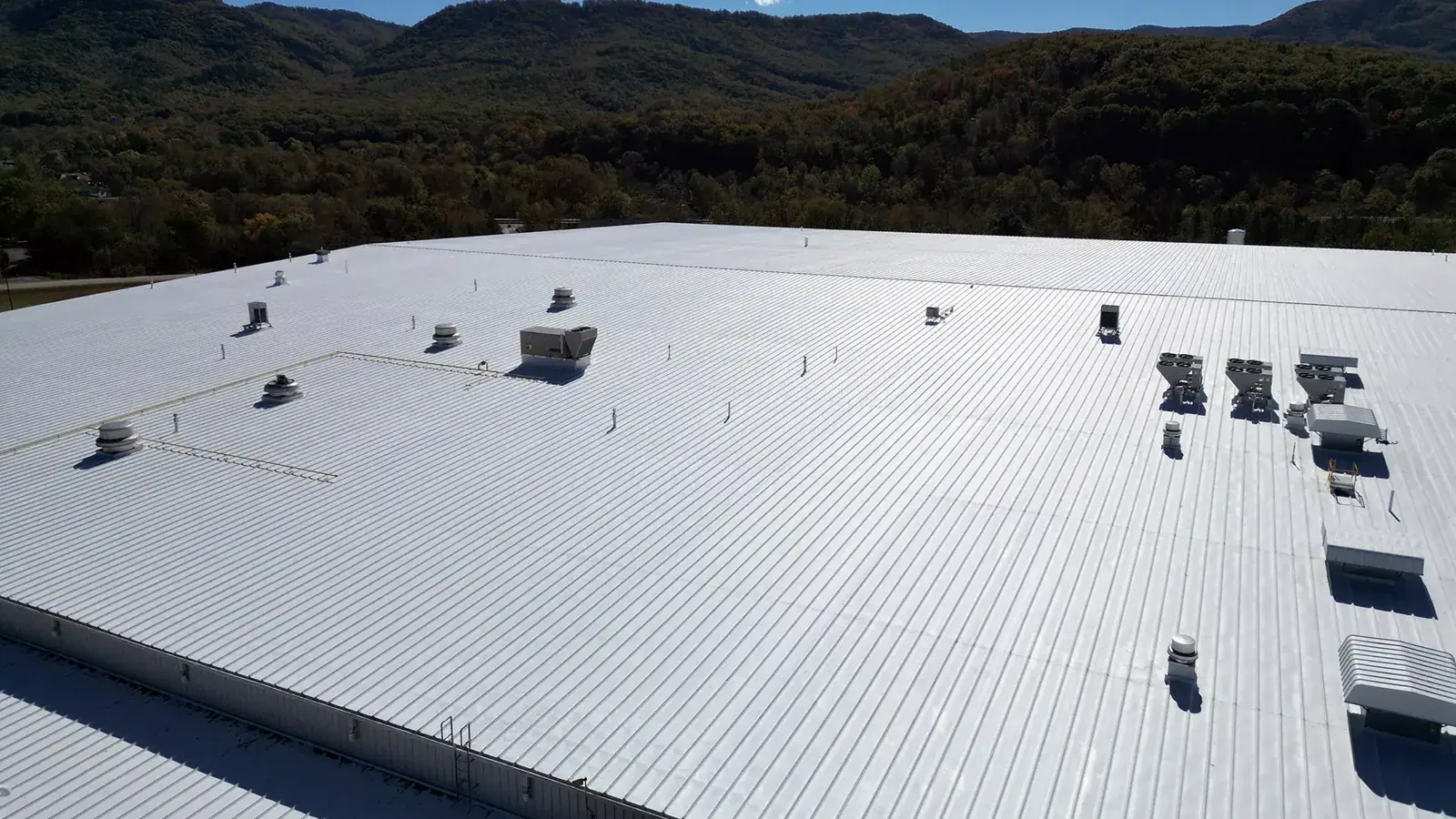
A tired metal-deck shop or an older plant with a patched, wavy roof is where spray polyurethane foam usually enters the conversation. The one thing an owner should understand is that SPF is not a sheet. It is two liquids that meet at the spray gun, expand into a rigid foam on the roof and cure into a continuous layer of insulation that follows every curve of the deck.
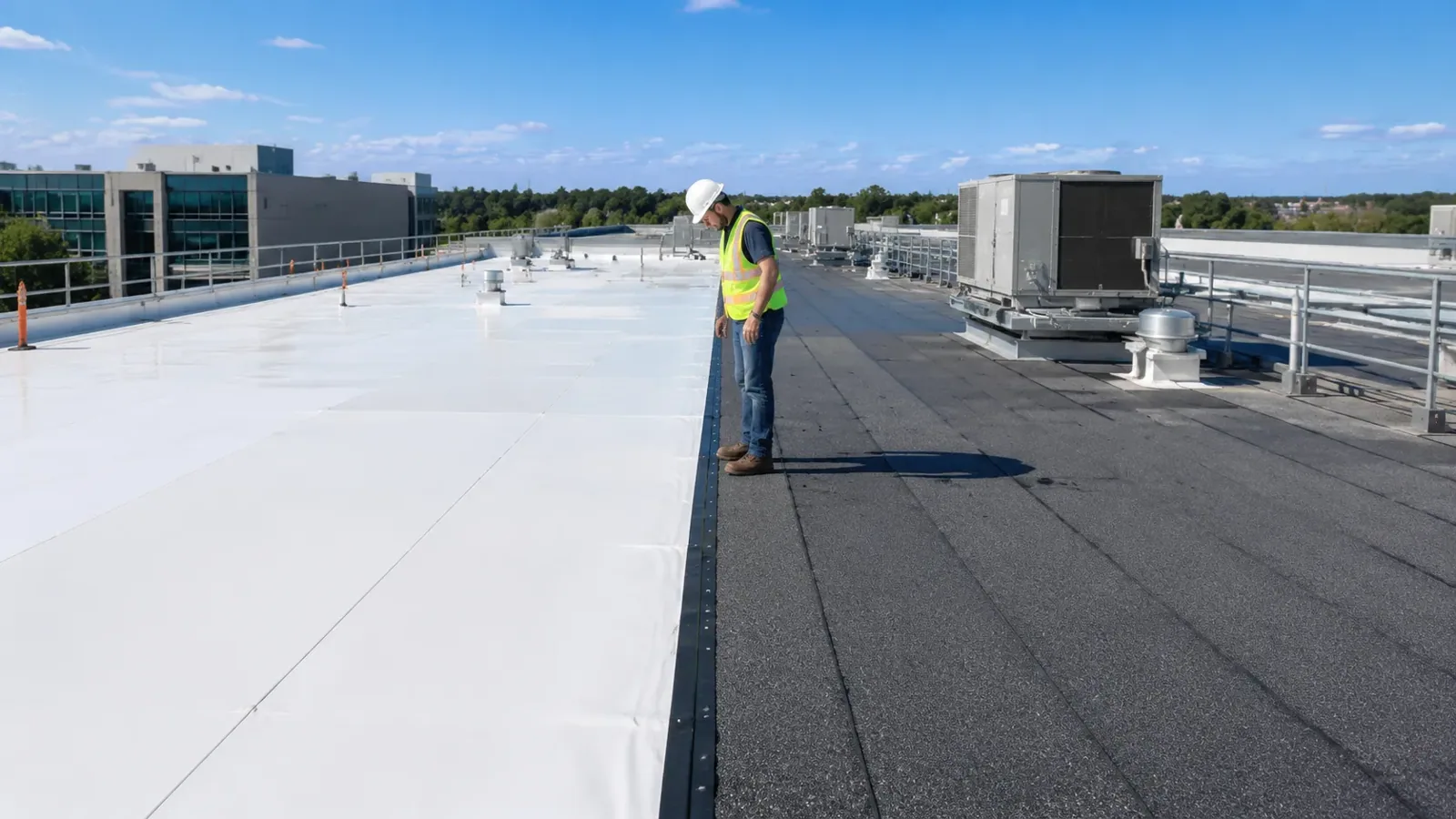
That shape is its strength and its weak point. There are no seams to open, but the foam is soft on the surface and needs a protective coating on top of it. We install and repair both layers, and the work starts by checking what is underneath.
Know the Two Layers
An SPF roof is two parts. The foam is the insulation and the waterproofing body. It bonds to the substrate, fills low spots and wraps curbs, pipes and parapets without a single lap. Then comes the coating, which is a liquid-applied skin that shields the foam from sunlight and gives the roof its color and its wear surface. The foam does the work of a membrane, and the coating does the work of a sunscreen.
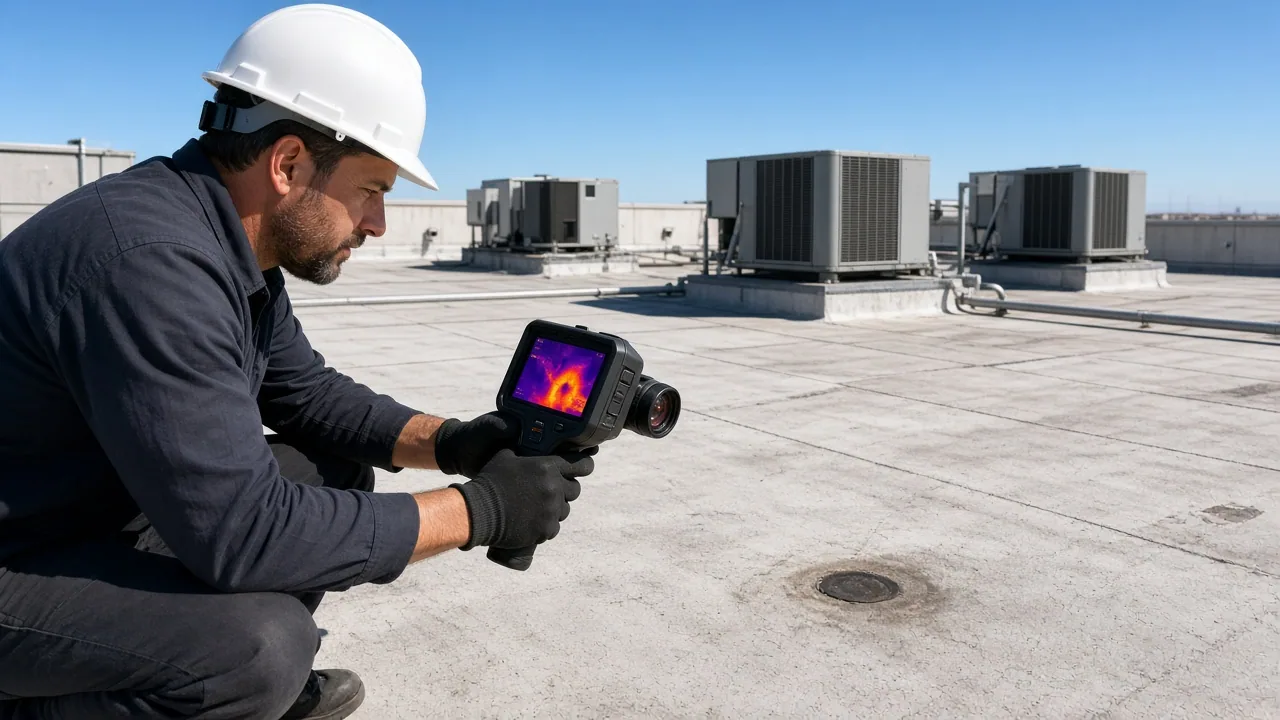
Step one is the substrate. Foam needs a clean, dry, sound surface. Old built-up roofs, modified bitumen and metal can all take it, but wet insulation underneath cannot be sprayed over. A moisture scan comes first, and the infrared moisture survey marks the wet areas so they can be cut out before any foam goes down.
Find Where It Fails First
Foam fails from the top down. The coating thins in the sun, the surface chalks, and then the foam itself begins to erode. A foam roof with a worn coating looks dull and a little rough, and the next sign is a soft spot where foot traffic has pressed into the surface. A simple test is to press a gloved thumb into the foam in a few places. It should resist. A spot that dents and stays dented has taken in water.
The second weak point is anything that cuts or punctures the surface. Dropped tools, ladder feet and service visits to rooftop units all leave marks. A small puncture in the coating is easy to fix. A hole through the foam to the deck lets water spread under the surface, so we probe around every mark before we patch it.
Count the Heat
A typical year in Wichita Falls brings roughly 28 days at 100 degrees, and 2011 delivered 100 of them. Foam handles heat by being a good insulator, so a coated roof slows the transfer of heat into the building. The coating takes the full load of ultraviolet light, which is why a light, reflective color matters here.
On a hot day the surface also changes how we work. Spraying has a working window set by the temperature of the deck and the air, and by how much wind there is. We schedule foam in the early part of the day when the surface is in range and the wind is down. The coating restoration cycle that follows is planned years ahead, because the coating is what gets renewed, not the foam.
Plan for Hail
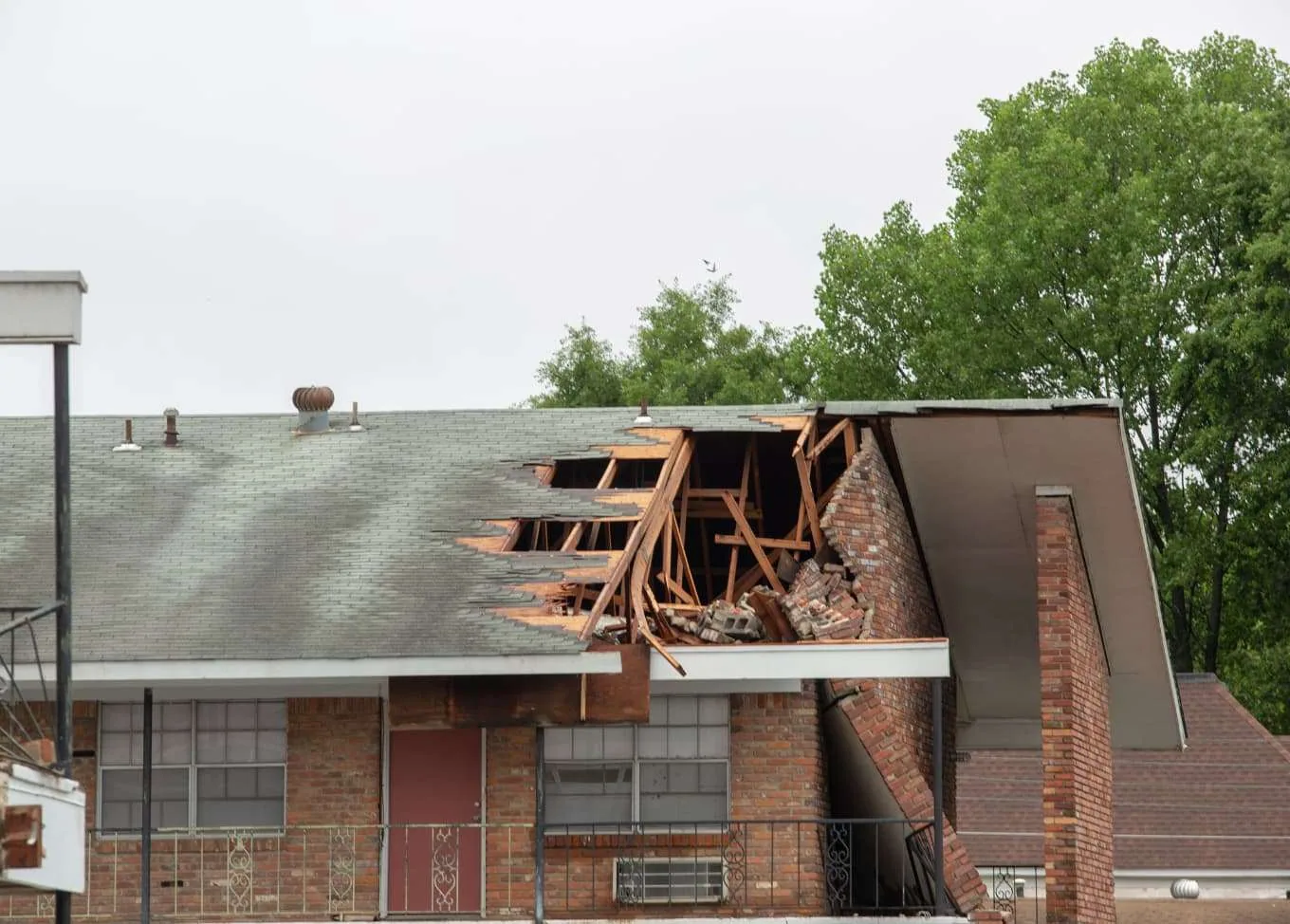
Hail is the hardest test for foam. A hailstone that hits a coated foam roof can bruise the surface or break through the coating, and the foam below is the part that is hard to replace. On April 2, 1991, baseball-size stones did extensive damage in Iowa Park and Burkburnett, and in 1982 golf-ball-size hail kept falling for a quarter of an hour at Electra. Those events are history, not an inspection, so a roof after a storm is checked on its own evidence.
After a storm we walk the roof and press, probe and mark. A hail bruise in foam is a dent with a cracked coating. Small ones are filled and recoated. A roof with many of them is a candidate for a thicker coating system, and the same walk feeds the hail damage repair decision on what to patch now and what to coat later.
Match SPF to the Building
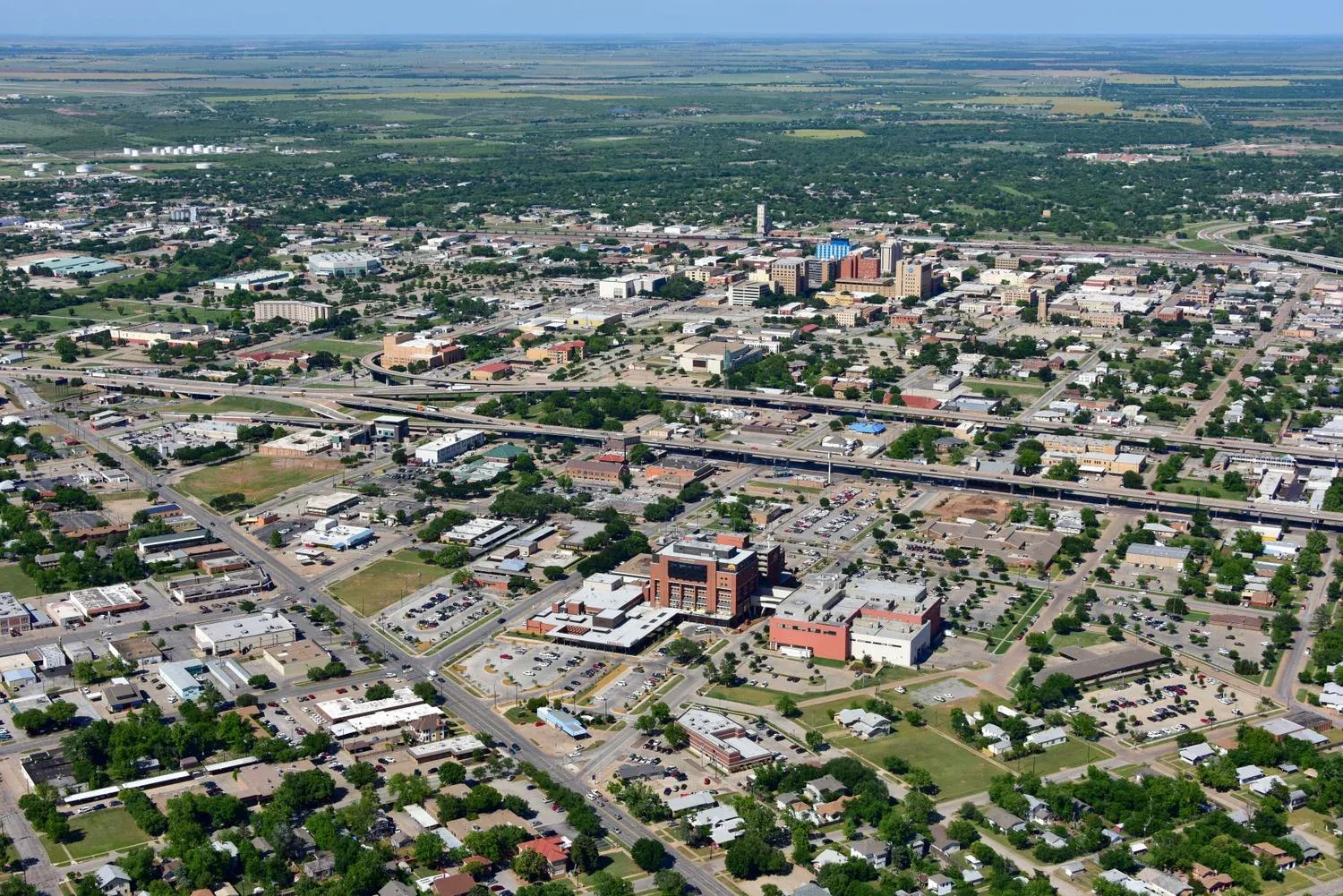
Foam suits roofs with many curves, penetrations and old layers that cannot be torn off cheaply. A plant in the Wichita Falls Business Park, a 525 acre area pitched to distributors and manufacturers, could carry enough rooftop equipment to make a lap-free system worth pricing. Along the Kemp and Kell corridor, where the 1979 tornado destroyed industrial plants as it moved east, a low commercial building with a rough older roof is another match.
Foam does not suit every building. A roof with heavy foot traffic, a spray operation next door or a deck that is wet below needs a different system. On a manufacturing plant roof, we compare foam with TPO and a metal retrofit before the owner commits.
Plan the Spray Day
Foam is a day-of-weather job. The crew needs a dry deck, steady air and a surface warm enough for the foam to rise. A forecast that shows a gusty afternoon moves the job to the next calm morning, and a front with rain moves it further. In north Texas that usually means spring and fall mornings carry the work, and the long summer is for coating rather than foam.
Access is planned around the building. Trucks and hoses need a path to the roof, the lot below needs clear space, and air intakes are covered or shut down while the spray is in the air. Inside, tenants get notice of the day and the hours, and the foam cures to a walkable surface the same day, so the building is back to normal quickly.
Repair or Replace
Foam repair is simple when the foam is sound. The coating is cleaned, the damaged spots are filled and a new coat goes over the whole roof. Replacement is the answer when the foam is wet, brittle or delaminated from the deck. A core cut tells which, and a few cuts across the roof give the full picture.
The cost drivers are the thickness of foam, the number of penetrations and the coating system, so a quote follows the walk and not the other way round. Waiting on a worn coating costs more, because every season the foam is exposed it takes more damage.
Commercial Roofing Questions
Does spray foam hold up in Texas heat?
Yes, with a good coating. The coating handles the sun, and the foam insulates. When the coating wears thin the roof needs a new coat before the foam is exposed.
Can foam be sprayed over an old roof?
Often. The old roof must be dry, firmly attached and clean. We scan for moisture and cut out wet sections first, because foam over a wet layer traps the water.
What does a small hail bruise cost to fix?
Less than a roof replacement, and less each time it is caught early. We fill the dent, seal the cracked coating and note the spot on the plan. The price depends on how many there are.
Who walks on a foam roof?
Only people who need to. Rooftop unit service visits should use marked walk paths or pads, because repeated foot traffic wears the coating. We can add walk pads during a recoat.
Is overspray a problem?
It can be. Foam is sprayed on a calm day, and cars, glass and neighboring buildings are masked or moved. Wind is checked before every pass, and the crew stops when it picks up.