Humidity is the quiet problem in a gym, and it starts under the roof. Bodies, showers, a pool or a steam room put a steady load of moist air into the building, and that moisture looks for a way out through the ceiling. A roof that is perfectly sound on top can still be wet underneath. In Wichita Falls, TX, the outside climate adds heat on top of that, with about 28 days a year at 100 degrees. Start with the building. Then read the roof from the inside out, because that is the direction the moisture travels.
A Big Room and a Wet Ceiling
A fitness center has a few large spaces: a weight floor, a studio, a court or pool hall, and a run of locker rooms. The big rooms have high ceilings and long roof spans. The locker rooms and pool areas generate the moisture. The offices and reception are small and need steady comfort. Each area wants something different from the roof and the air system under it.
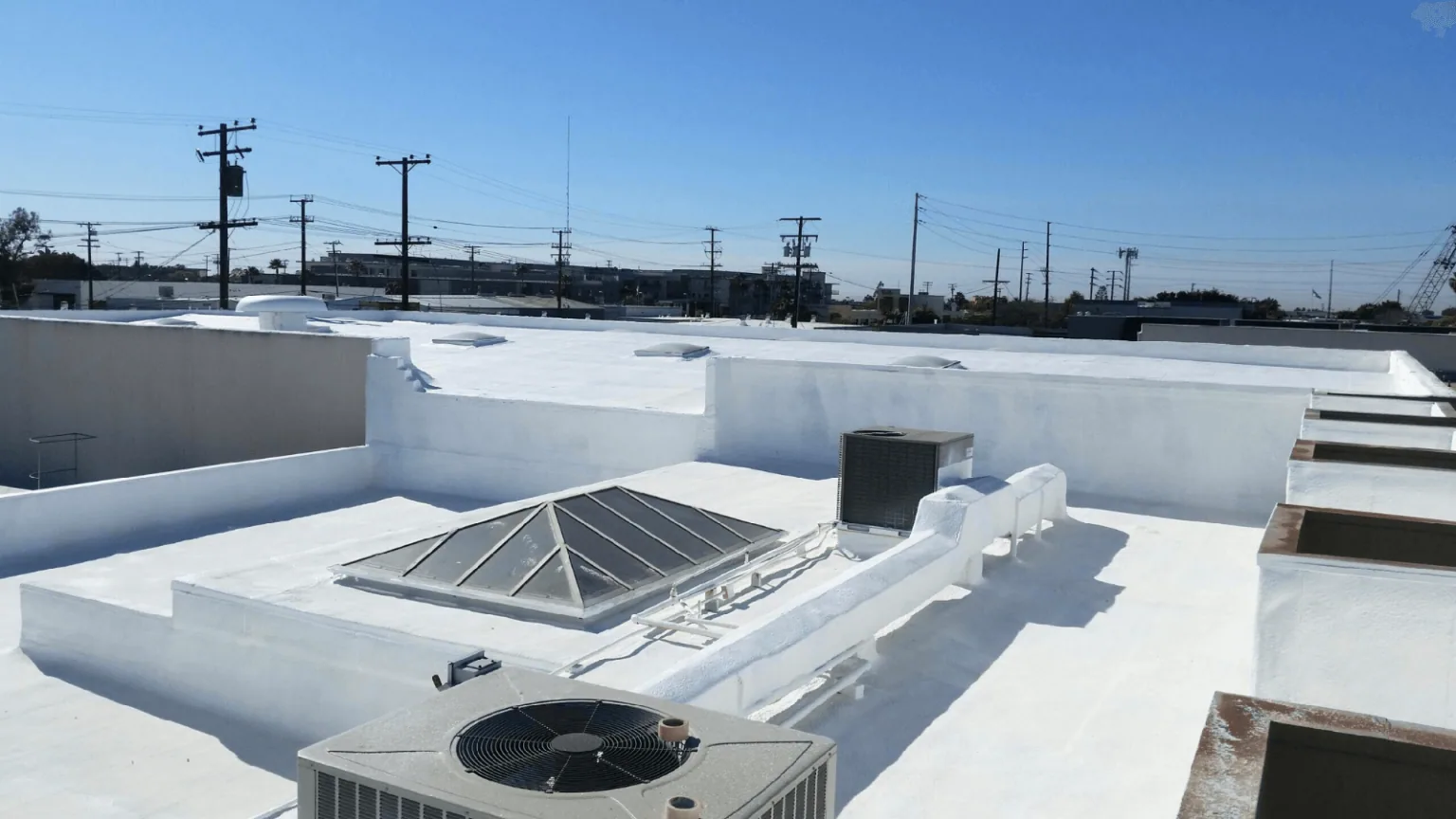
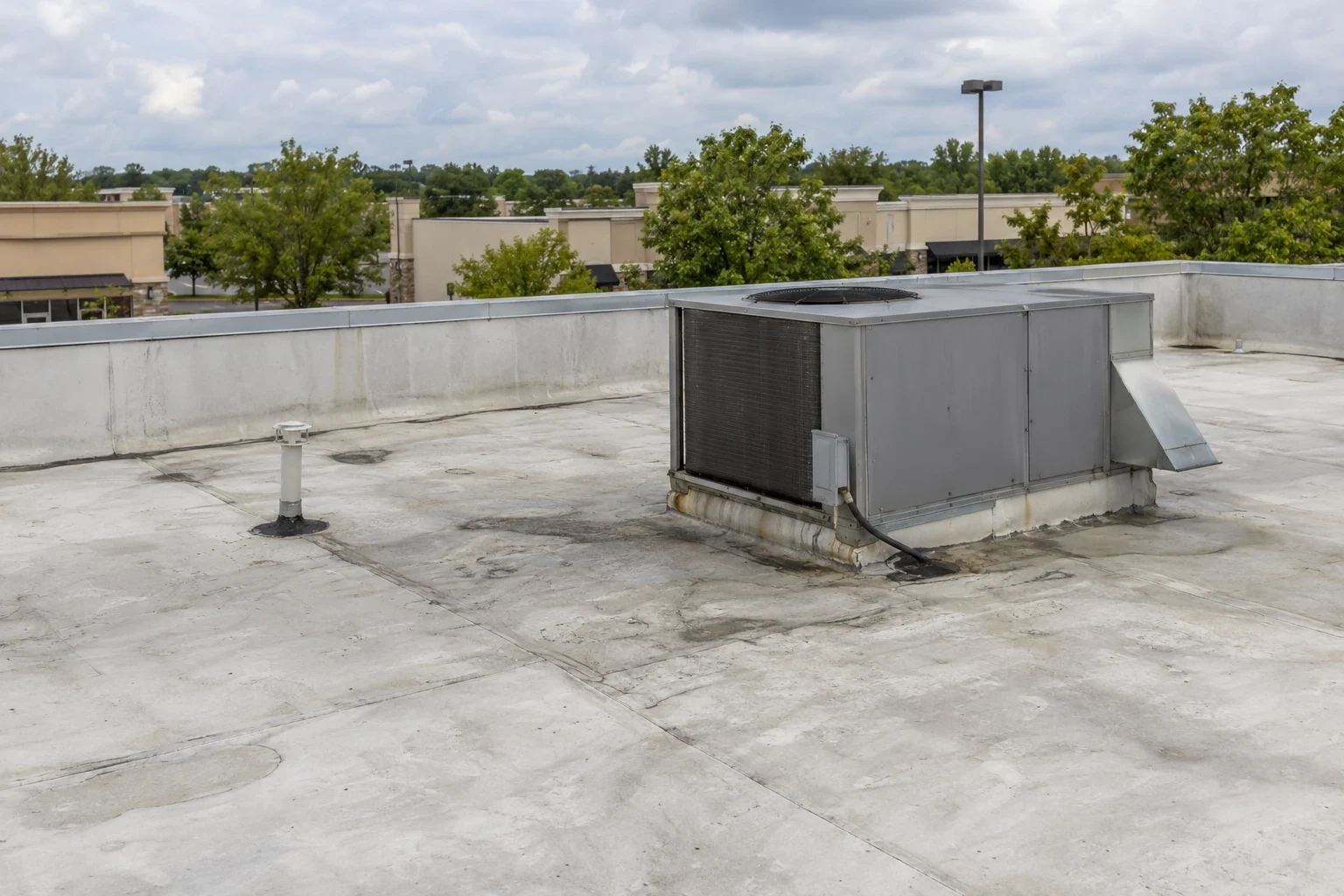
The air-handling units that dry and cool those spaces sit on the roof, and they are large. A dehumidification unit over a pool hall is heavy, has a deep curb and moves a lot of air through the building. The roof under it carries that load, and its curb flashing moves with the unit. We locate every unit on the plan and note which spaces each one serves.
Heavy units fail roofs in a particular way. A curb carries the unit's weight into the deck, and a unit that vibrates works its flashing loose over the seasons. Refrigerant and condensate lines run across the membrane to the edge, and any line that rests on the sheet wears it. Wichita Falls heat adds to the work these units do, and it stresses the same flashings in the opposite direction, so we look at every curb for cracks, gaps and sealant that has lost its grip.
Condensation Is Not Always a Leak
A drip from a gym ceiling after a cool, humid morning may not be rain at all. Warm, moist air meets a cold surface and turns to water. A vapor barrier that has failed or a hole in the ceiling lets that moist air reach the underside of the roof deck, where it condenses and drips. The drip looks like a leak and is treated like one, though the fix is a different one.
Here is a simple test. If drips appear without rain, cluster near ducts and exhaust points, and arrive in cool, still weather, suspect condensation. If drips follow storms, suspect the roof. A scan and a couple of cores settle it, and we write both results on the plan. Treating condensation with a patch only moves the drip. The fix is usually air sealing, a working vapor layer or a change in how the air system runs.
Layers Over a Humid Room
Most large gyms use a low-slope roof with a TPO or PVC membrane, insulation and a steel deck, though some use metal panels over long frames. Insulation and a cover board protect the membrane from below and above. A wet layer in a humid building stays wet longer, because the room beneath adds moisture instead of letting the layer dry.
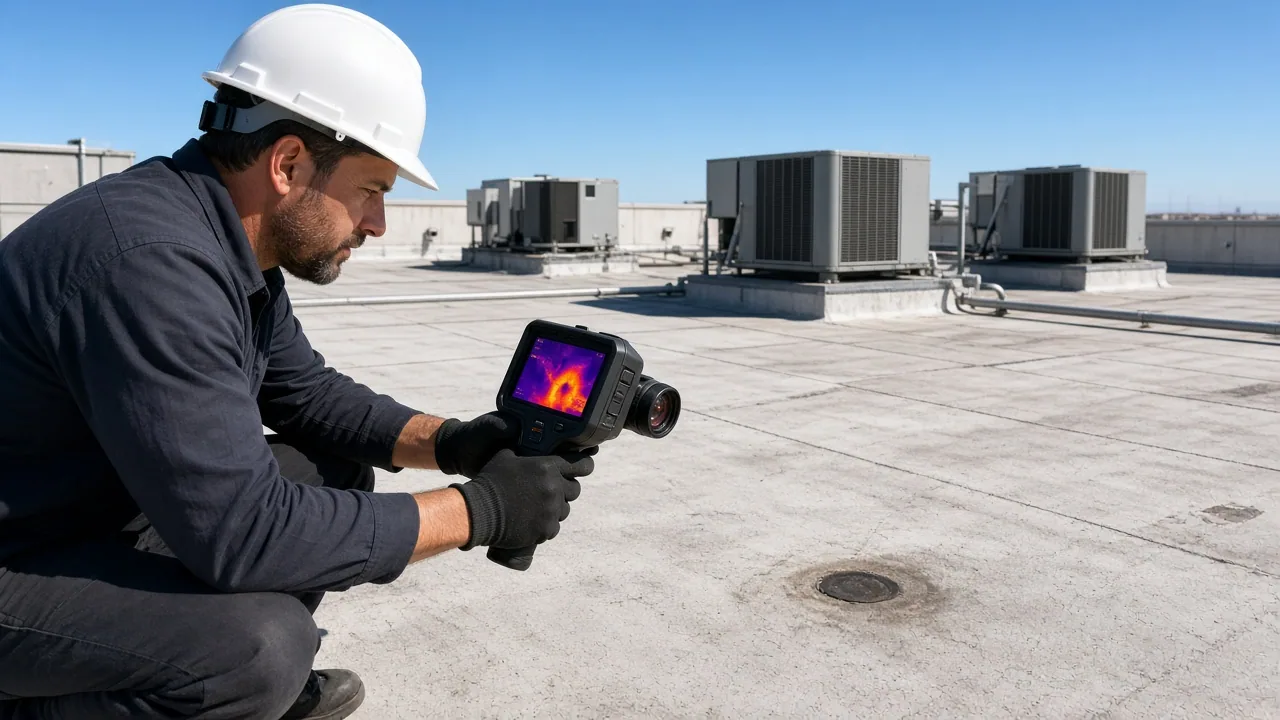
That is why an infrared moisture survey is useful here. It shows damp insulation from the roof while the surface still looks dry, and it separates a roof leak from a condensation line. We check the vapor layer when we cut, because a missing or torn layer is the root of many wet-ceiling calls. Fixing the roof without fixing the vapor path leaves the cause in place.
Campus and Community Facilities
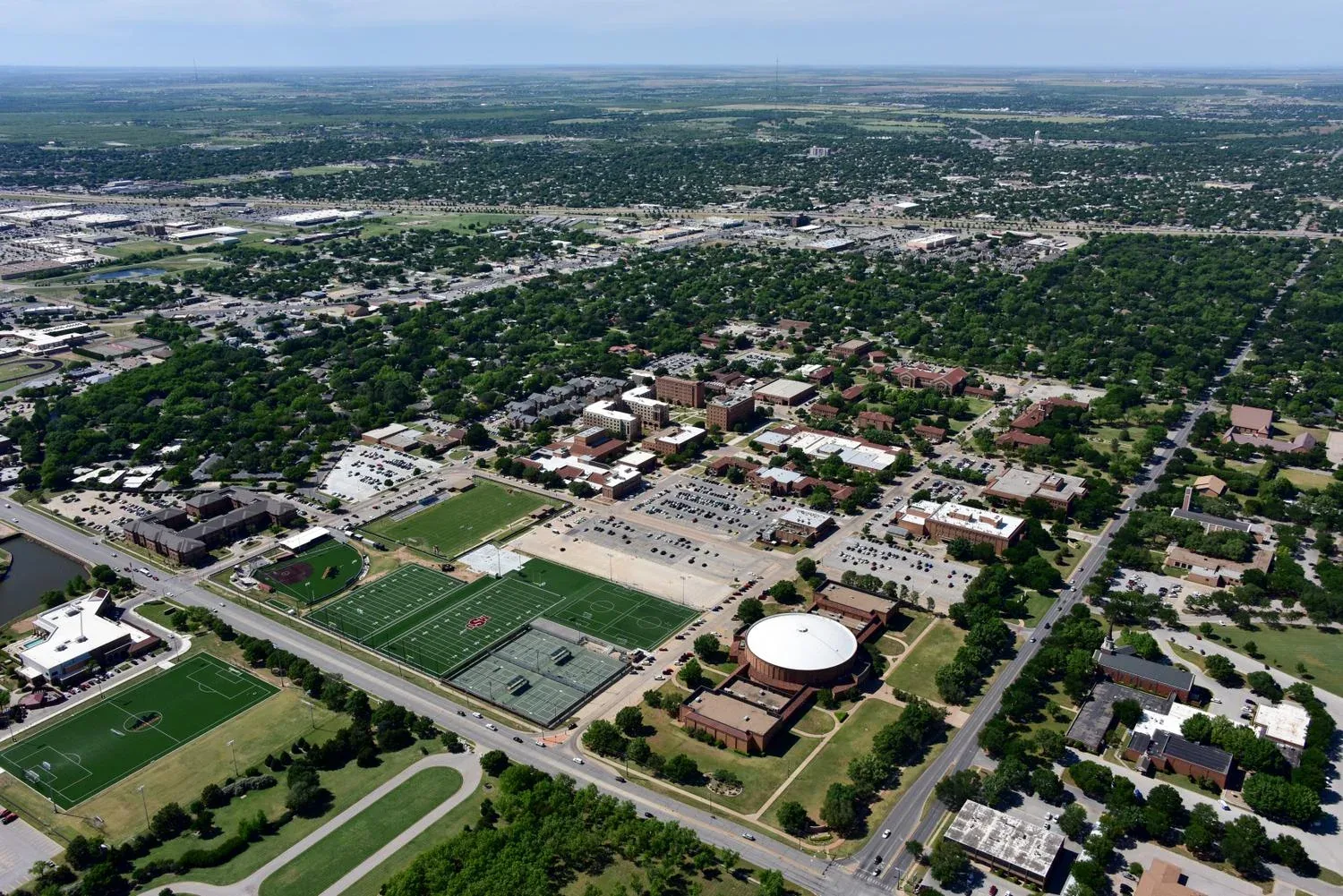
Some fitness buildings belong to schools, colleges or public programs. Midwestern State University's 255-acre campus off Taft Boulevard has athletic venues including D.L. Ligon Coliseum and Memorial Stadium, and the Bridwell Activities Center was completed in 2022. Buildings of that kind in the Taft Boulevard area serve many users, and events set their calendars.
A recreation center fills its calendar with classes, leagues and camps, and a stadium or coliseum fills it with events. The roof type on each building has to be confirmed by walking it, since the use alone does not tell us. The schedule for roof work is built from the event calendar, not from an assumed off season, and the owner approves it before any crew arrives.
Repair, Recover or Replace
One clean rule: repair a dry roof, recover a sound one, replace a wet one. In a humid building, add a fourth step: fix the moisture path. A recover over a roof with a failed vapor layer traps moisture, so we confirm the layer before choosing it. Where insulation is wet, replacement brings the chance to add a vapor layer and a higher insulation value.
Cost follows roof area, the number and weight of rooftop units, the access for a crane, the amount of wet insulation and the need to protect pools, courts and floors. Wood gym floors and pool equipment are costly to damage, so interior protection is part of the price. The scope lists each space with its protection and its schedule.
Working Around Members and Classes
Fitness centers run early mornings and late evenings, and the busiest hours are predictable. Roof work is placed in the quiet middle of the day. Over pool halls and courts, we plan to close the room or the affected lane, and we cover floors and equipment before a cut opens. Dust and fumes stay out of air intakes by choosing welded or cold-applied systems.
Hail and heat set the seasonal timing. A college or a school gym works around the academic year, while a private club works around its membership peaks. The owner receives a written calendar before the first day, with each room's closing date and reopening date clearly listed.
Hail is the sudden risk. On April 2, 1991, baseball-size hail did extensive damage in Iowa Park and Burkburnett. That is history and says nothing about a roof today. A gym with a wide, flat roof gets a hail check after any spring storm, with pressing, probing and photographs of every bruise.
Commercial Roofing Questions
How can I tell condensation from a roof leak in my gym?
Look at the weather. Drips on dry, cool mornings near ducts point to condensation. Drips after rain point to the roof. A moisture scan and a core cut separate the two.
Does a pool hall need a different membrane?
It needs careful detailing more than a special sheet. Chlorinated moist air is tough on metal, so fasteners, flashings and curbs should resist corrosion. PVC is often chosen for its chemical resistance.
Can a gym stay open during a reroof?
Often, if we work in sections and protect the rooms below. Wood floors and pool areas get covers, and any air-handler shutdown is scheduled with the facility manager.
Why is the roof over the locker rooms wetter than the rest?
Showers add steady moisture, and exhaust fans carry it through the roof. Penetrations there wear faster and the insulation takes on moisture. We check those spots first.
What should a facility manager send first?
The roof age if known, a floor plan with room uses, the location of the air handlers and any ceiling drip reports with dates and weather. That lets the first visit answer a specific question.