Hail comes up first at a dealership, because the lot outside holds a great deal of exposed value. The same storm that dents a row of cars also tests the showroom, the service bays and the canopy over the delivery lane. In Wichita Falls, TX, that risk is real: baseball-size stones damaged Burkburnett and Iowa Park in April 1991. Start with the building. A dealership has three or four roofs with three or four jobs, and each needs its own reading before anyone talks about replacing anything.
Showroom, Shop and Canopy
The showroom is the face of the business. It has tall glass, a high ceiling, an air-conditioning load and a roof that must stay dry above customers and display vehicles. The service shop behind it has tall overhead doors, exhaust ductwork, heavy equipment and a roof that is usually a long steel span. Between and around them are offices, a parts room, a detail bay and a canopy over the delivery or write-up lane.
Each of these roofs has a different tolerance. A drip in the showroom is a sales problem. A drip in the shop is a safety and equipment problem. A drip in the parts room is an inventory problem. We sketch the building by those uses first, then walk each roof against them, so the repair order follows what is most costly to lose.
What Sits on the Roof
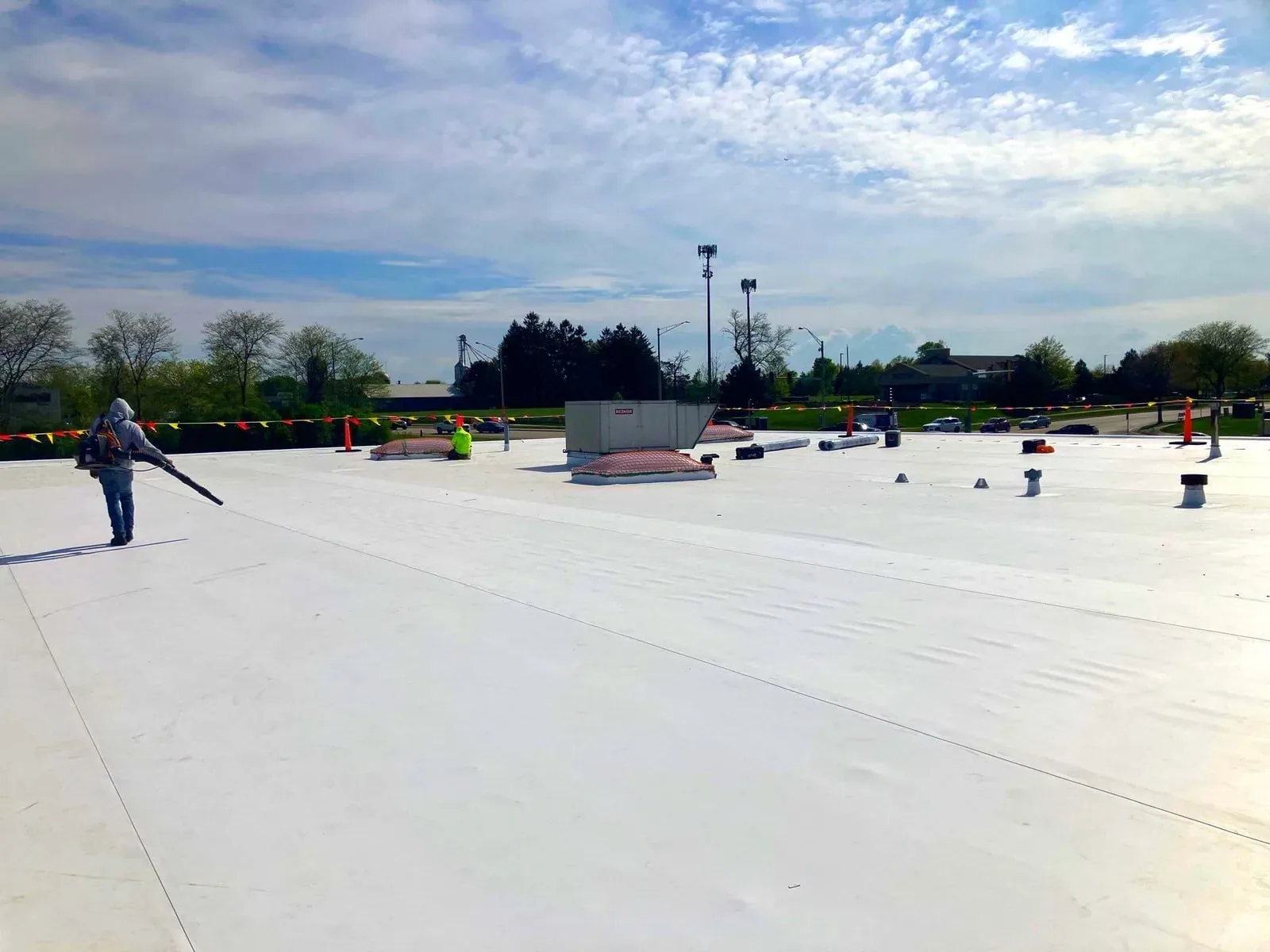
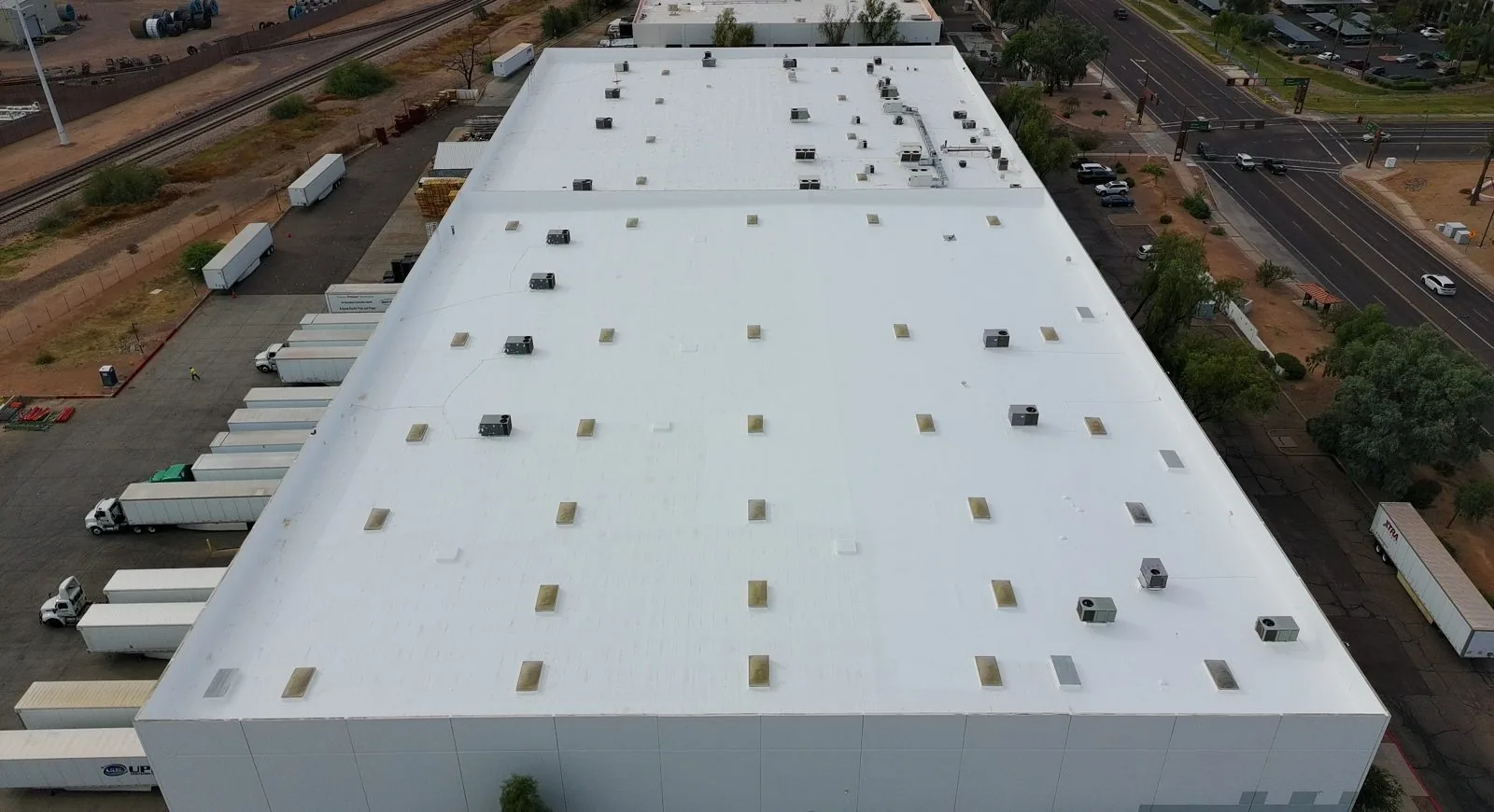
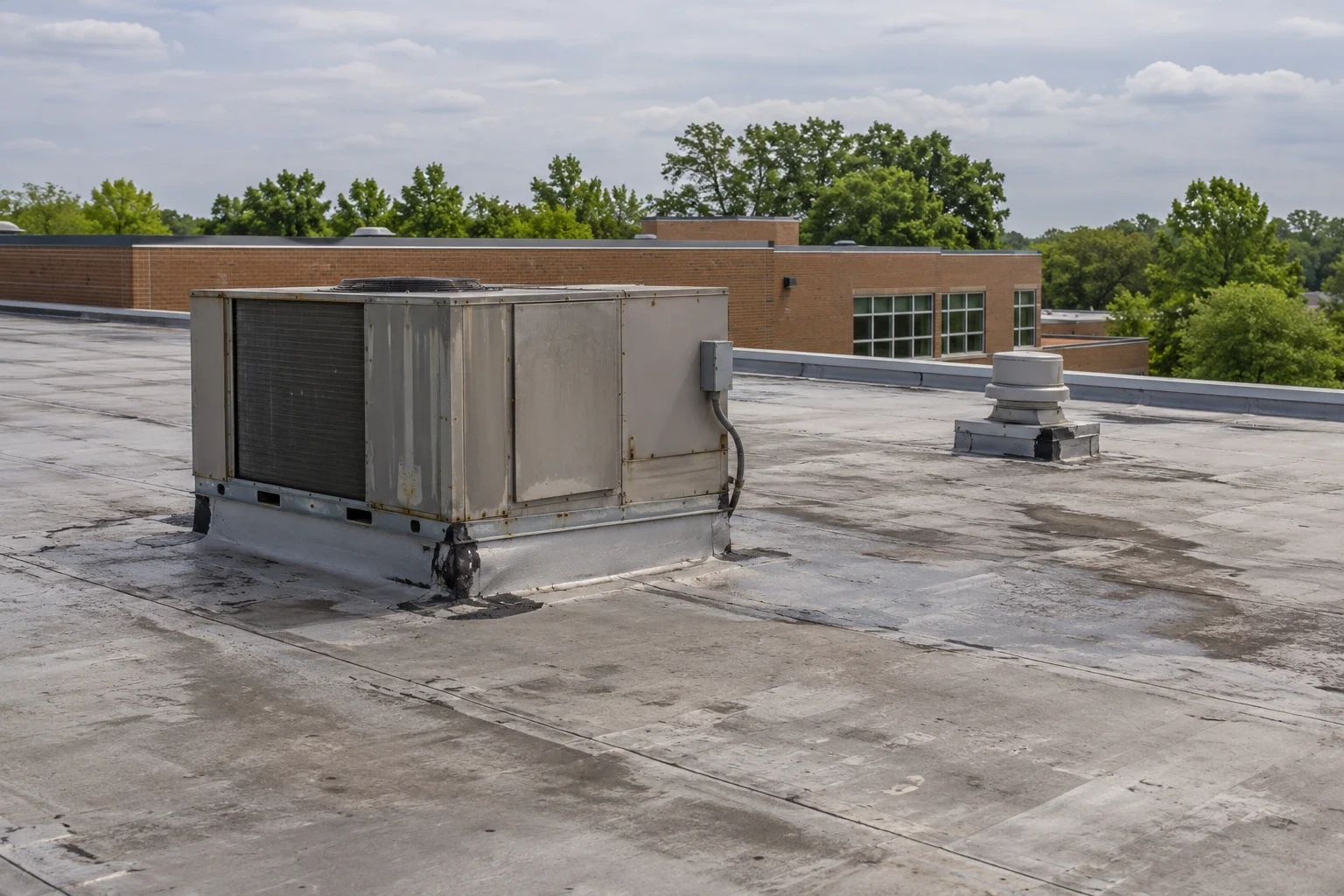
Dealership roofs are crowded. There are large rooftop units over the showroom, exhaust fans over the shop, makeup air, parts room vents and often a cluster of signage supports and satellite or antenna mounts. Some dealerships carry signs or towers that tie into the roof structure, and each tie-in is a penetration.
Membranes vary. A TPO or PVC sheet over the showroom is common, and the shop may have metal panels or a built-up roof. PVC has a good record near exhaust and fumes, while metal panels need their fasteners watched. The layer underneath is the insulation, and in a showroom that is air-conditioned all summer, a wet layer works against the cooling load and the comfort of the room. We scan before we decide what to cut.
Hail, Wind and the Lot
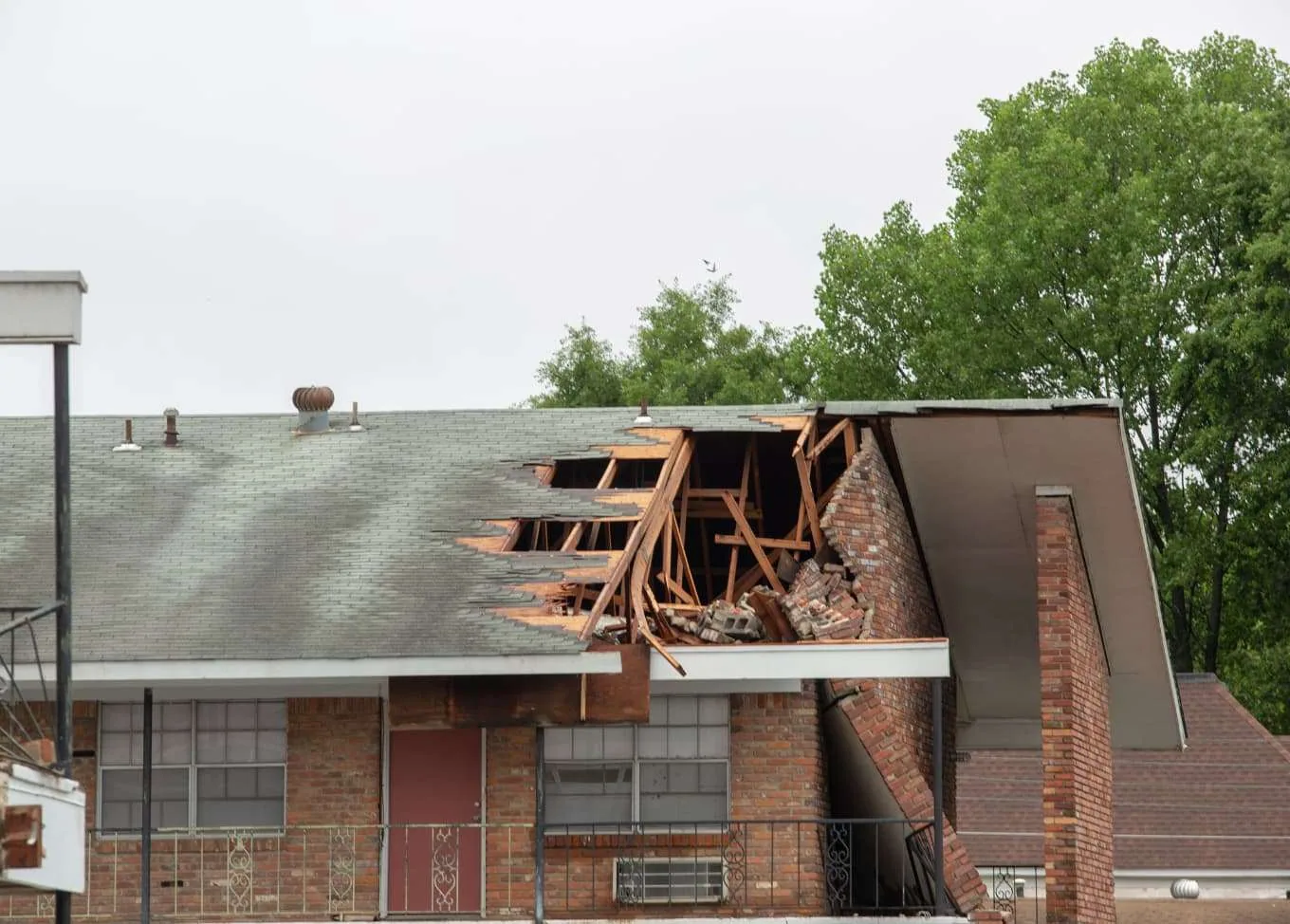
Hail is the risk that shows up across the lot and the roof together. Hail larger than baseballs hit Sheppard Air Force Base on March 29, 1993, and golf-ball-size hail covered Electra for 15 minutes on March 13, 1982. Those events are history, not an inspection of any roof today, but they justify a storm plan on file before the season starts.
After a storm, the roof gets its own check: dents in metal, bruises in the membrane, cracked skylights, dislodged vent caps and damaged canopy panels. A hail damage report with photographs by roof area helps in an insurance conversation, and a dealership usually has two claims in play, one for vehicles and one for the building. Keeping the roof file separate keeps the building claim clean.
Signage and brand towers deserve their own line in that file. A tower base that was bolted through the roof carries a flashing, and a hard wind rocks the tower and loosens the seal. After a storm we look at each base, each guy wire plate and each conduit that enters the roof, and we note what was found next to a photograph. That record also helps when a sign contractor needs to know the state of the roof before reattaching anything.
Where These Roofs Fail First
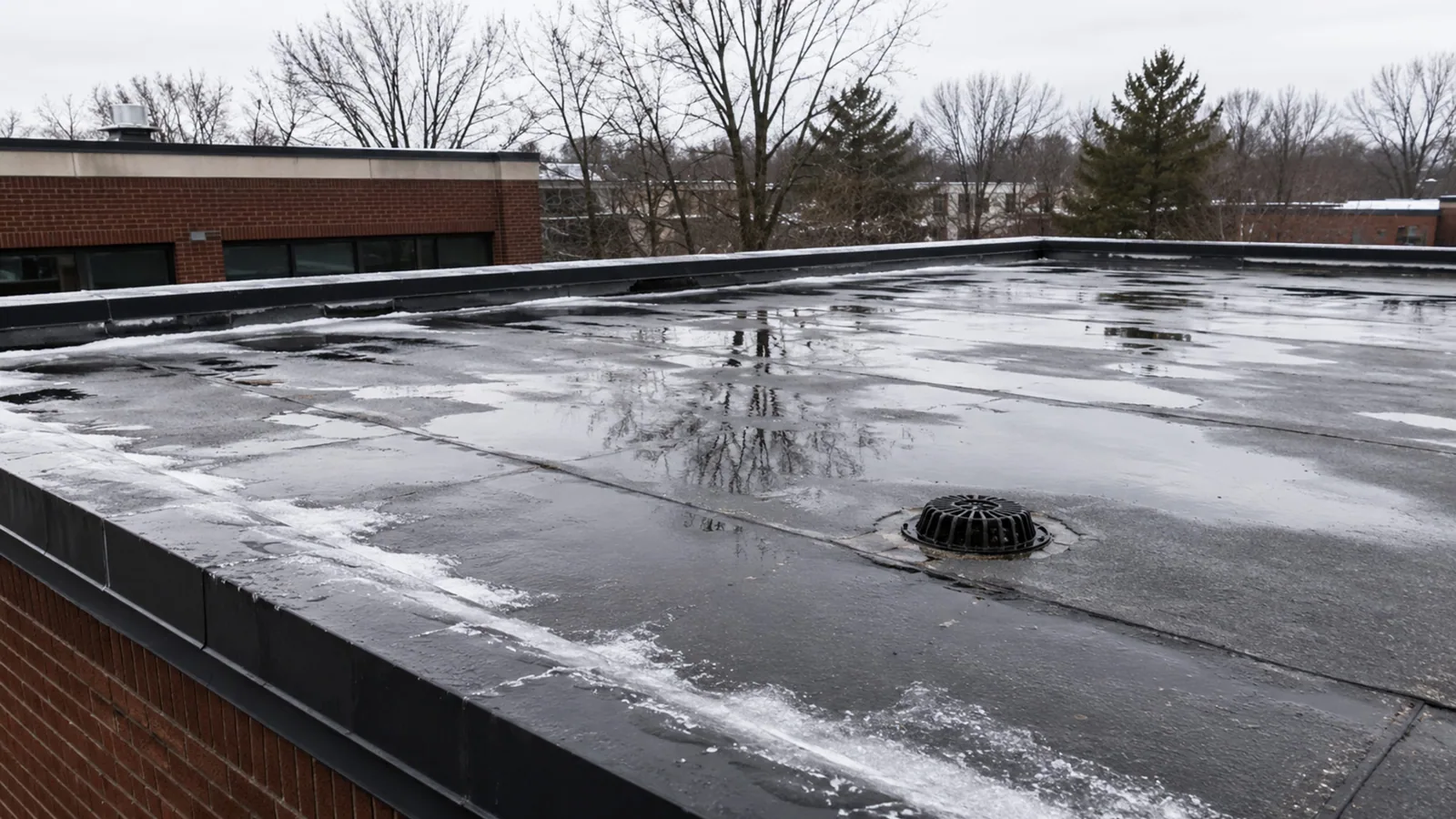
The canopy goes first, because it is exposed on every side. Next come the drains, which clog with dust and debris from a lot that sees constant traffic. Penetrations follow, especially the exhaust fans in the shop, where heat and fumes wear on the boots. Edge metal around the showroom takes wind, and a loose cap there can pull a section of membrane up with it.
Heat adds slow stress. A typical Wichita Falls year has about 28 days at 100 degrees, and a dark roof over an air-conditioned showroom works hard on every one of them. A cool roof reflects more of the sun and reduces the load on the units, which can matter on a building that cools large glass areas all summer. A ponding line on the shop roof tells us where the slope has failed.
Repair, Recover or Replace
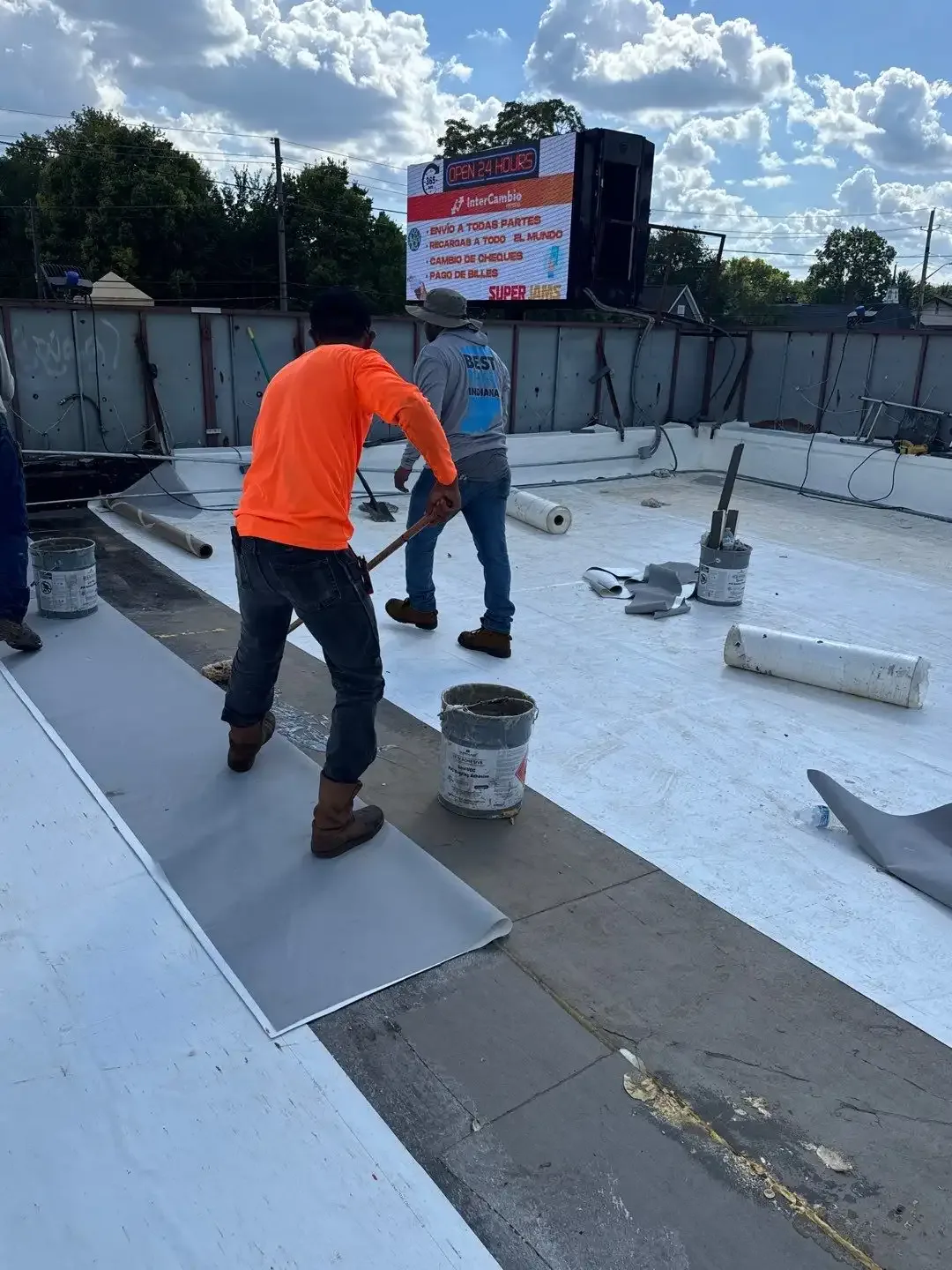
The rule is about water, not age. A roof that is dry beneath its membrane can be fixed at the weak points, which means new boots, reset edge metal and welded seams, or covered with a second sheet. A roof that has taken water across a wide area has to lose that wet layer. A sound roof can take a recover, which cuts noise and mess over the showroom. Wet insulation sags and holds water, so the sooner it comes out, the less of the roof it ruins.
Cost depends on roof area, access over a lot full of vehicles, the number of penetrations, tear-off and the tie-ins for signs and canopies. Lift placement is a real cost: a crane or lift needs clear ground, and a dealer who moves inventory for a day can save money. The written scope lists each roof area with its options, so a dealer principal or a corporate facilities group can compare them on equal terms. When a manufacturer standard or a lender asks for documents, the same scope doubles as the record, with area, materials, tie-ins and the schedule in one place.
Keeping Sales and Service Open
Sales and service run long hours, and the shop starts early. We work in sections, starting over the shop or parts area when sales are slow, and keeping the showroom for a quiet day or an after-hours window. Customers should never walk under a work zone, and vehicles near the building move before the lift arrives. Interior protection goes in before any cut opens above a display car.
The same planning applies to a big-box retail store or a warehouse, though a dealership adds the moving inventory. Where a site sits along a major road such as the Kemp and Kell corridor, visibility and customer traffic argue for finishing work quickly and leaving the site tidy. We send the schedule to the general manager before the first day.
Commercial Roofing Questions
Does a dealership need a separate hail claim for the roof?
Usually the building and the vehicles are handled separately. We document the roof on its own, with photographs by area and a list of damaged items, so the building claim stands without the lot claim.
Why do showroom roofs leak at the edge near the glass?
The wall above the glass is a flashing area, and it moves with the building. Sealant dries and cracks, and water follows the wall down. We reseal or rebuild that detail and test it with water.
Can the shop keep working during roof repairs?
Often, with sections and protection under the cut. Exhaust shutdowns are scheduled with the service manager, and equipment under open areas is covered or moved.
Is a lighter roof worth it over a showroom?
It reduces the sun load on the roof surface and can ease the air-conditioning work. The result depends on the insulation and equipment, so we describe the effect without quoting a number.
What should a general manager send first?
The roof age if known, a sketch of the showroom and shop with leak locations, and any storm dates. That lets the first visit answer a specific question.