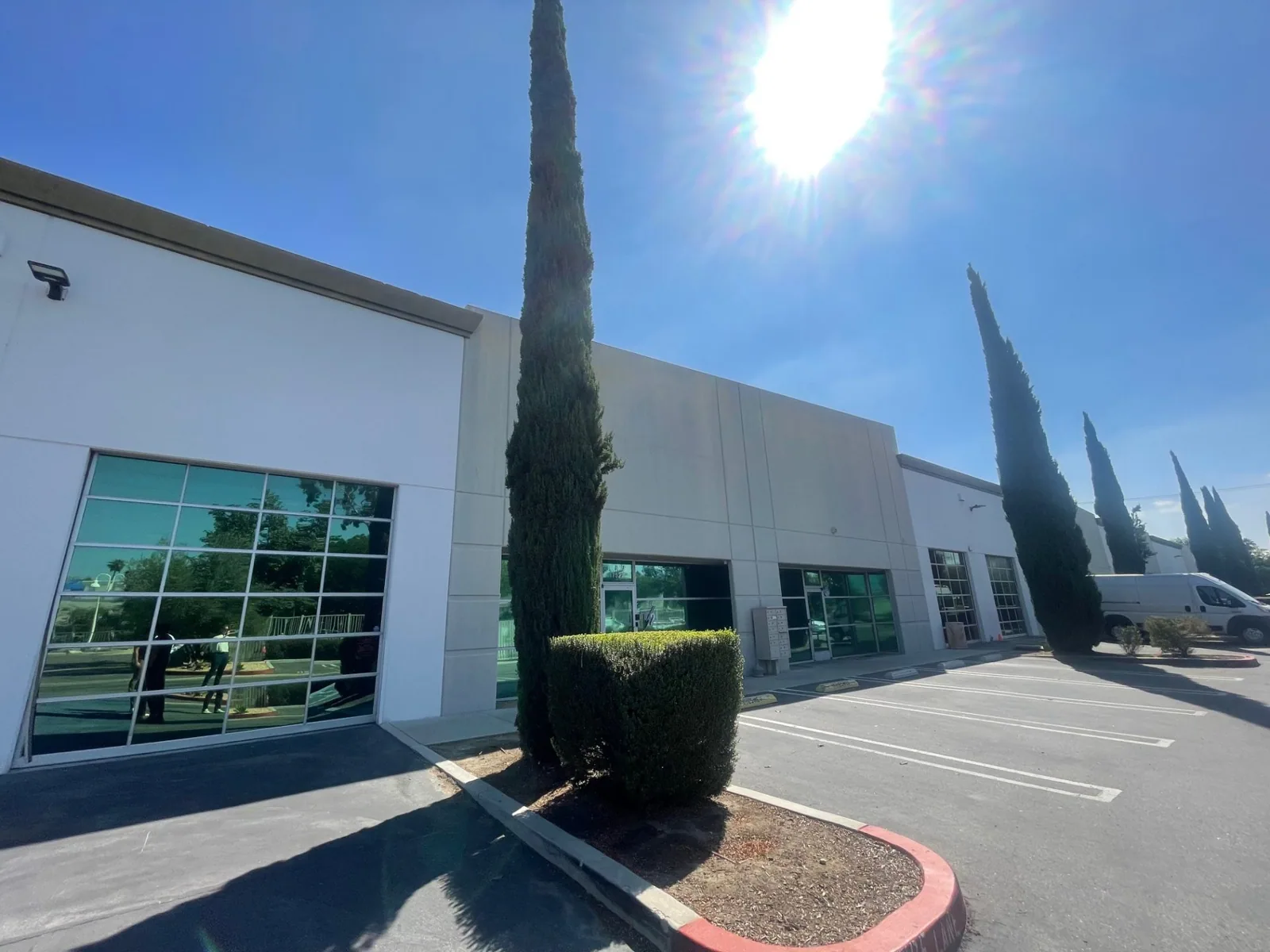
A chain thinks in locations, and a roofer should think in locations too. The store in Wichita Falls, TX is not the store in another state, even if the sign and the floor plan match. Its roof meets different weather, was built by a different crew and carries the equipment that this particular kitchen or sales floor needs. The first step is to give each location its own roof record.
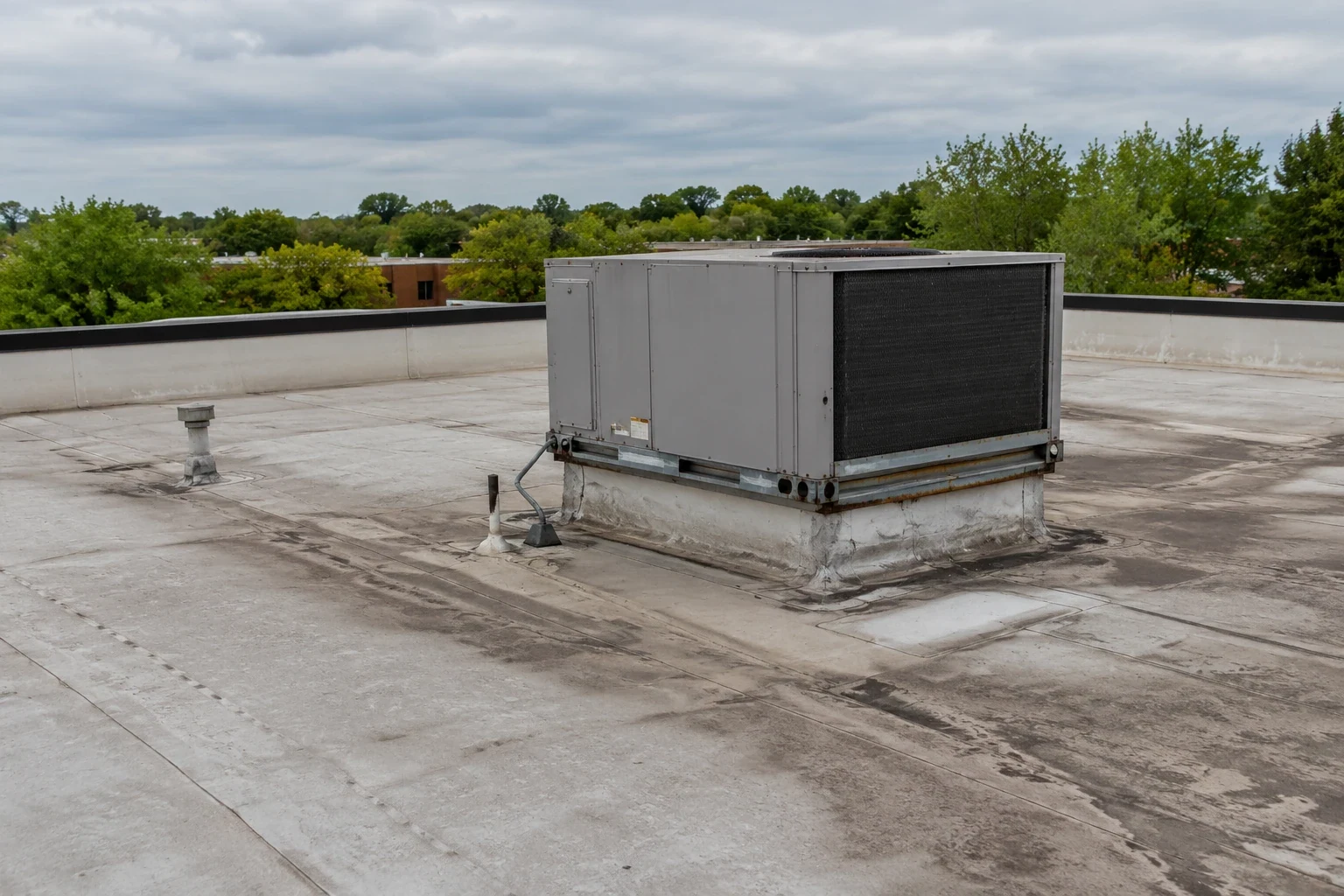
We repair, replace and maintain low-slope and metal roofs on retail and restaurant buildings, from freestanding pads to strip centers. Work is planned around trading hours, deliveries and brand standards, and the finding for each site is written in a form a regional facilities lead can compare across the portfolio without reading a long report.
One record per store
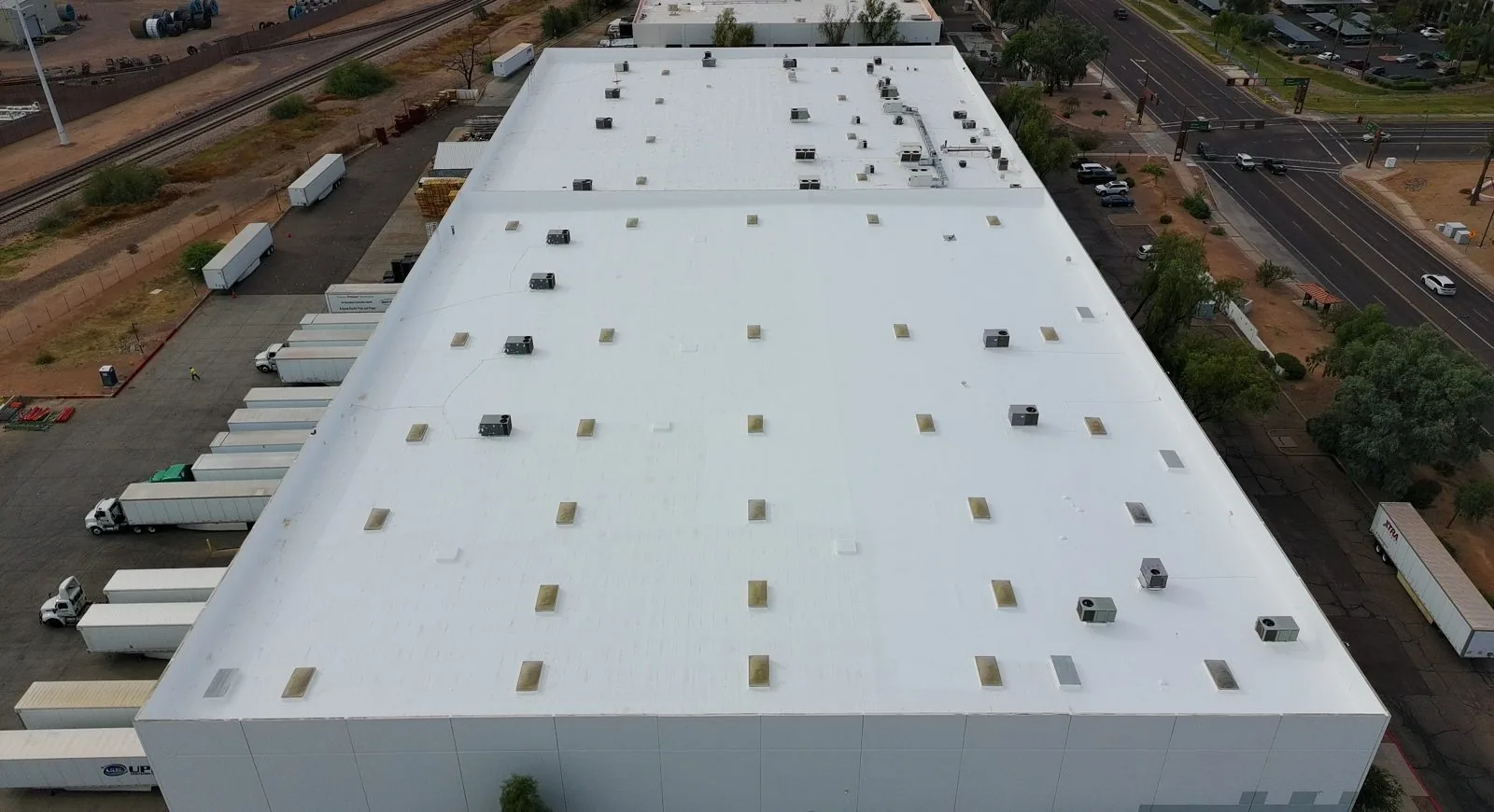
Start with the building. A restaurant has a kitchen exhaust, a grease path and a lot of rooftop equipment. A big-box store has a large roof, dock doors and a perimeter that takes the wind. A strip-center tenant shares a roof with neighbors and may not control it at all. Each of those buildings fails in a different way, so the record for each should say who owns the roof, who maintains it and what sits on top.
We walk the roof, photograph every penetration and note drainage, seams, flashing and wear. Then we give the site a simple rating and a next step: watch it, fix it now or budget for a new roof. A chain with many stores can use those ratings to decide which sites get capital money this year and which wait. The same format works across the whole group.
Warranty paperwork belongs in the same file. A chain often holds a mix of new and aging roofs, and the terms of each warranty depend on who does repairs and how they are documented. Before anyone patches a roof that may still be covered, we ask what paperwork exists and whether the maker needs notice. Skipping that step can cost more than the repair.
Kitchens, grease and rooftop units
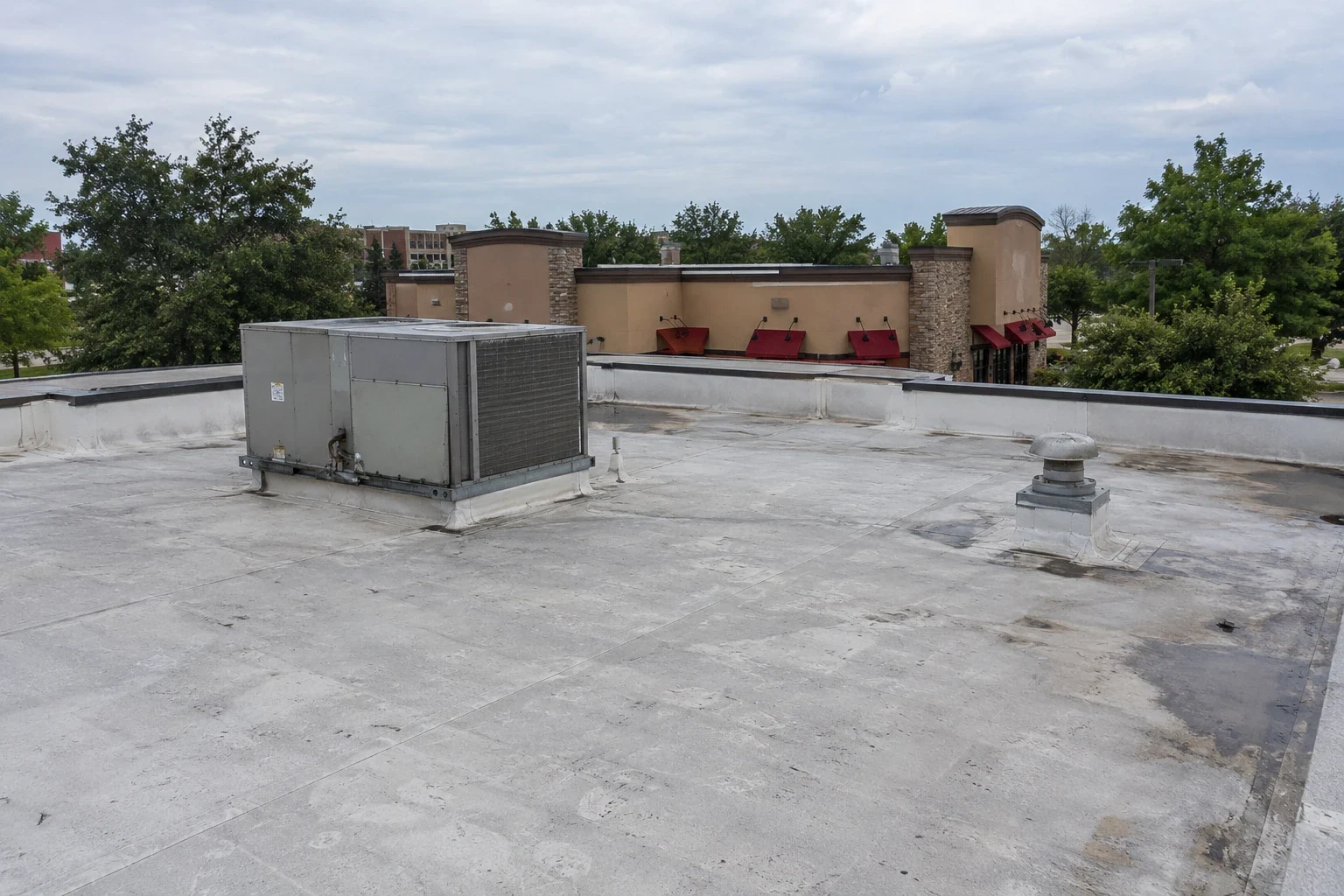
Restaurant roofs have a problem that stores do not, which is grease. Exhaust fans throw a film of cooking grease on the membrane, and some membranes break down under it. A roof that looks fine from a window can have a stained, softened area near the fan. We check the grease containment, the curbs and the surrounding membrane, and we recommend a system that tolerates the exposure.
Rooftop units are the other source of wear. Technicians walk the roof, set down tools and sometimes leave panels open. Walk pads, tight curb flashing and a quick post-service check protect the membrane. For restaurant sites, restaurant roofing is as much about the equipment on top as about the membrane beneath it.
Drainage on a freestanding pad is simple but unforgiving. One drain, one scupper or one gutter carries the whole roof, and a clog in any of them shows up first as a puddle by the front door or a stain over a dining table. We clear and test drainage on every visit, and we note any low spot that holds water after a rain. A ponding line on the membrane marks where the water has been sitting.
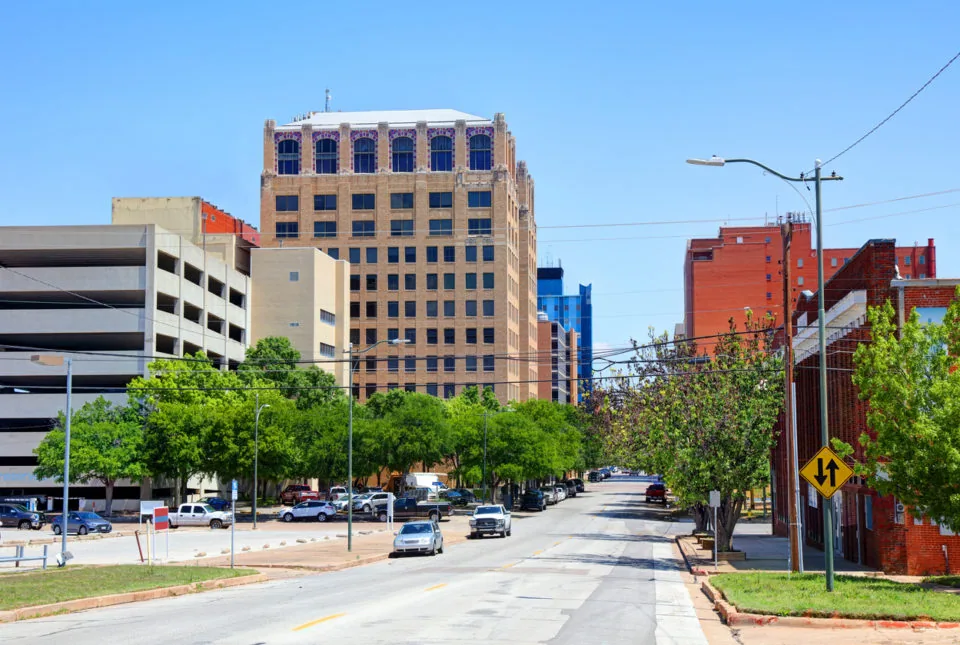
Where the retail sits in Wichita Falls
Retail in Wichita Falls follows its roads. Kell Boulevard carries U.S. 82-277 across the city as an expressway, and the Kemp and Kell corridor holds commercial sites that have seen a great deal of weather. The April 1979 tornado destroyed businesses along Kemp Boulevard and razed a shopping center in the Southmoor subdivision. That storm is history, not proof of anything on a roof today, but it reminds owners to check wind resistance.
Midwestern Parkway serves Sikes Senter, the 1974 enclosed mall whose four largest tenant spaces are vacant and which the city bought in October 2025. Chains with nearby sites should watch how that corridor changes, since traffic patterns and neighbors may shift. The Midwestern Parkway retail corridor is also the place to think about long-term leases and roof responsibility before a repair is needed.
Heat and hail on a retail roof
Heat is steady here: about 28 days of 100-degree weather in an ordinary year, and 100 such days in 2011. A dark membrane over a sales floor takes that heat, and the building uses more cooling when the roof is hot. A reflective surface can help, which is why cool roof options come up for stores that keep long hours.
Hail is the sudden test. Baseball-size hail caused extensive damage in Burkburnett and Iowa Park on April 2, 1991, and golf-ball-size hail fell in Electra on March 13, 1982. For a chain, one storm can touch several stores at once, so a post-storm walk is organized by location. A hail bruise rarely shows from street level, so we press and probe the membrane, mark what we find and document it for the insurer.
Storms also test the roof edge and rooftop screens. Parapet caps, coping and screen walls catch wind, and a loose cap can open the wall below to water. After a severe storm we check those details first, then the field of the roof, so the report shows where the storm acted and where it did not.
Work around trading hours
A store loses money when customers cannot get in, and a restaurant loses it when a kitchen goes down. So we plan roof work for the quietest hours, protect entrances and keep delivery routes open. Noisy tear-off is scheduled before opening or after closing where we can, and each day's work is closed in so rain does not reach the sales floor or the dining room.
Emergency repair has no schedule. If a storm opens a seam over a kitchen at night, we respond at any hour and on holidays with emergency roof repair. The permanent fix follows once the roof is dry. For centers with several tenants, we work with property management companies on access, and with hospitality groups where a restaurant sits inside a hotel.
Brand standards matter as well. A chain may require a particular look for rooftop screens, signage mounts and parapet caps, so we confirm those rules before changing any visible detail. New roof edges are matched to the existing trim, and any sign or screen that has to be moved is reinstalled where it was.
Commercial Roofing Questions
How do you handle roofs across many store locations?
Each site gets its own record, photos and rating, so the group can compare them. Priorities are set by leak risk and remaining life, and work is grouped by area when that saves time.
Does kitchen grease harm a roof membrane?
It can. Grease softens some membranes and stains others. We check the area around exhaust fans, look at containment and recommend a membrane suited to the exposure.
Can a store stay open during a roof replacement?
Usually yes. We phase the work, protect entrances and close in the roof each day. Noisy steps are scheduled outside trading hours when possible.
Who pays for the roof in a leased strip center?
That depends on the lease. The lease says who maintains the roof, and we help by documenting condition and cause so the tenant and landlord can settle responsibility with facts.
What should a regional manager send before a first visit?
Send a list of sites, the roof ages if known, lease responsibility and any leak history. Photos of ceiling stains are useful. We then shape the first walk around the sites with the greatest exposure.
Should a chain replace all its roofs on one schedule?
Rarely. Roofs age at different rates, so a single schedule wastes money on sound roofs and delays work on failing ones. We rank each site and group the work by area and need.