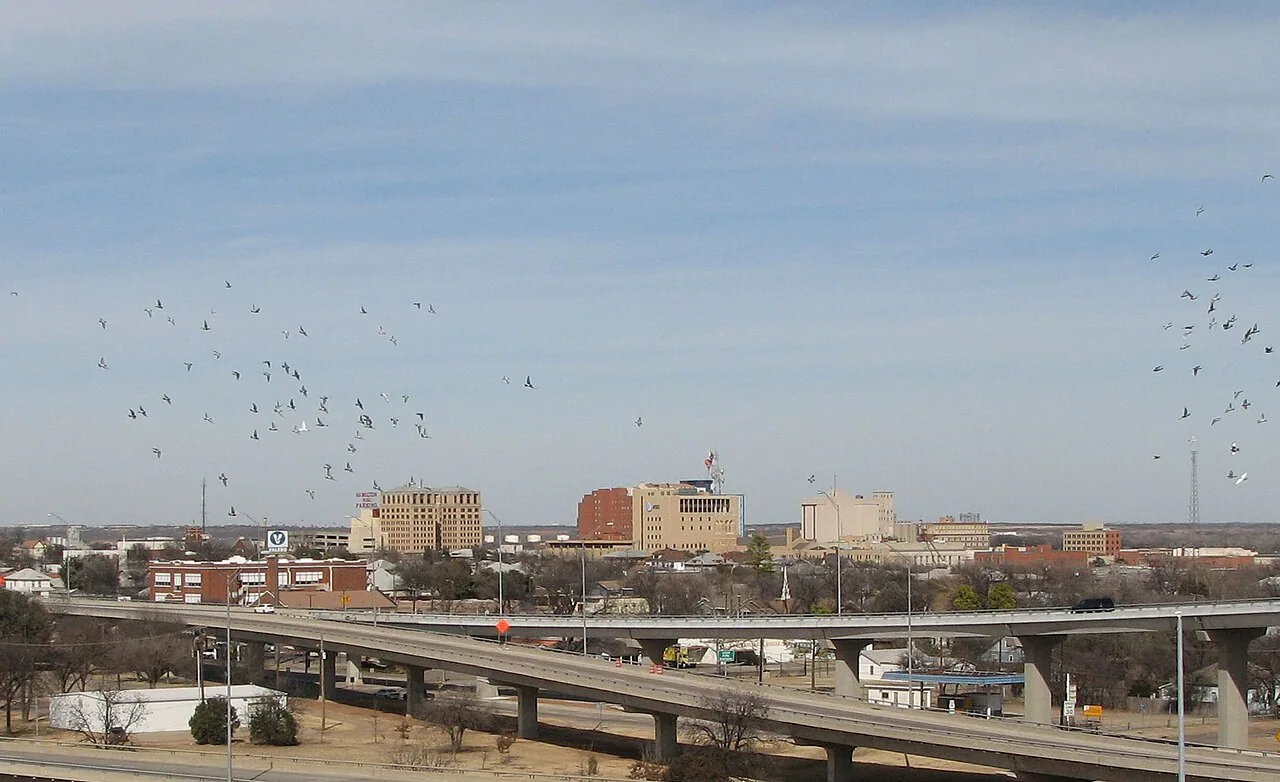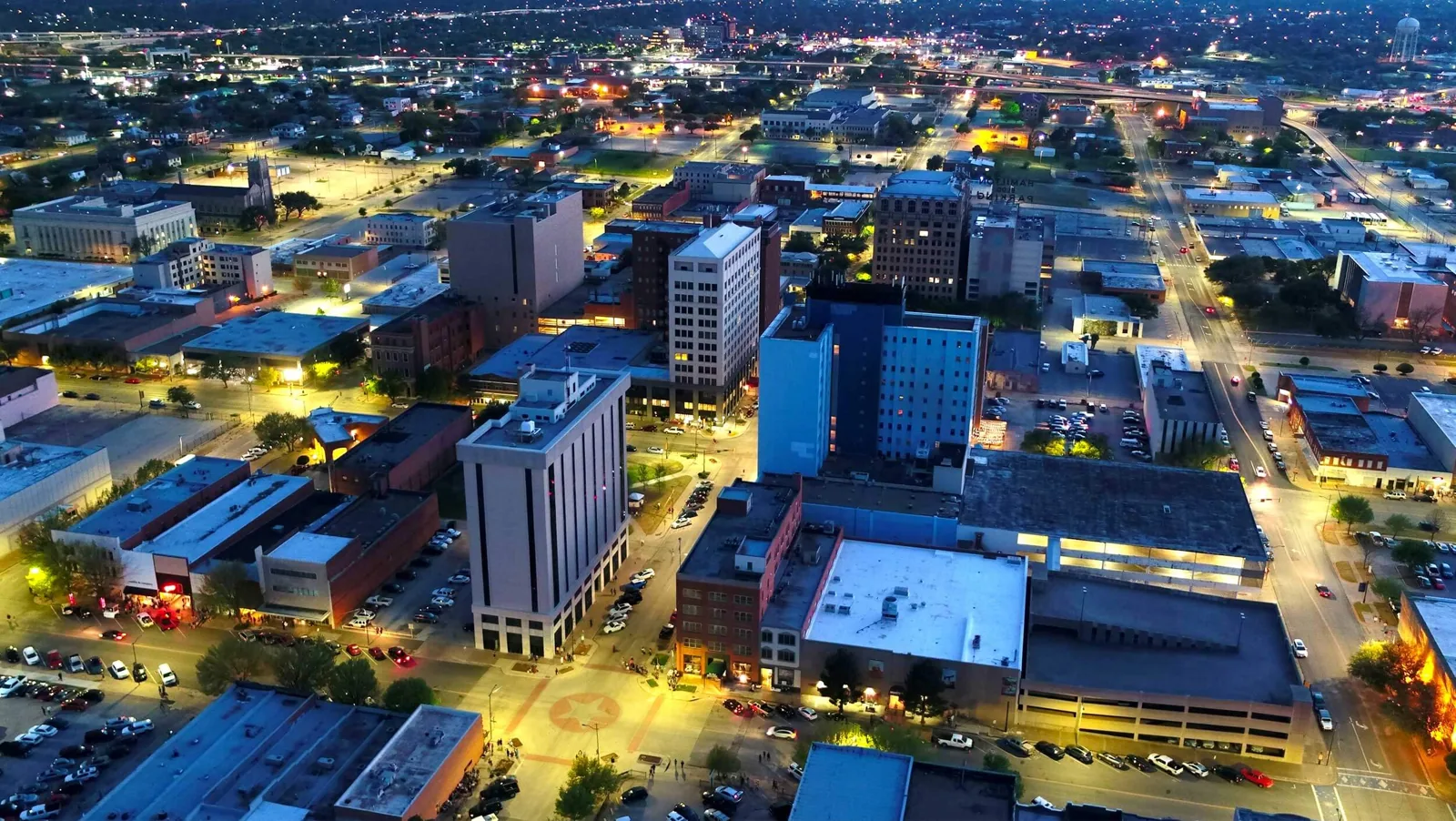
Shopping centers and small commercial buildings in southwest Wichita Falls share a roof question that is easy to state and hard to answer by eye: will this roof stay on in a hard wind? The April 1979 tornado ran through Western Hills and Faith Village and on across Colonial Park, Southmoor and Sun Valley; in Southmoor it razed a shopping center, and in the Sun Valley area it destroyed businesses. We use that history as context only. It tells us nothing about any one roof today, and it gives every owner here a reason to check the attachment.
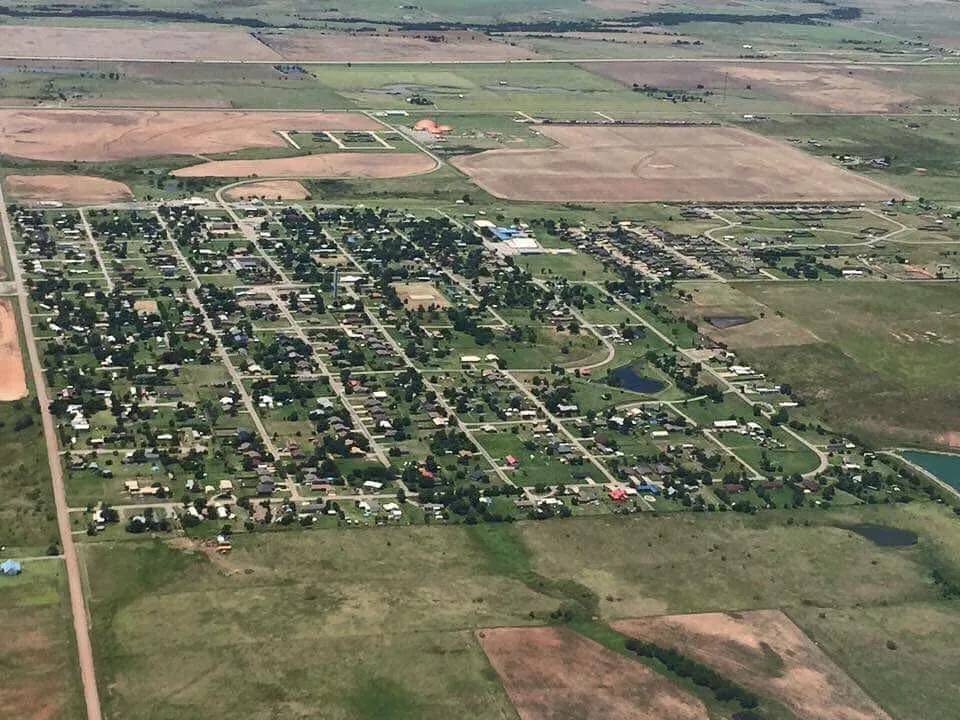
Here is step one: find out how the roof is held down. Everything else depends on it.
How a Low-Slope Roof Is Held Down
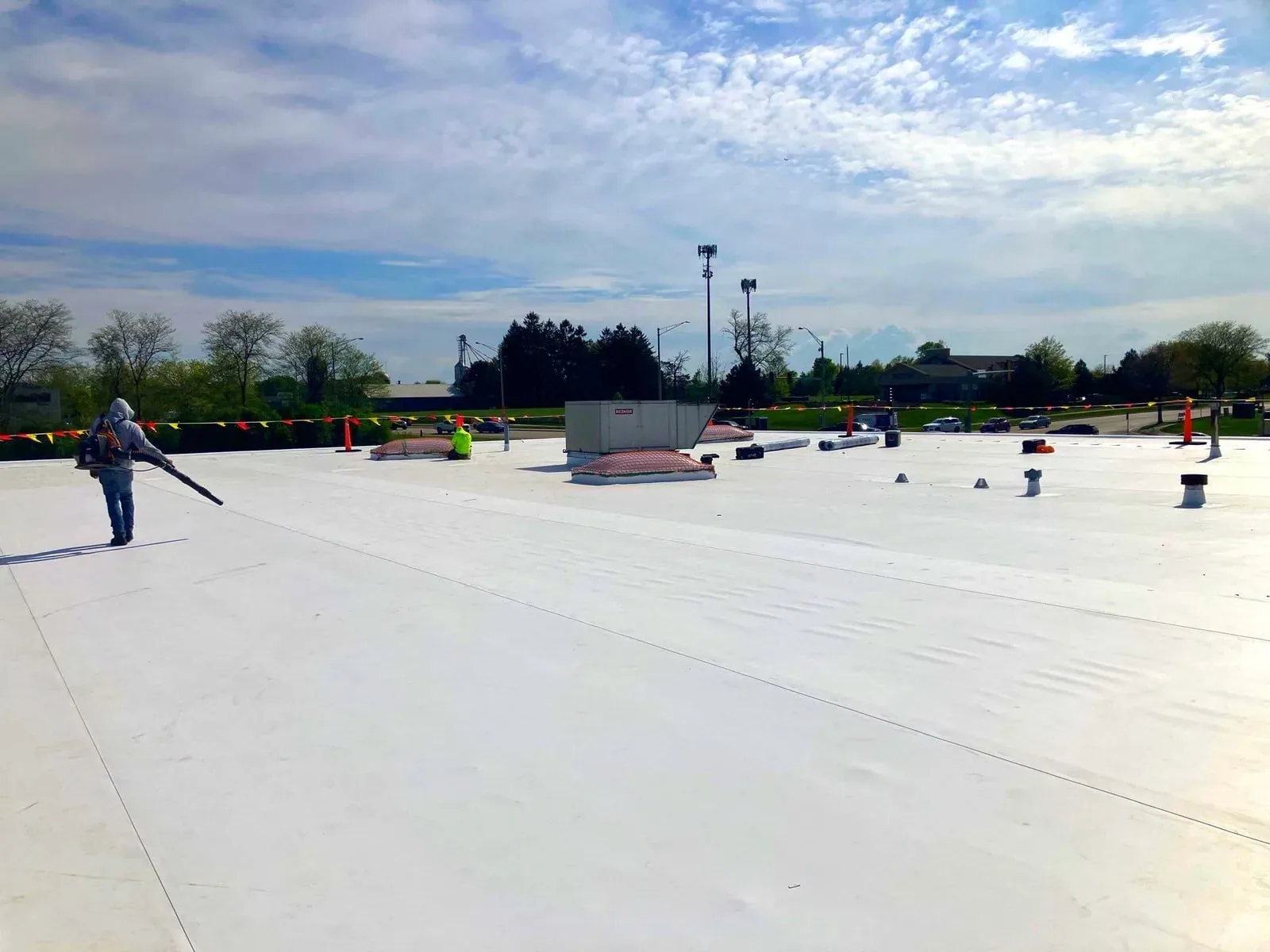
A commercial roof is a stack of layers. A structural deck sits at the bottom. Insulation lies on the deck. The membrane lies on the insulation. Each layer is fastened, glued or weighted down, and the method decides how well the roof resists wind. Fasteners can back out. Glue can weaken. Ballast can blow off.
We name each layer and test it. Pull-out tests on fasteners tell us how well the deck holds them. A look at the edge tells us how the sheet is fastened there, because edges see the most uplift. A TPO roof and an EPDM roof are fastened differently, and we check each one the right way.
Insulation matters for wind as well. Boards that are loose or crushed let the membrane move. A roof that flutters in the wind pulls at its own fasteners, and over a few seasons they work free. When we press the surface and feel a spongy spot, we mark it, because it can mean wet or broken insulation under the sheet.
Deck type matters too. A steel deck holds fasteners differently from a concrete deck or a wood deck, and each needs the right fastener. We identify the deck by looking from below when we can, or by a small cut from above.
Where Wind Wins First
Wind lifts the roof at corners and edges first. The corner is where the air speeds up and pulls hardest. If the edge metal is loose or the sheet is thin there, the roof can start to peel from that spot. We check the coping, the fascia, the corner flashings and the fasteners behind them first, then work toward the middle.
The 1979 storm crossed the southern and eastern parts of the city in about 30 minutes after it formed southwest of the city in Archer County. Storms like that come quickly. A roof has to be ready before the sky changes, and that means checking the edges in good weather.
Walk the perimeter on foot and watch the edge. Metal that waves, gaps at joints and sealant that has pulled away are all signs. A gutter that hangs lower on one end than the other can mean the fascia behind it has pulled away from the wall.
After any strong wind event, check the roof within days. A small lift at the edge can turn into a long tear at the next gust, and a quick fix costs far less than a section replacement.
Retail Strips and Small Shops
Where a southwest neighborhood has shops, offices and service businesses, the roofs follow the same pattern. A shopping center roof spans many tenants, so a leak in one can spread under the deck to another. We trace the water before we patch, and we mark each tenant space on the roof sketch.
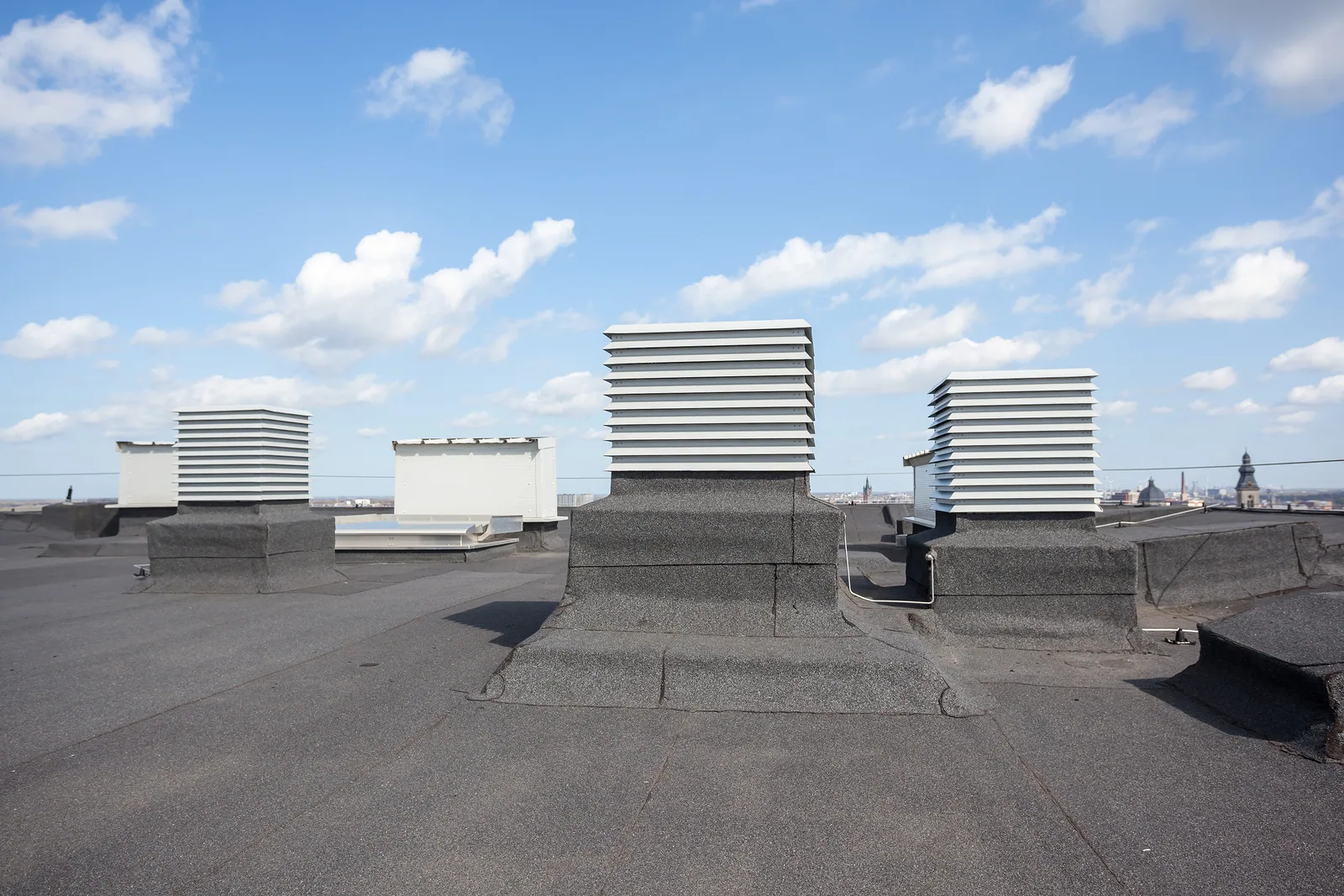
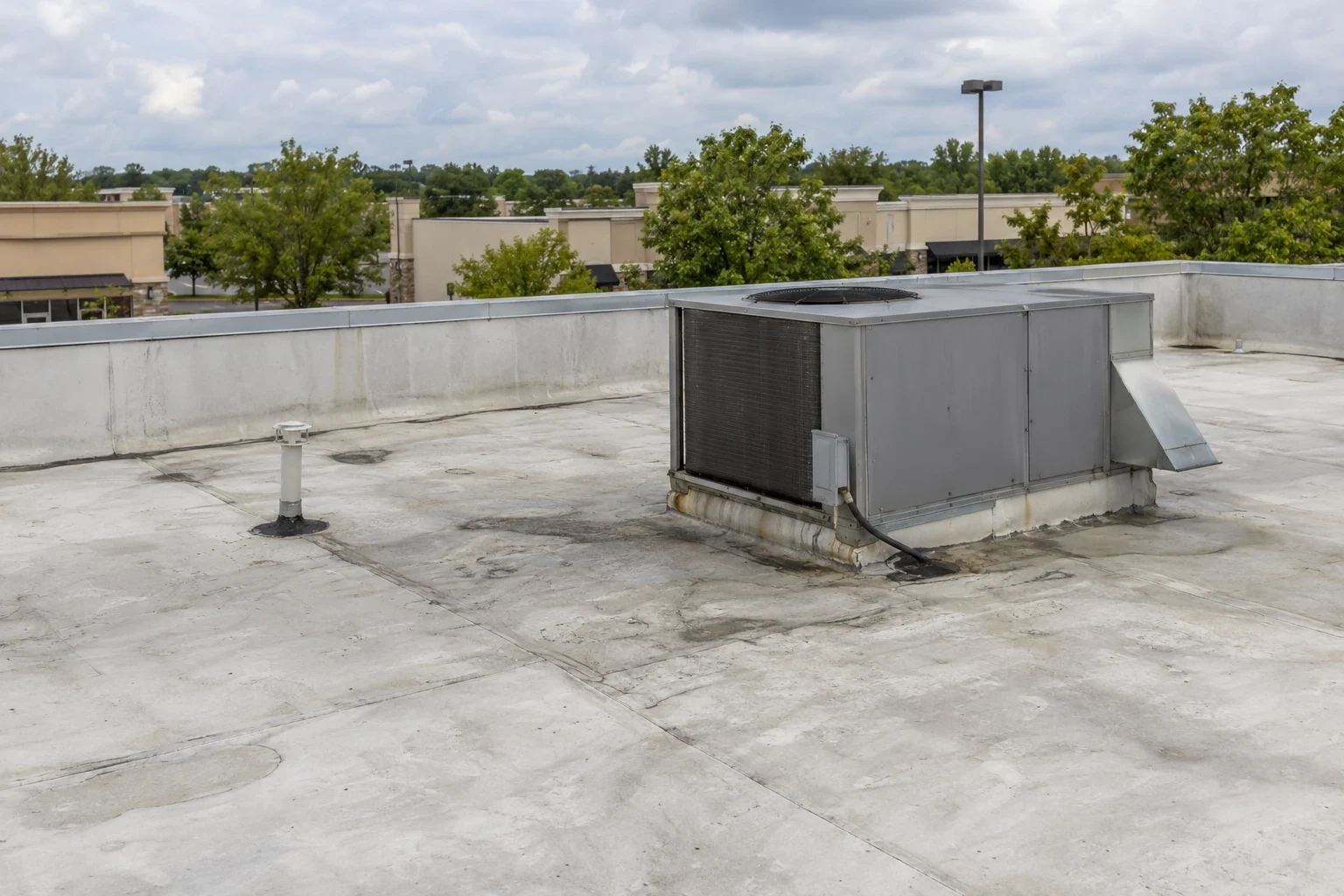
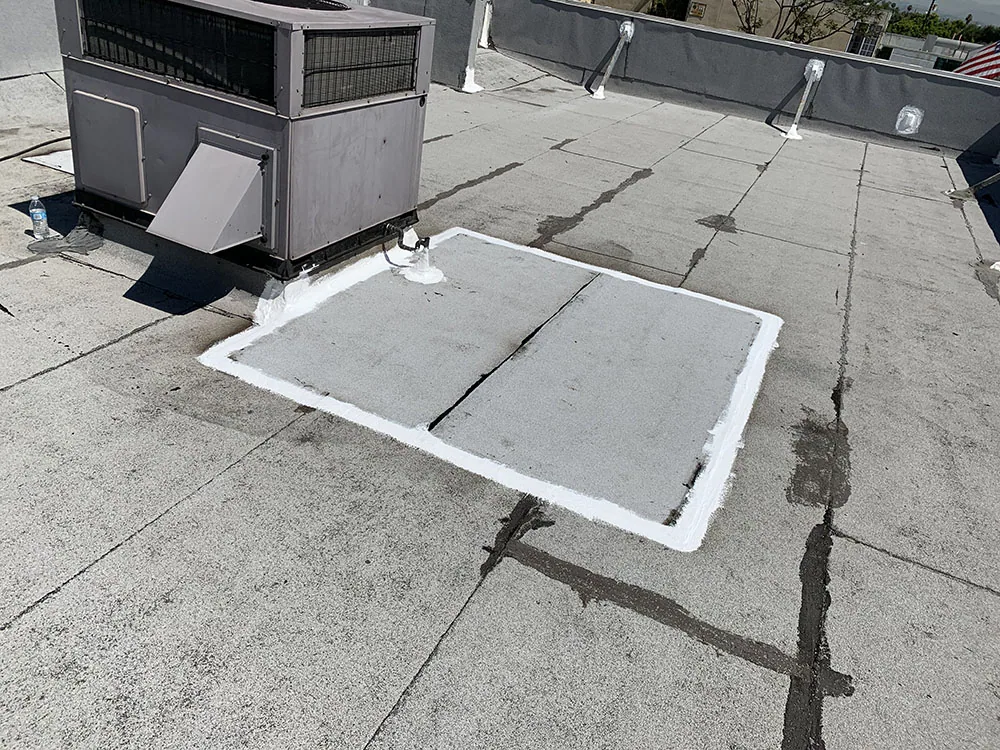
Rooftop units, signs and vents add holes in the membrane. We probe each curb corner and each boot for splits. The ones that are cracked get new flashing. The ones that look sound get a note on the list.
Parapet walls get a close look. A parapet cap that has lost its sealant lets water run down inside the wall. The stain shows up on the interior side, often weeks later, and by then the insulation near the wall can be wet. We check each cap and each joint before moving on.
Tenants change over time, and each change can mean a new unit or a new vent on the roof. The roof sketch lists every one, with the date it was added, so the record stays current.
Heat and Hail Between Storms
The city sees about four weeks a year at 100 degrees and has recorded a high of 117 degrees. Heat ages the surface, loosens sealants and softens adhesives. Hail adds bruises. Hail bigger than baseballs fell on Sheppard AFB on March 29, 1993. That is history, not a finding about a roof here.
We check for both on every walk. A heat and UV damage check looks for chalking and cracks. A hail check looks for bruises and dents. The two together tell us how much life a roof has left.
Heat also affects the people who work on the roof. We start work early in the day, keep water on site and stop when temperatures climb past safe limits. A tired crew makes mistakes, and mistakes in roofing show up as leaks.
Repair, Recover or Replace
One clean rule: fix what the tests show. If the membrane is sound and the problem is local, make a repair. If the insulation is dry and the sheet is tired, a recover may fit. If the insulation is wet or the deck is damaged, replace.
When we replace a roof, we can choose a system that resists wind better than the one it replaces. That may mean more fasteners, a heavier sheet or a stronger edge. We list the choices and the cost drivers in the quote: roof size, deck condition, insulation, the number of penetrations and access.
Moisture readings and core samples guide the choice. A core shows the layers and tells us whether a recover is possible. It also shows whether a past recover was laid over wet material, a common reason for early failure.
Timing and Access
Spring brings the worst storms, so we plan big jobs for summer and fall when we can. In a retail center, we agree on delivery routes, parking limits and noisy hours before we start. The same approach fits the Kemp and Kell Corridor and buildings near downtown Wichita Falls.
Rain delays are part of the plan. A tear-off section is sized so the crew can dry it in by evening, and the forecast is checked before each day begins. If a storm line is coming, the crew closes the section, secures material and leaves the roof.
Commercial Roofing Questions
How can I tell if my roof will hold in high wind?
Look at the edges and the fasteners. Loose edge metal, backed-out screws and thin spots at corners are warning signs. A walk with pull-out tests gives a firm answer.
Does a past tornado change how my roof should be built?
History is context, not a rule. The roof you have is judged by its own condition and attachment.
What fails first in a strong wind?
Edges and corners. Air gets under the edge metal and lifts the sheet. That is why we check them first.
Can a new roof resist wind better?
Yes, if the design calls for it. More fasteners, a stronger edge and the right sheet help. We list the choices.
What helps the first walk?
The roof's age, the building's purpose and any leak you have noticed, so the first walk can start at the likeliest trouble.